About this artwork
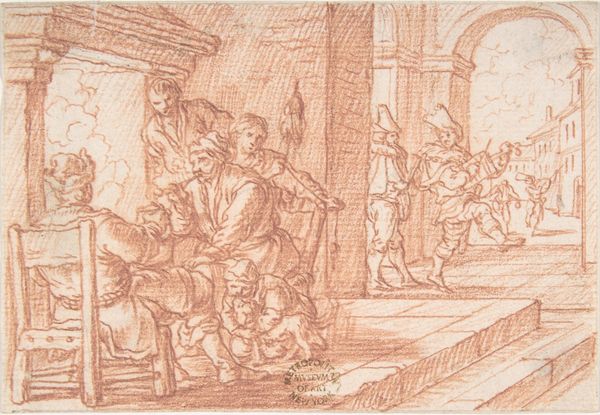
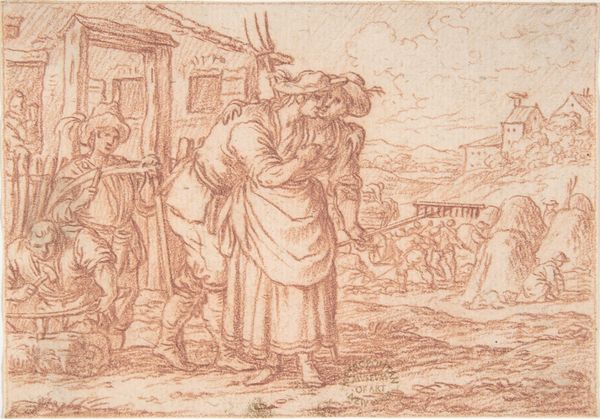
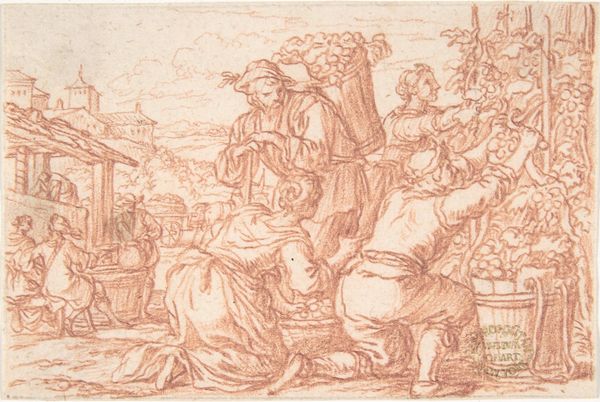
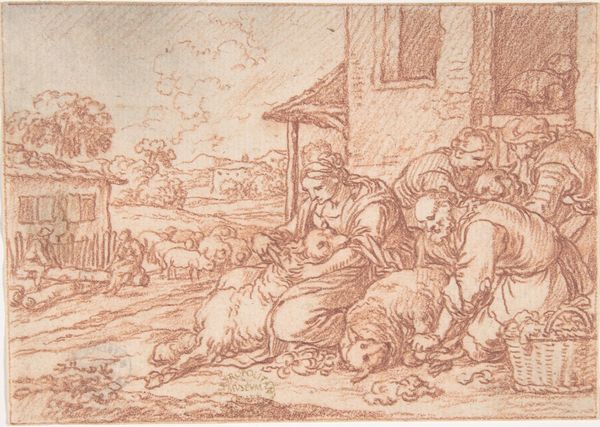
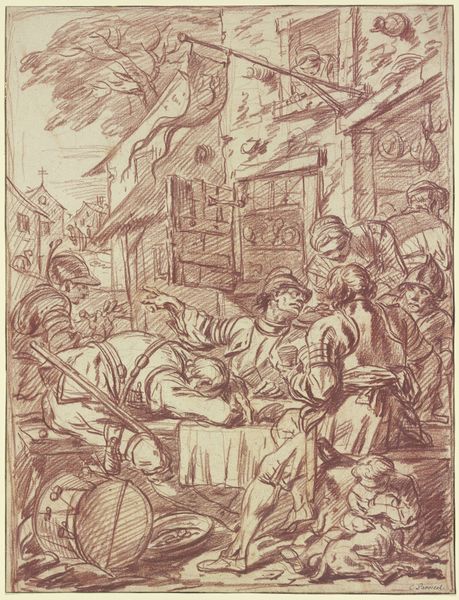
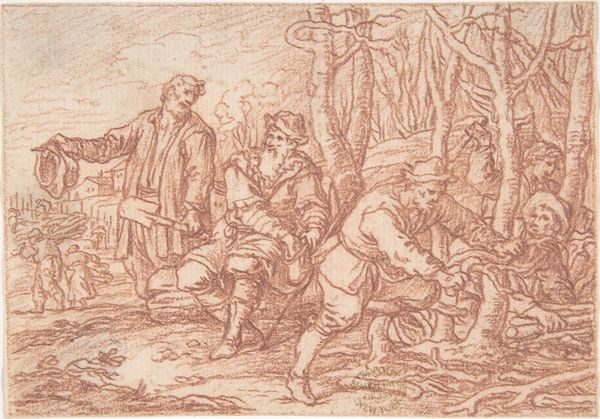
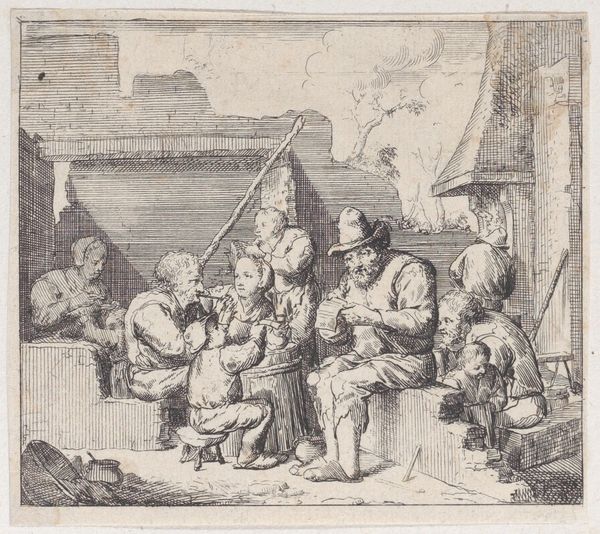
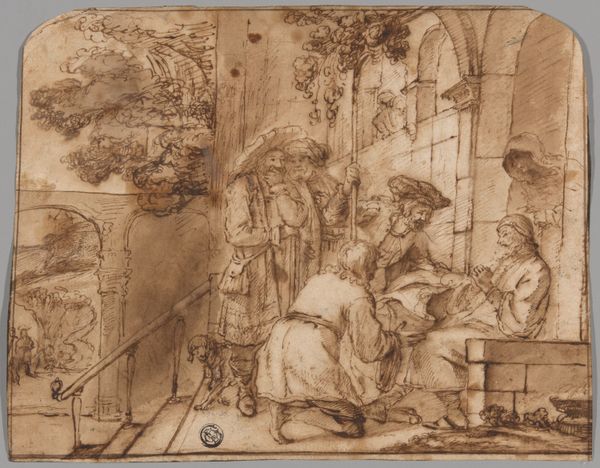
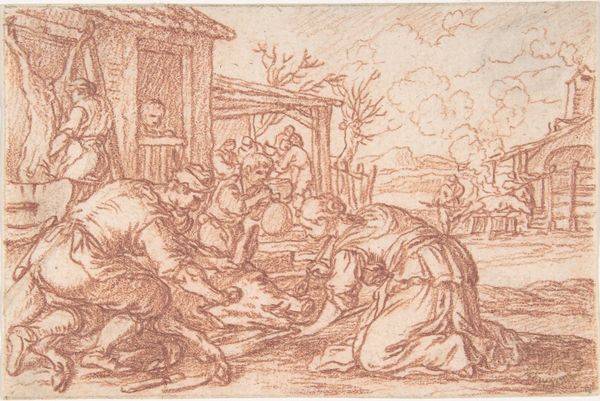
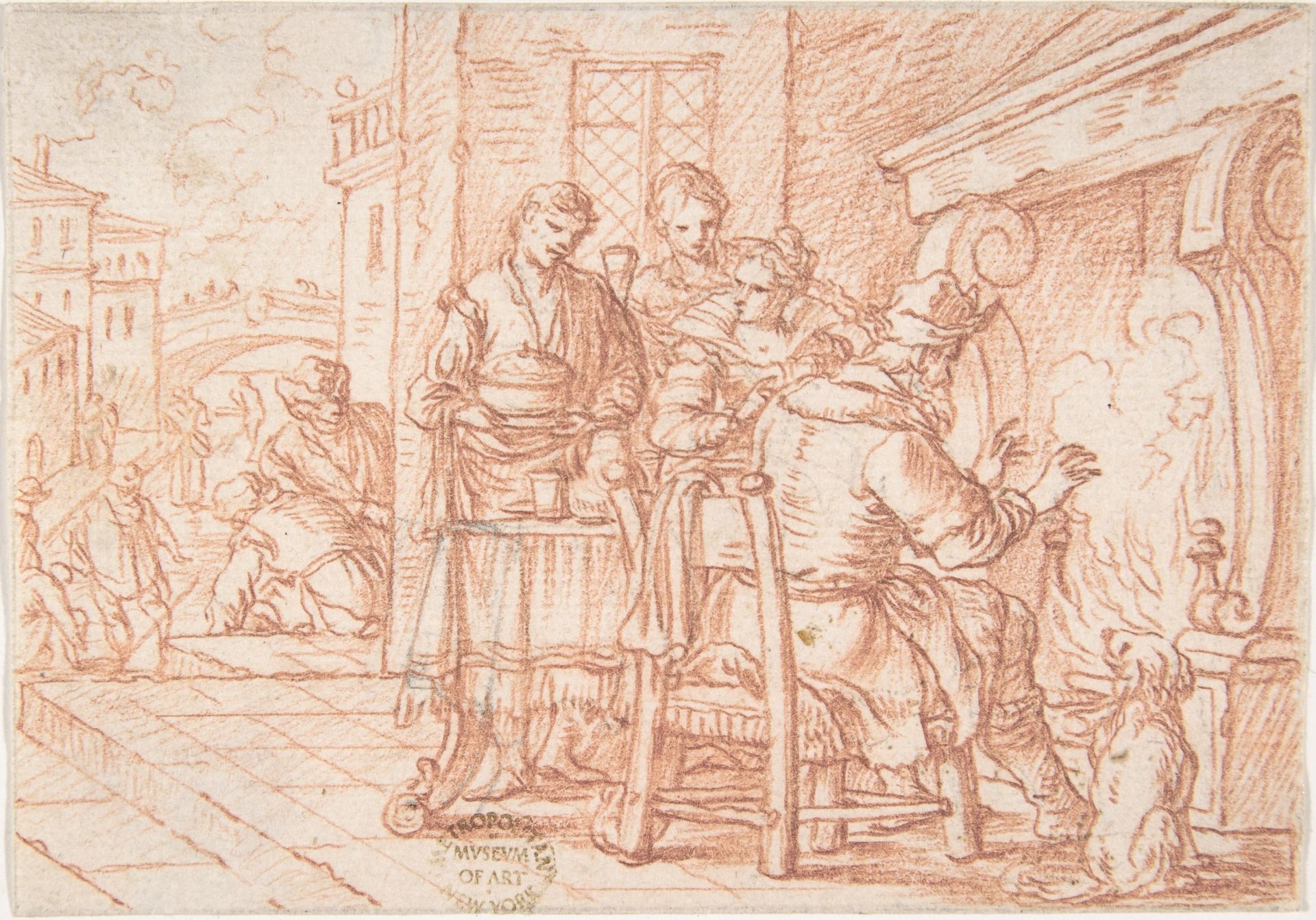
Jonas Umbach made this drawing, "January," as part of a series depicting the labors of the months. It’s created with red chalk, a material prized for its earthy tone and the velvety texture it can achieve on paper. Umbach uses the chalk to create a scene of warmth and conviviality, appropriate for the start of the new year. We see figures gathered for a meal, their forms rendered with quick, assured strokes that capture the play of light and shadow. The red chalk lends a sense of immediacy to the composition, making it feel as though we are witnessing a fleeting moment in time. The artist's skill is evident in the way he uses the chalk to suggest a range of textures, from the smooth surfaces of the tableware to the soft fur of the dog warming itself by the fire. The drawing speaks to a tradition of draftsmanship that valued both technical precision and expressive freedom. Ultimately, it bridges the gap between careful observation and the artist's own sensibility.
January (one of a series representing the labors of the months)
1690


Artwork details
- Medium
- drawing, print, etching
- Dimensions
- 3 5/16 x 4 3/4 in. (8.3 x 12.1 cm)
- Location
- Metropolitan Museum of Art, New York, NY
- Copyright
- Public Domain
Tags
Comments
Share your thoughts
About this artwork
Jonas Umbach made this drawing, "January," as part of a series depicting the labors of the months. It’s created with red chalk, a material prized for its earthy tone and the velvety texture it can achieve on paper. Umbach uses the chalk to create a scene of warmth and conviviality, appropriate for the start of the new year. We see figures gathered for a meal, their forms rendered with quick, assured strokes that capture the play of light and shadow. The red chalk lends a sense of immediacy to the composition, making it feel as though we are witnessing a fleeting moment in time. The artist's skill is evident in the way he uses the chalk to suggest a range of textures, from the smooth surfaces of the tableware to the soft fur of the dog warming itself by the fire. The drawing speaks to a tradition of draftsmanship that valued both technical precision and expressive freedom. Ultimately, it bridges the gap between careful observation and the artist's own sensibility.
Comments
Share your thoughts