1640
Salt


Listen to curator's interpretation
Curatorial notes
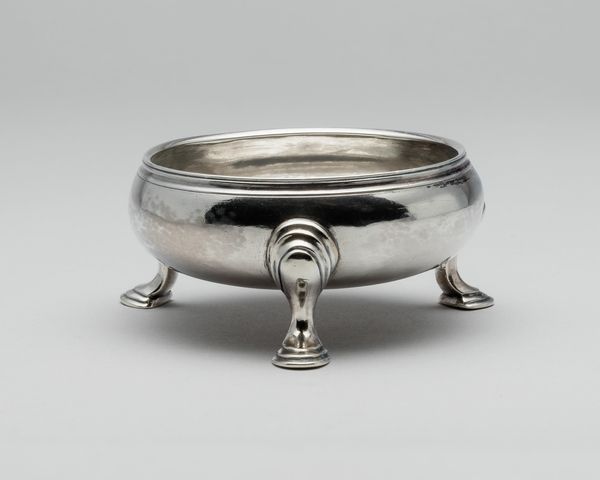
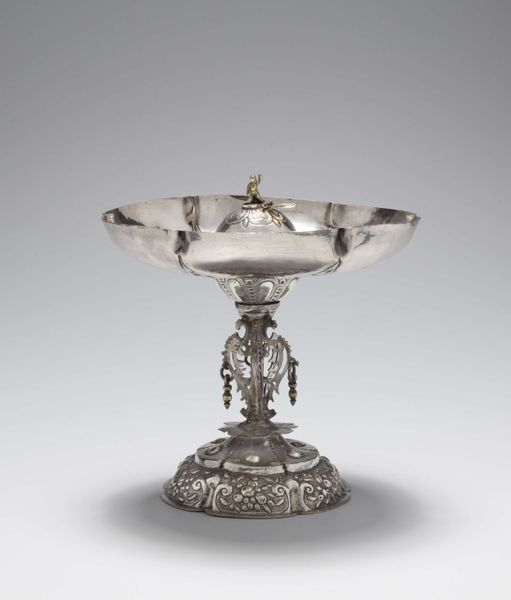
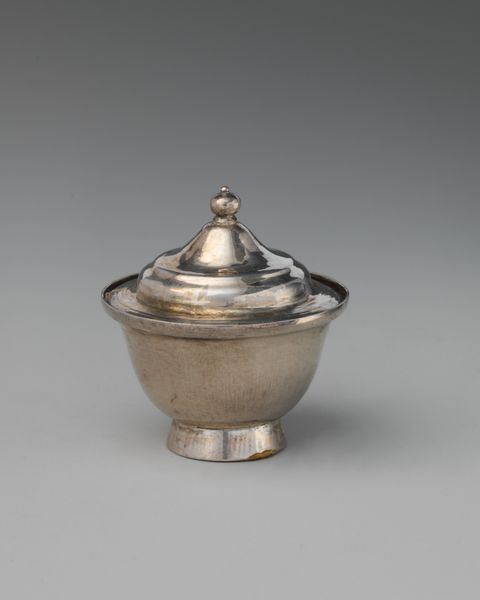
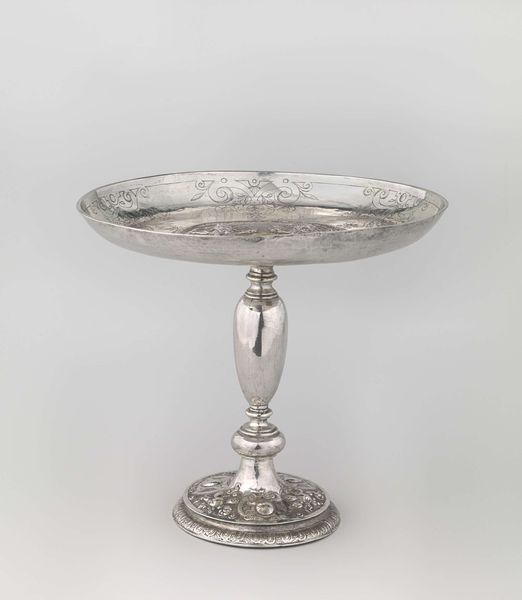
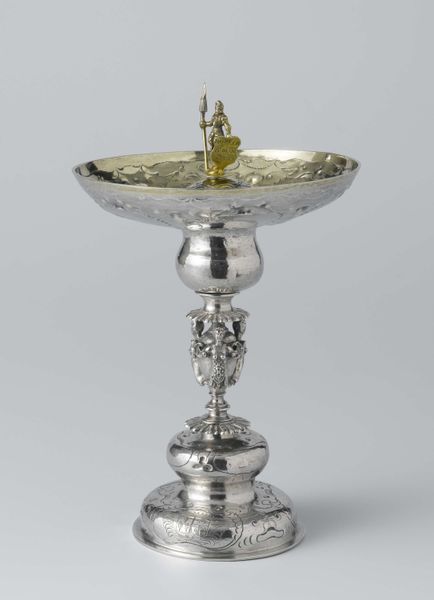
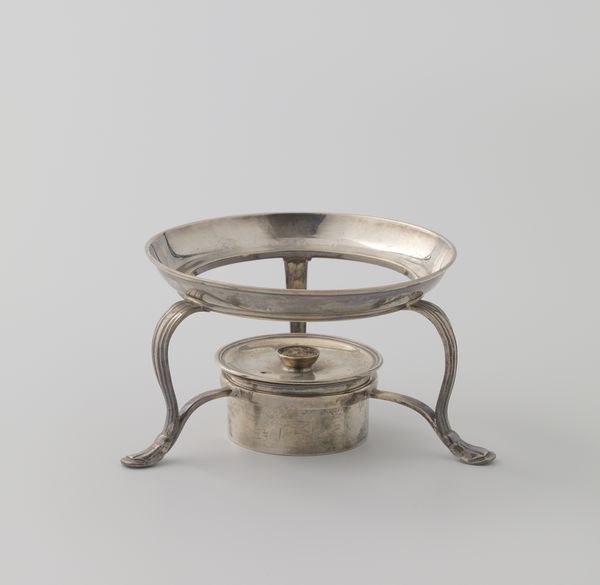
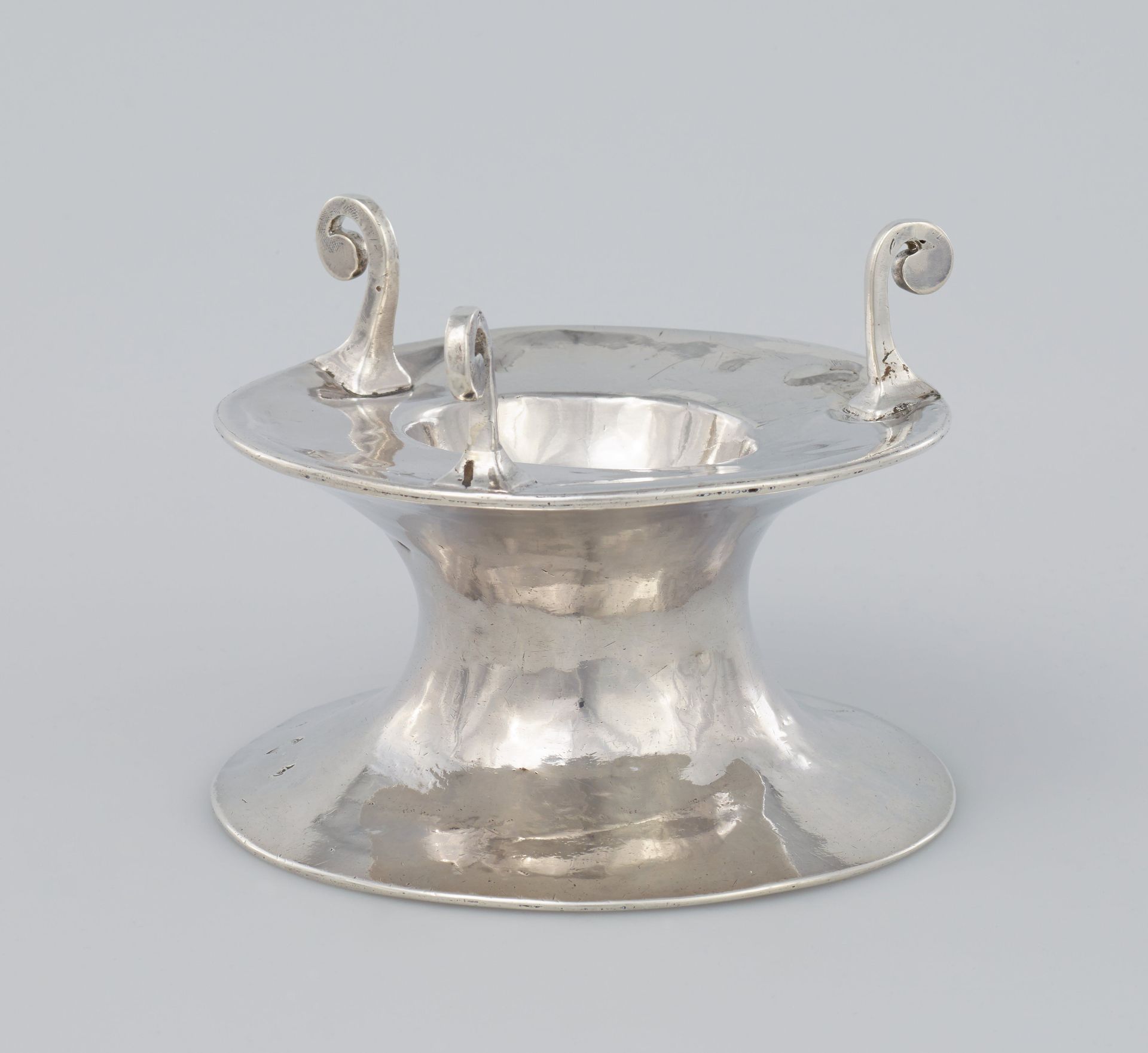
Curator: Welcome. We're looking at "Salt," a baroque silver sculpture, created around 1640 by George Gallant. You can currently find it here at the Minneapolis Institute of Art. Editor: Oh, this is so incredibly tactile. It’s calling out to be touched! The cool, smooth silver, the rounded form, I imagine it’s quite substantial. It reminds me of something from a fairy tale feast. Curator: Salt cellars such as these were very important objects during the 17th century. In examining its baroque silver materiality we can see how precious this sculpture really was back in the day, and how much access the commissioner had to valuable raw materials. Its function also reinforces this idea: in the 1640's salt wasn't as cheap as it is now. Editor: Yes! Salt, life, the sea... It feels simultaneously grounded and otherworldly. It's so simple and elemental in form; this vessel containing the most basic need… it transcends pure function somehow. I keep thinking about the hands that have reached for salt from this vessel over centuries. Curator: It does beg questions of craftsmanship and class. Who would have had the means to not only afford the salt, but a vessel of such quality to contain it? It certainly wasn't meant for the masses, and yet the very people who were involved in the production of salt most likely never were able to eat from such a luxurious and precious object. It becomes a focal point when examining modes of production and consumption. Editor: You're absolutely right to point that out. There's a bittersweetness to acknowledging that disparity. Still, I can’t help but be enchanted by its simple elegance, despite its socio-economic implications! What an object, truly. Curator: It's these intersections that make objects like these compelling to analyze and observe in modern museums. Its very preciousness is exactly what made it so relevant and important. Editor: Well, I'm thankful that it survived through the centuries for us to experience.