About this artwork
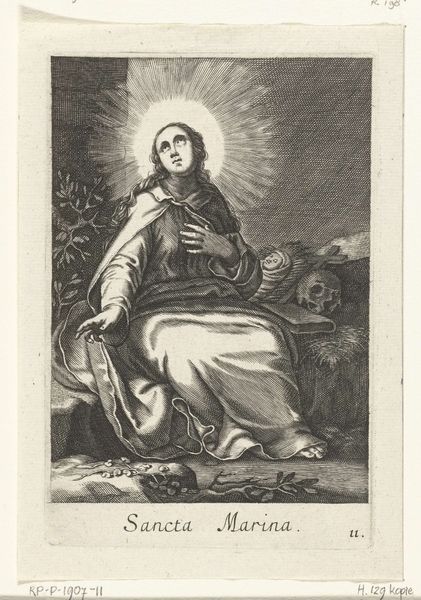
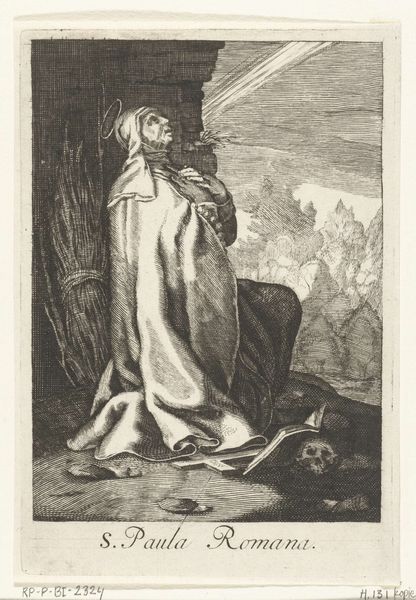
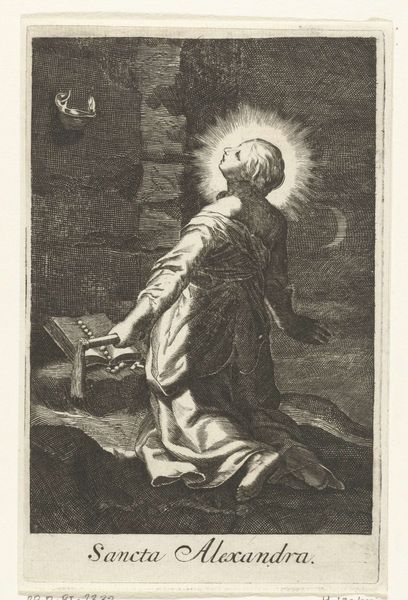
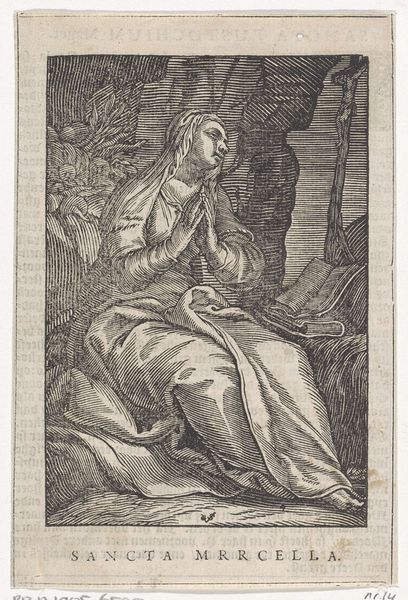
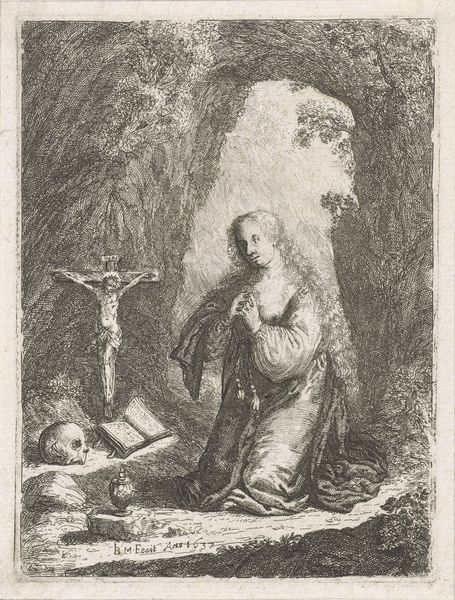
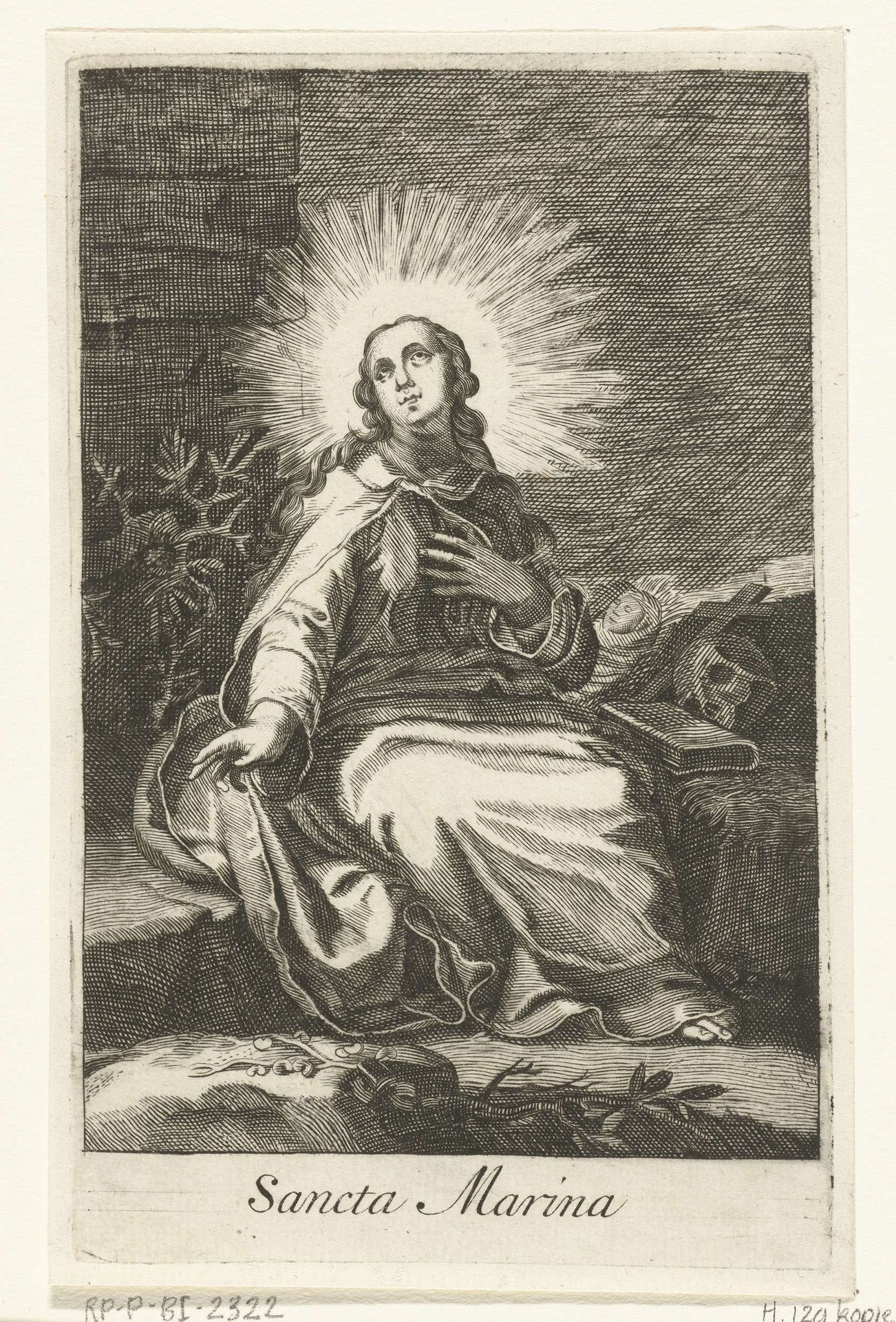
Editor: This engraving, "Heilige Marina van Alexandrië als kluizenares," by an anonymous artist from around 1590-1662, depicts Saint Marina. The stark contrast between light and shadow really captures the gravity of the saint's devotion. What elements stand out to you? Curator: Considering it's an engraving, the labor and skill invested in physically creating those lines to generate tonal value is really quite remarkable. Also, notice how the artist depicts her not as a queen who rejects marriage, but as a worker who withdraws to create. Her devotional practice and life of prayer were, at their essence, a kind of skilled, spiritual labor. Editor: That's interesting, I never considered it that way! The inclusion of the skull is quite vanitas though. Does the means of producing prints change how we consider Baroque art? Curator: Absolutely. Engravings made art accessible beyond the wealthy elite. Think of the materiality of the print itself – paper, ink, the metal plate used for engraving. These materials, the product of labour, facilitated a wider dissemination of religious and moral narratives, influencing social values. Consider also where such a print may have been hung, for whom, and how that may reflect values in consumption? Editor: So it's not just about the image itself, but the physical process of making it that gives it meaning. And, its context. The economics! Curator: Precisely. The very act of reproducing this image connects artistic expression to the machinery of its time and opens opportunities for interpretations far beyond devotion, particularly surrounding production and material consumption. Editor: I'll definitely be thinking about prints differently now! The engraving process as labor is not something I’d considered before. Curator: It challenges us to reconsider traditional definitions of art and artistic skill itself, doesn't it?
Heilige Marina van Alexandrië als kluizenares
1590 - 1662

Anonymous
@anonymousLocation
RijksmuseumArtwork details
- Medium
- print, engraving
- Dimensions
- height 160 mm, width 100 mm
- Location
- Rijksmuseum
- Copyright
- Rijks Museum: Open Domain
Tags
Comments
Share your thoughts
About this artwork
Editor: This engraving, "Heilige Marina van Alexandrië als kluizenares," by an anonymous artist from around 1590-1662, depicts Saint Marina. The stark contrast between light and shadow really captures the gravity of the saint's devotion. What elements stand out to you? Curator: Considering it's an engraving, the labor and skill invested in physically creating those lines to generate tonal value is really quite remarkable. Also, notice how the artist depicts her not as a queen who rejects marriage, but as a worker who withdraws to create. Her devotional practice and life of prayer were, at their essence, a kind of skilled, spiritual labor. Editor: That's interesting, I never considered it that way! The inclusion of the skull is quite vanitas though. Does the means of producing prints change how we consider Baroque art? Curator: Absolutely. Engravings made art accessible beyond the wealthy elite. Think of the materiality of the print itself – paper, ink, the metal plate used for engraving. These materials, the product of labour, facilitated a wider dissemination of religious and moral narratives, influencing social values. Consider also where such a print may have been hung, for whom, and how that may reflect values in consumption? Editor: So it's not just about the image itself, but the physical process of making it that gives it meaning. And, its context. The economics! Curator: Precisely. The very act of reproducing this image connects artistic expression to the machinery of its time and opens opportunities for interpretations far beyond devotion, particularly surrounding production and material consumption. Editor: I'll definitely be thinking about prints differently now! The engraving process as labor is not something I’d considered before. Curator: It challenges us to reconsider traditional definitions of art and artistic skill itself, doesn't it?
Comments
Share your thoughts