About this artwork
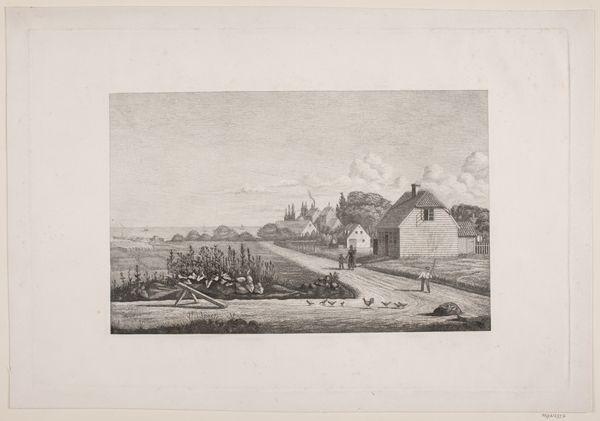
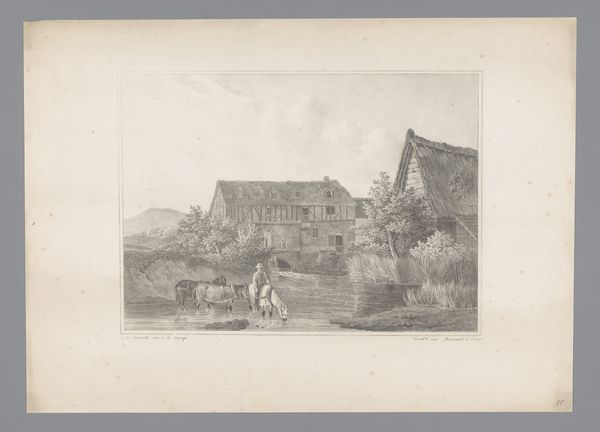
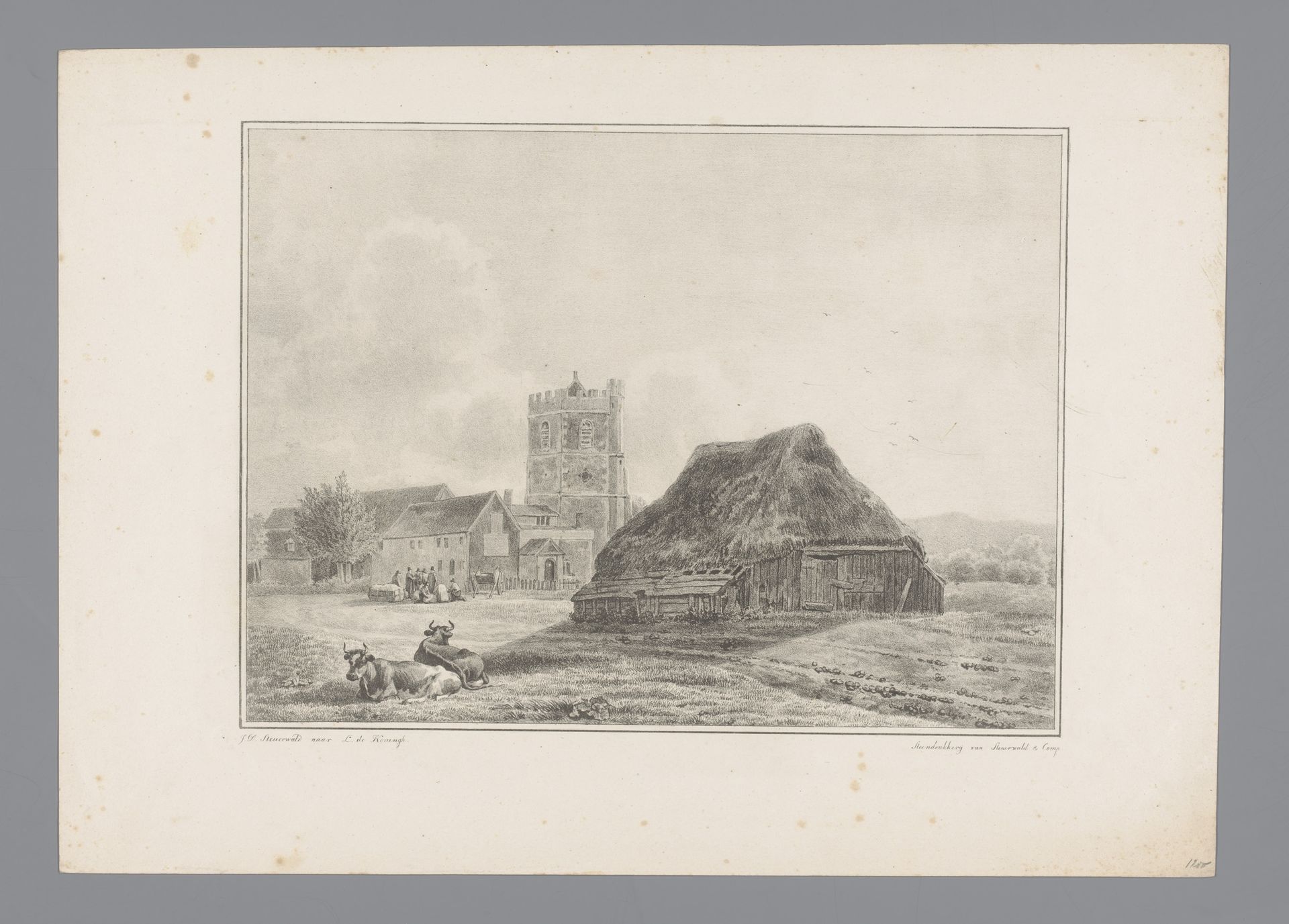
Editor: This drawing, "Cows by a farmhouse" by Jan Dam Steuerwald, made in 1826 using pencil on paper, evokes a quiet rural life. What really strikes me is the detail in the thatched roof. How do you read this piece? Curator: Let's consider the means of production. Pencil on paper places this work firmly within a specific socio-economic bracket – access to materials, leisure time. Note how the drawing meticulously captures the textures of the thatch, the rough-hewn timber of the barn, even the individual hairs on the cows. This wasn't simply about depicting a picturesque scene. Editor: So, it's not just about romanticizing the countryside? Curator: Precisely. It's also about a close observation and documentation of the agricultural processes and material conditions of rural life. Look at how the building dominates the foreground – that raw materiality shapes the entire composition, reducing the Church in the background to secondary. We must consider not only *what* is being represented but also *how* those things are being made. Does the emphasis on craft and materiality elevate the subject matter? What’s the meaning here? Editor: I see what you mean. It makes me consider who was using these raw materials to produce what we see in the drawing, as well as what the finished product means. I didn’t initially think about the social context and its connection to the art-making process, thanks. Curator: That's the core of it. By attending to the material details, we move beyond simply appreciating beauty to interrogating the systems and structures that enable its creation.

Artwork details
- Medium
- drawing, paper, pencil
- Dimensions
- height 314 mm, width 438 mm
- Location
- Rijksmuseum
- Copyright
- Rijks Museum: Open Domain
Tags
Comments
Share your thoughts
About this artwork
Editor: This drawing, "Cows by a farmhouse" by Jan Dam Steuerwald, made in 1826 using pencil on paper, evokes a quiet rural life. What really strikes me is the detail in the thatched roof. How do you read this piece? Curator: Let's consider the means of production. Pencil on paper places this work firmly within a specific socio-economic bracket – access to materials, leisure time. Note how the drawing meticulously captures the textures of the thatch, the rough-hewn timber of the barn, even the individual hairs on the cows. This wasn't simply about depicting a picturesque scene. Editor: So, it's not just about romanticizing the countryside? Curator: Precisely. It's also about a close observation and documentation of the agricultural processes and material conditions of rural life. Look at how the building dominates the foreground – that raw materiality shapes the entire composition, reducing the Church in the background to secondary. We must consider not only *what* is being represented but also *how* those things are being made. Does the emphasis on craft and materiality elevate the subject matter? What’s the meaning here? Editor: I see what you mean. It makes me consider who was using these raw materials to produce what we see in the drawing, as well as what the finished product means. I didn’t initially think about the social context and its connection to the art-making process, thanks. Curator: That's the core of it. By attending to the material details, we move beyond simply appreciating beauty to interrogating the systems and structures that enable its creation.
Comments
Share your thoughts