1865
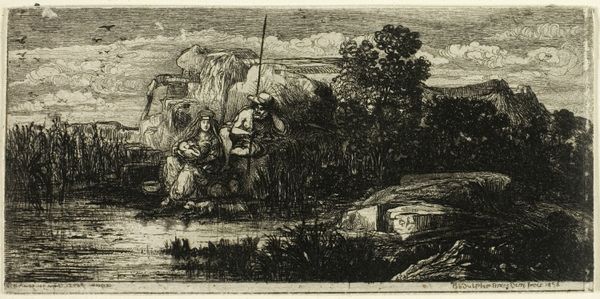
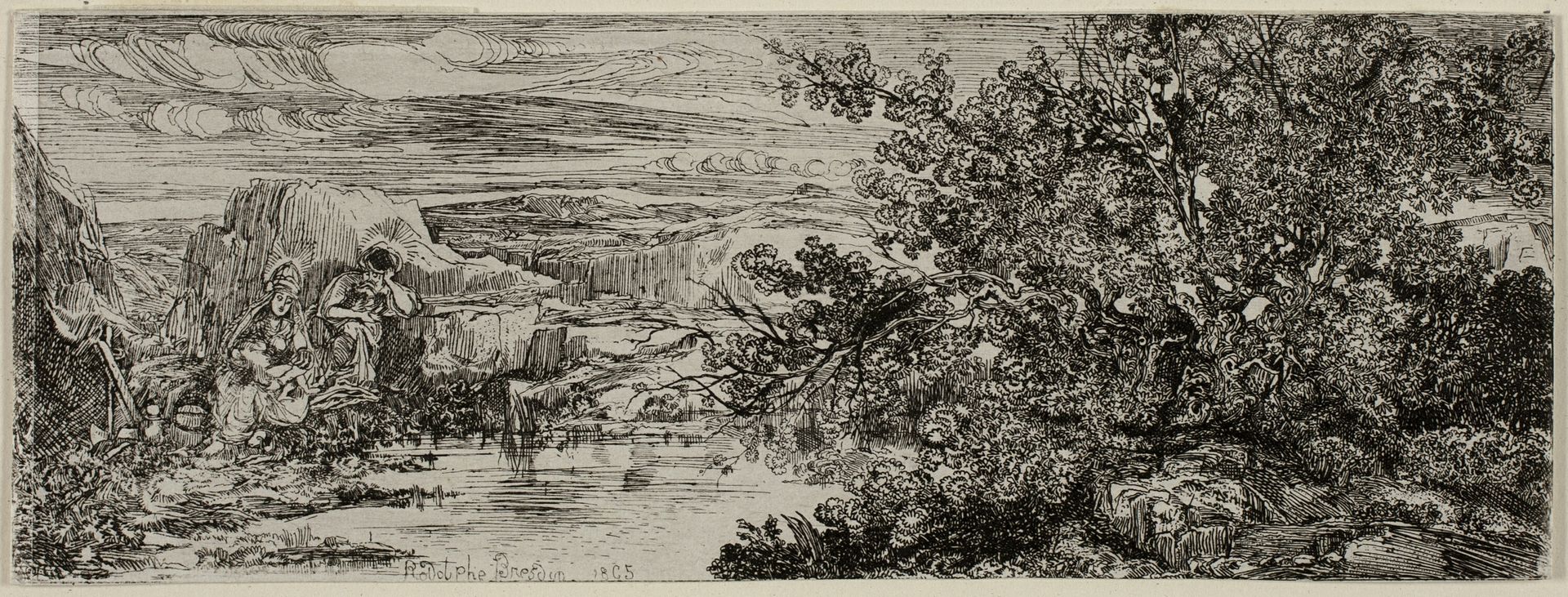
The Holy Family beside a Pool


Listen to curator's interpretation
Curatorial notes
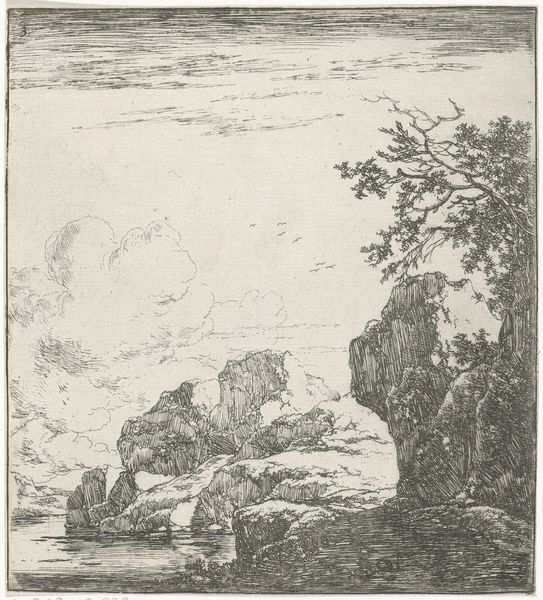
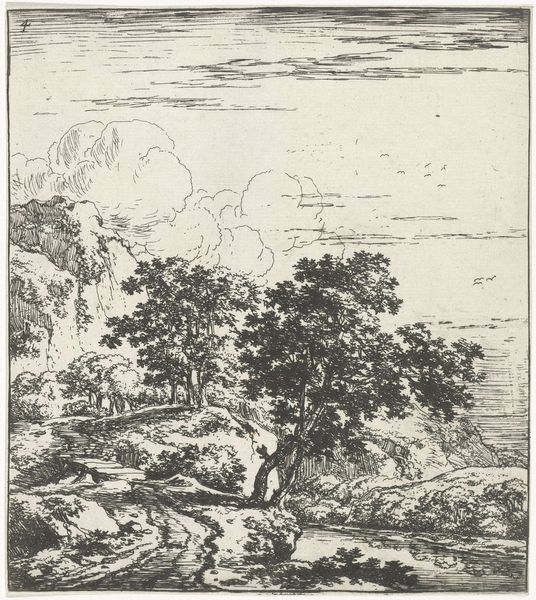
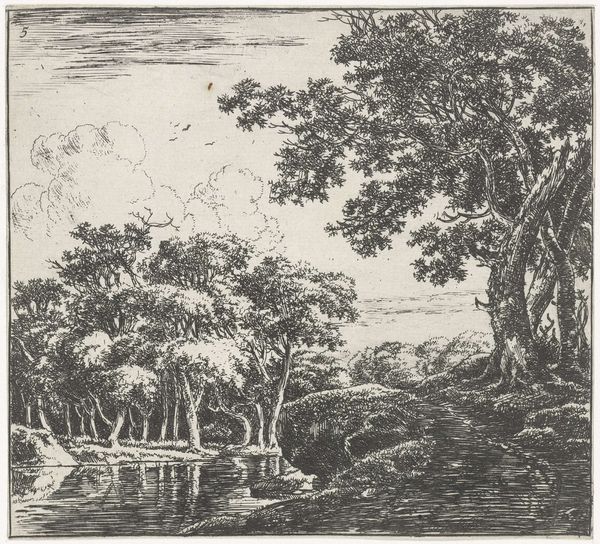
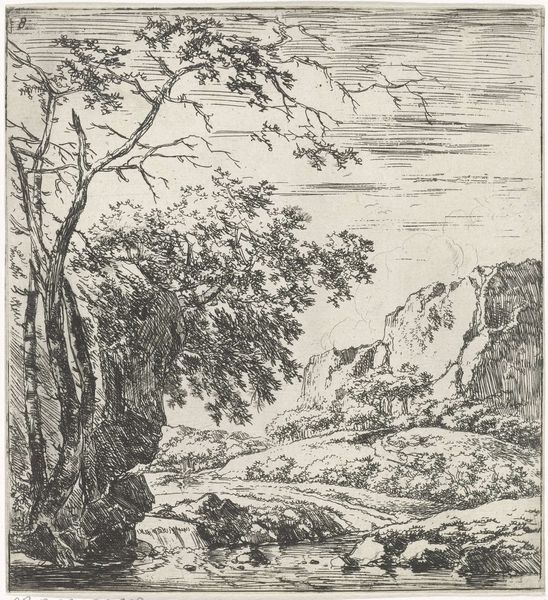
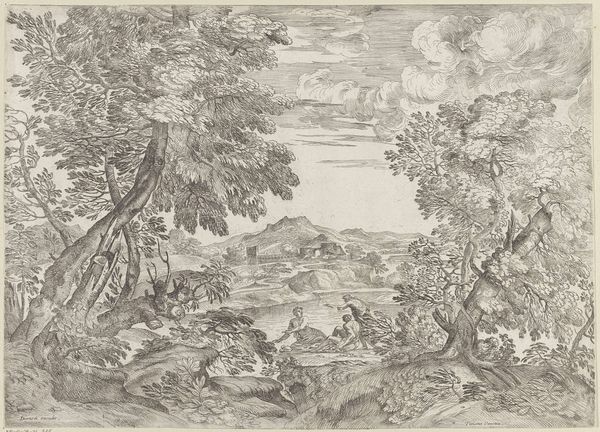
Editor: We're looking at "The Holy Family beside a Pool," an etching made with ink on paper, crafted in 1865 by Rodolphe Bresdin. It's incredibly detailed, almost dreamlike, but with a somber, heavy mood. How do you even begin to interpret such a piece? Curator: Begin, perhaps, by plunging in, just as those lines plunge into the paper to create Bresdin's vision. He was, shall we say, a rather eccentric fellow, utterly devoted to his craft, a master of detail bordering on obsessive. Note how he transforms a religious scene into something almost fantastical, more rooted in a wild, inner landscape than any earthly vista. Do you feel that pull, that sense of a private world revealed? Editor: I do. The density of the lines… it’s almost overwhelming. I’m drawn to the contrast between the detailed foreground and the hazy background, makes the figures feel isolated. Curator: Precisely! And consider this: Bresdin struggled financially his entire life. Some scholars have argued his frantic level of detail was a way to justify his work, each etching representing a tremendous labor. Maybe even, dare I say, an attempt to capture something fleeting and precious before it disappeared altogether. Does knowing that shift your perspective? Editor: Definitely. It adds another layer, a personal desperation within this holy scene. Almost makes it tragic, in a way. Curator: Tragic, yes, but also beautiful. It's the kind of beauty found only when life's hardships are transformed by art into something…eternal. He's one of my heroes. Editor: I can see why. It makes me want to spend so much more time with the piece, chasing those details. Thanks for this lens!