About this artwork
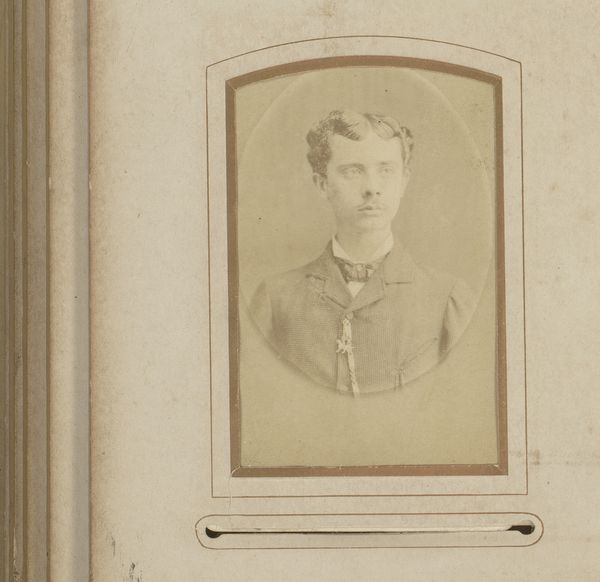
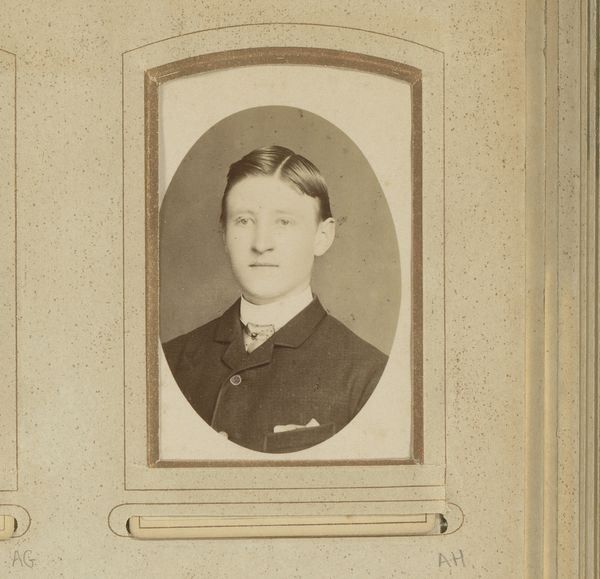
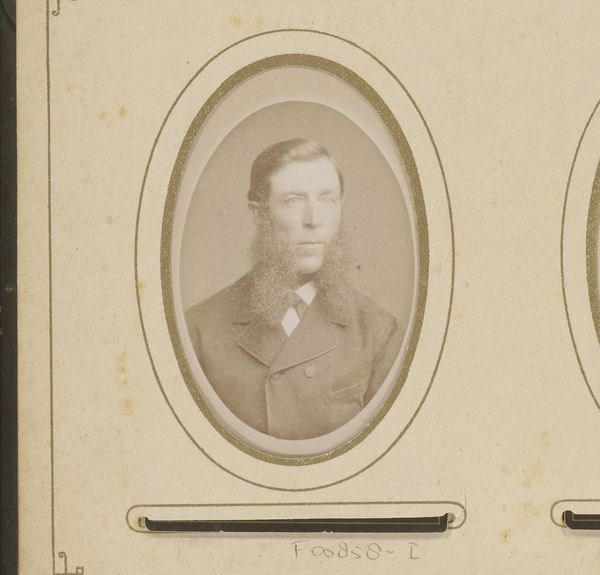
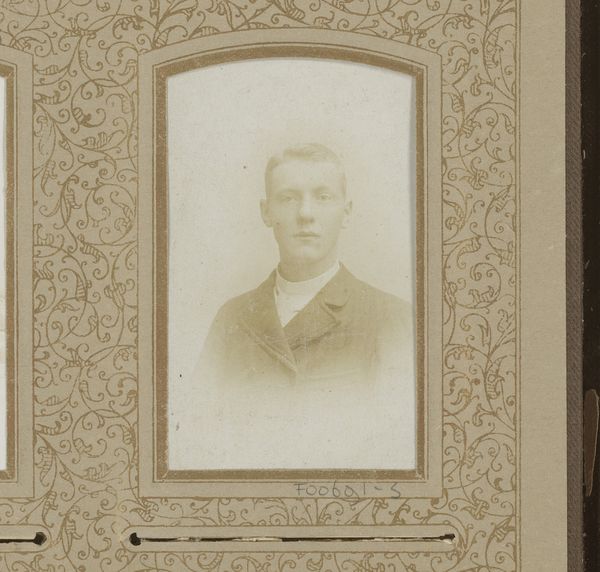
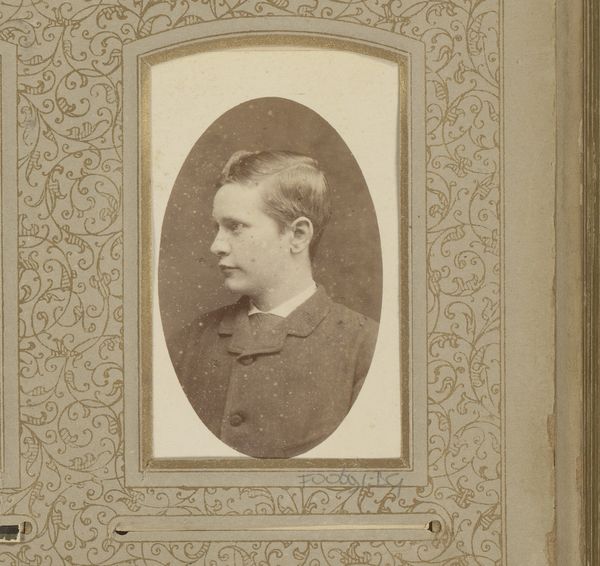
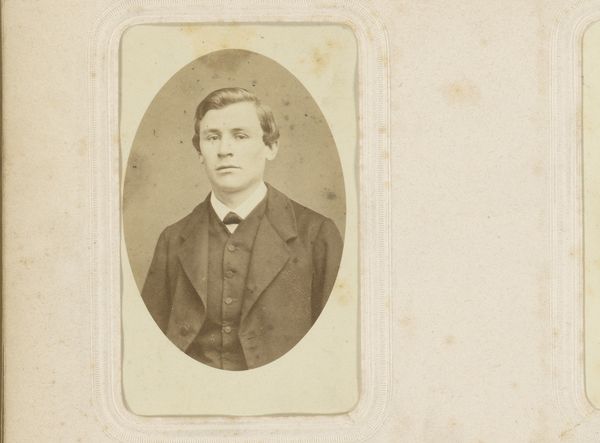
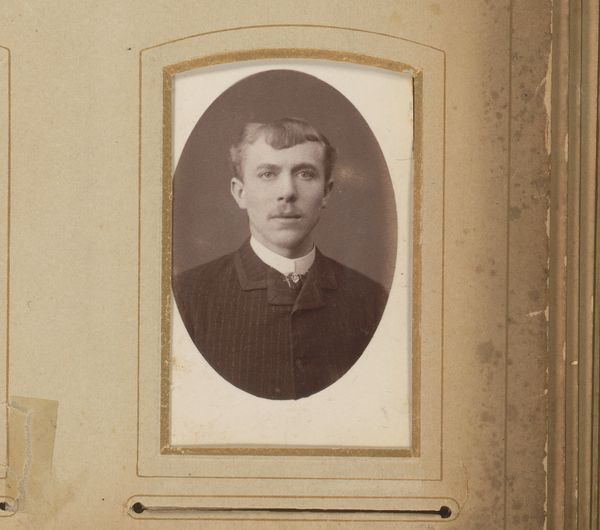
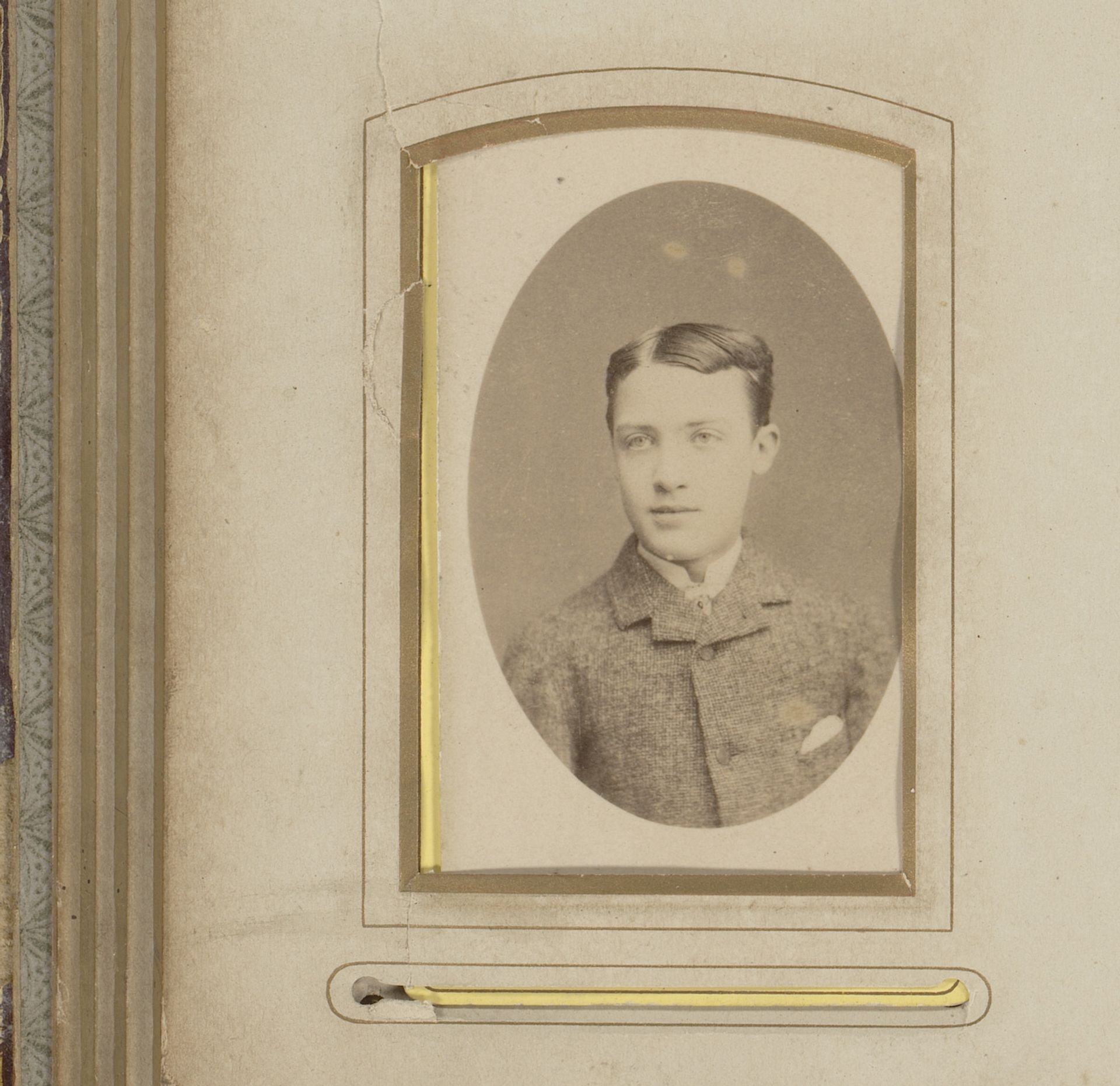
Curator: Let's discuss this captivating portrait of a young man, attributed to Cornand et Cie, crafted between 1878 and 1886. It’s a gelatin silver print. What’s your initial impression? Editor: Stark. The framing contributes; it gives the subject such a constrained appearance. An oval within a rectangle—very geometric. It emphasizes the constructed nature of representation. Curator: Indeed. Consider the textures within the image itself. The subtle weave of his jacket contrasts with the smooth planes of his face, creating a visual depth that moves beyond simple representation. These formal arrangements are meticulously constructed. Editor: I see that, and I can't help but think about the cultural weight such portraits carried. This image, presented within the context of burgeoning industrialization and a growing middle class, signals status and aspirations. These weren't just photographs, but social declarations, placed meticulously within albums and homes. Curator: The meticulous arrangement speaks to the semiotics of the gaze. Note how his direct eye contact implicates the viewer, demanding attention. His expression suggests seriousness. Do you feel a specific emotion resonates? Editor: There’s a trace of melancholy in his eyes. It resonates beyond mere representation; it offers a suggestion of an inner world. Curator: The gray tones enhance this mood. I focus particularly on tonal contrasts, revealing the essence of photographic art. The almost ethereal quality of light as it strikes his face… Editor: And isn't this tonal manipulation further tied to the Victorian obsession with mourning, the documentation of loss and life’s transitions. Photography offered a potent medium to contend with mortality, capturing a fleeting present for future remembrance. Curator: Precisely. Considering it now, I find this photograph revealing a compelling interaction between the subjective experience and its objectification. Editor: Agreed. These enduring traces continue to stimulate dialogues on what we choose to reveal about ourselves for posterity.

Artwork details
- Medium
- photography, gelatin-silver-print
- Dimensions
- height 82 mm, width 53 mm
- Copyright
- Rijks Museum: Open Domain
Tags
portrait
16_19th-century
photography
gelatin-silver-print
Comments
No comments
About this artwork
Curator: Let's discuss this captivating portrait of a young man, attributed to Cornand et Cie, crafted between 1878 and 1886. It’s a gelatin silver print. What’s your initial impression? Editor: Stark. The framing contributes; it gives the subject such a constrained appearance. An oval within a rectangle—very geometric. It emphasizes the constructed nature of representation. Curator: Indeed. Consider the textures within the image itself. The subtle weave of his jacket contrasts with the smooth planes of his face, creating a visual depth that moves beyond simple representation. These formal arrangements are meticulously constructed. Editor: I see that, and I can't help but think about the cultural weight such portraits carried. This image, presented within the context of burgeoning industrialization and a growing middle class, signals status and aspirations. These weren't just photographs, but social declarations, placed meticulously within albums and homes. Curator: The meticulous arrangement speaks to the semiotics of the gaze. Note how his direct eye contact implicates the viewer, demanding attention. His expression suggests seriousness. Do you feel a specific emotion resonates? Editor: There’s a trace of melancholy in his eyes. It resonates beyond mere representation; it offers a suggestion of an inner world. Curator: The gray tones enhance this mood. I focus particularly on tonal contrasts, revealing the essence of photographic art. The almost ethereal quality of light as it strikes his face… Editor: And isn't this tonal manipulation further tied to the Victorian obsession with mourning, the documentation of loss and life’s transitions. Photography offered a potent medium to contend with mortality, capturing a fleeting present for future remembrance. Curator: Precisely. Considering it now, I find this photograph revealing a compelling interaction between the subjective experience and its objectification. Editor: Agreed. These enduring traces continue to stimulate dialogues on what we choose to reveal about ourselves for posterity.
Comments
No comments