About this artwork
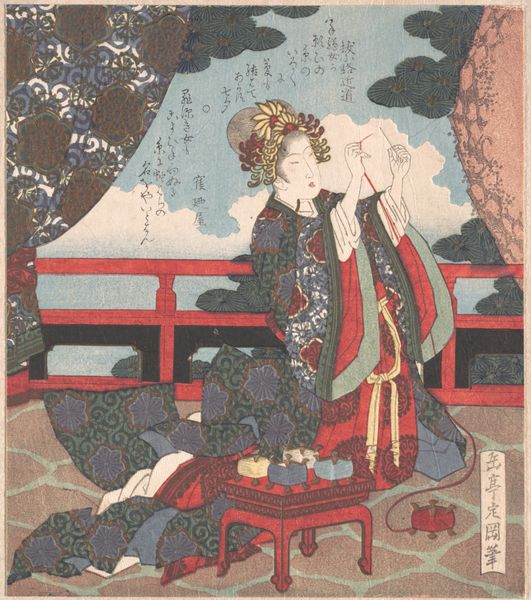
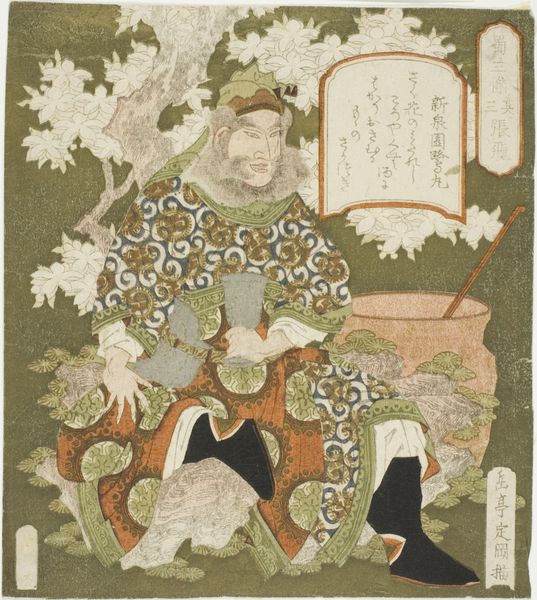
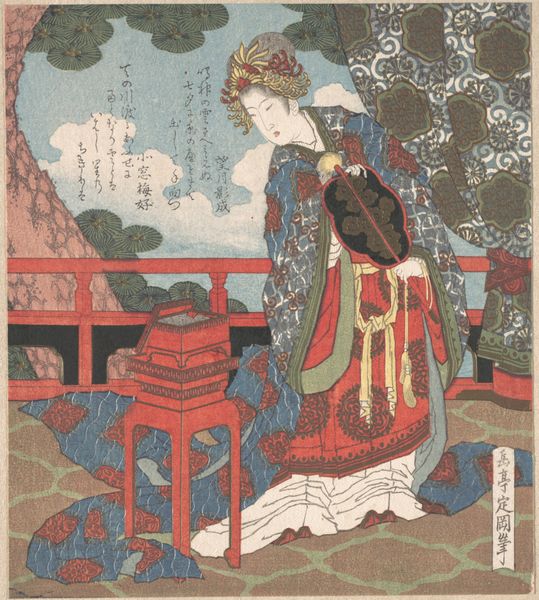
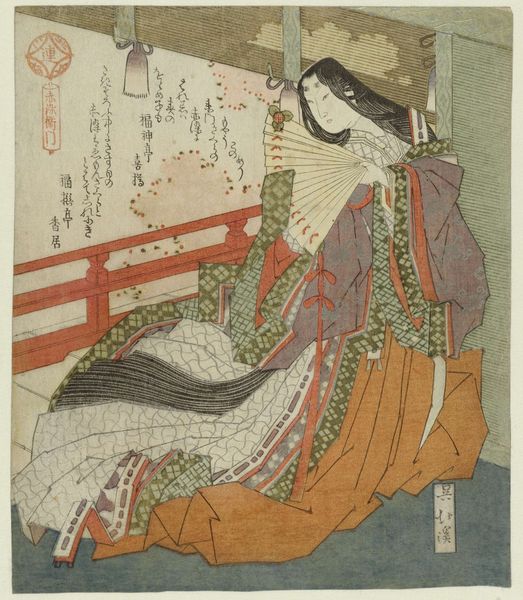
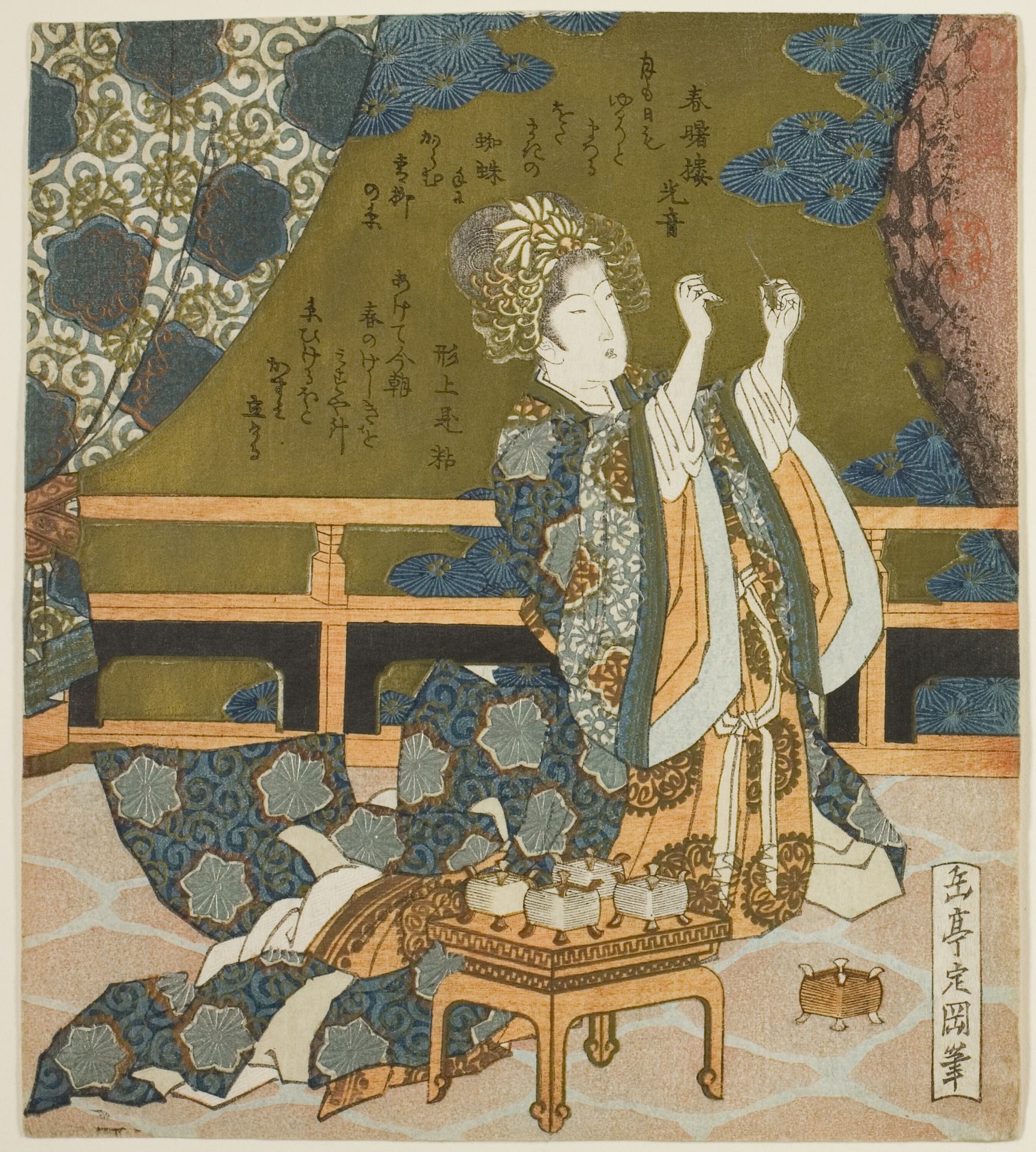
This color woodblock print by Yashima Gakutei captures two women meticulously examining a thread, and a spider’s web held within a box. In Japanese art, such scenes often symbolize the transient nature of beauty and the delicate balance of life. Consider the spider's web: a potent symbol across cultures. In many traditions, including ancient Greece, the spider is a creator, weaving the very fabric of existence. Yet, it also represents fragility, as a single touch can destroy its intricate creation, reflecting our own vulnerabilities. The act of examining the thread echoes the classical motif of Ariadne, who provided Theseus with a thread to escape the labyrinth. Here, it reflects a psychological quest to navigate the complexities of fate. Notice how the ephemeral quality of the web and thread, poised between creation and destruction, engages us on a deep, subconscious level. This visual language transcends time, resurfacing in various forms, and reminding us of the cyclical nature of existence and the enduring power of human emotions.
Two Chinese Women Examining Thread and a Spider’s Web in a Box, from the series "Diptych for the Drum Group"
c. 1824


Artwork details
- Medium
- print, woodblock-print
- Dimensions
- 21.3 × 19.0 cm
- Location
- The Art Institute of Chicago
- Copyright
- Public Domain
Tags
Comments
Share your thoughts
About this artwork
This color woodblock print by Yashima Gakutei captures two women meticulously examining a thread, and a spider’s web held within a box. In Japanese art, such scenes often symbolize the transient nature of beauty and the delicate balance of life. Consider the spider's web: a potent symbol across cultures. In many traditions, including ancient Greece, the spider is a creator, weaving the very fabric of existence. Yet, it also represents fragility, as a single touch can destroy its intricate creation, reflecting our own vulnerabilities. The act of examining the thread echoes the classical motif of Ariadne, who provided Theseus with a thread to escape the labyrinth. Here, it reflects a psychological quest to navigate the complexities of fate. Notice how the ephemeral quality of the web and thread, poised between creation and destruction, engages us on a deep, subconscious level. This visual language transcends time, resurfacing in various forms, and reminding us of the cyclical nature of existence and the enduring power of human emotions.
Comments
Share your thoughts