About this artwork
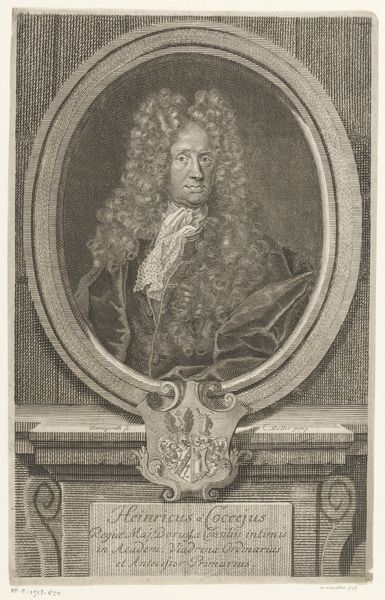
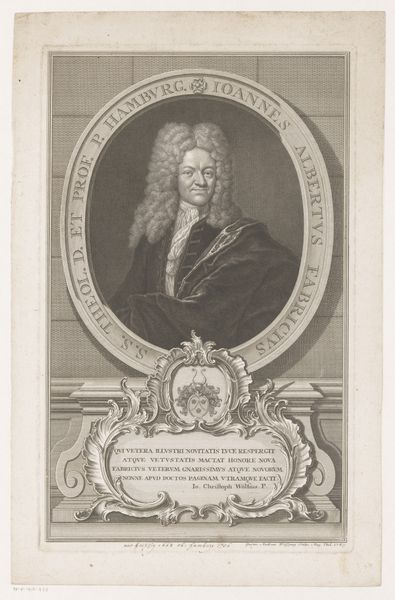
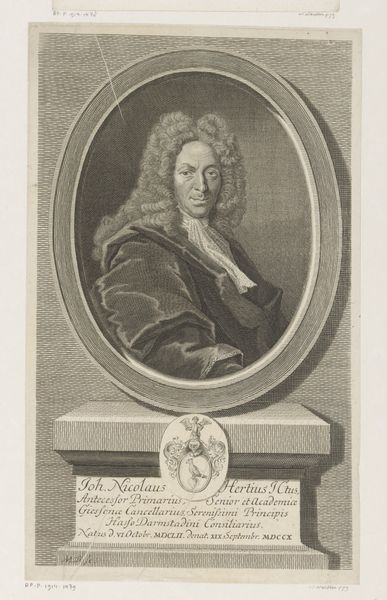
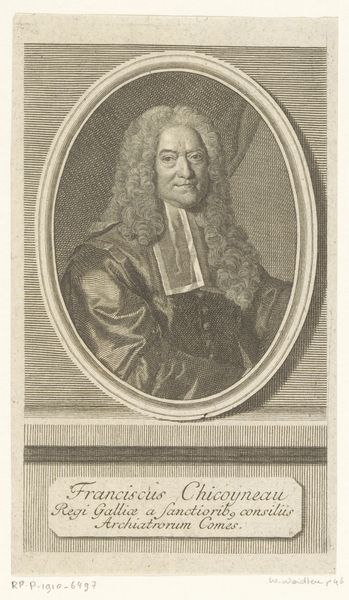
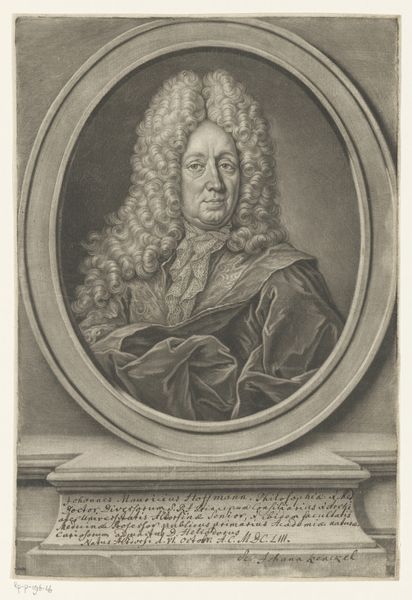
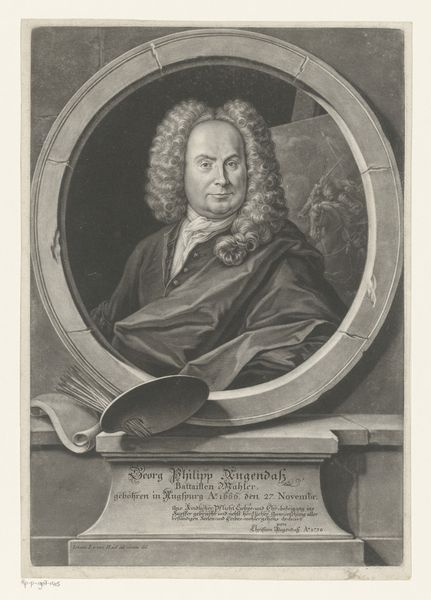
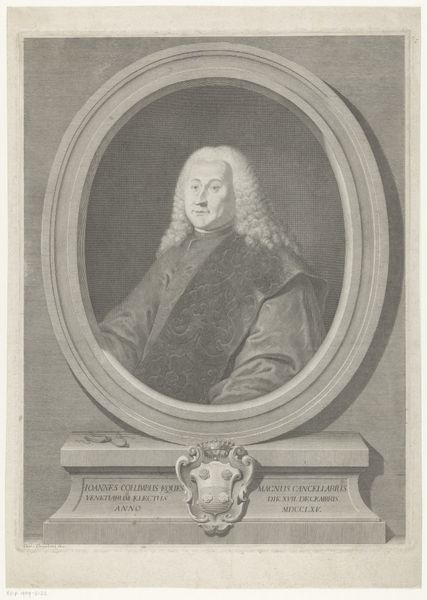
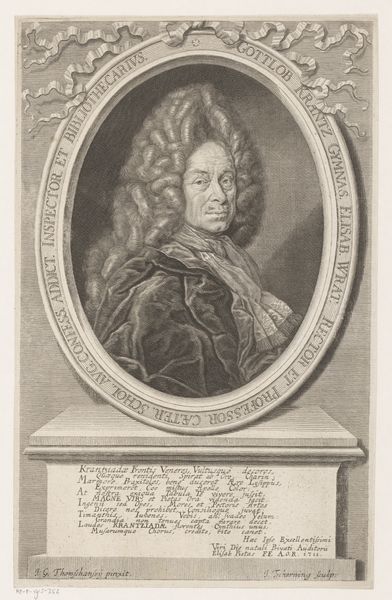
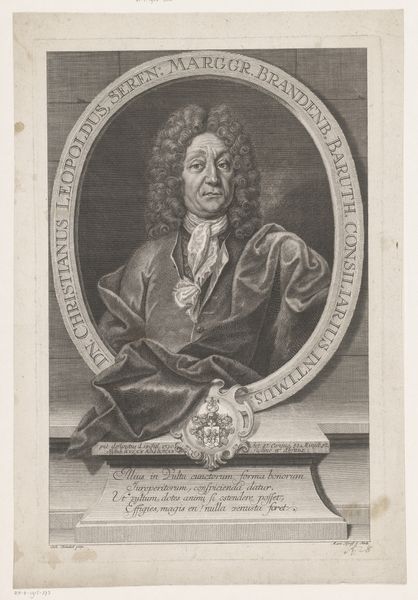
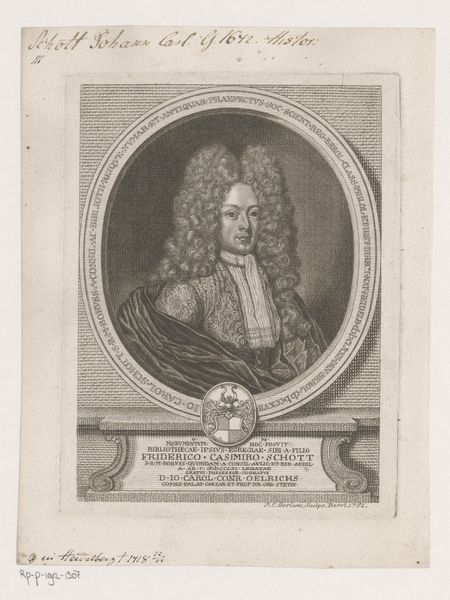
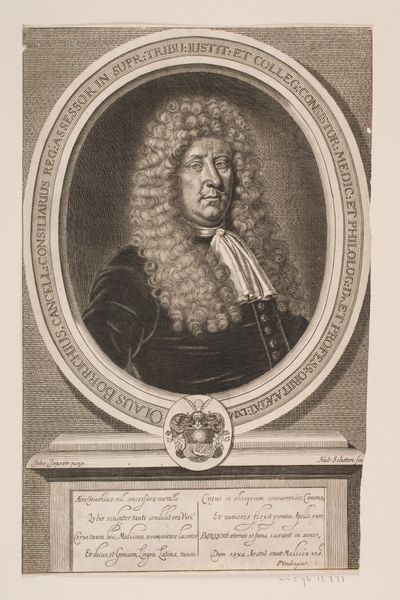
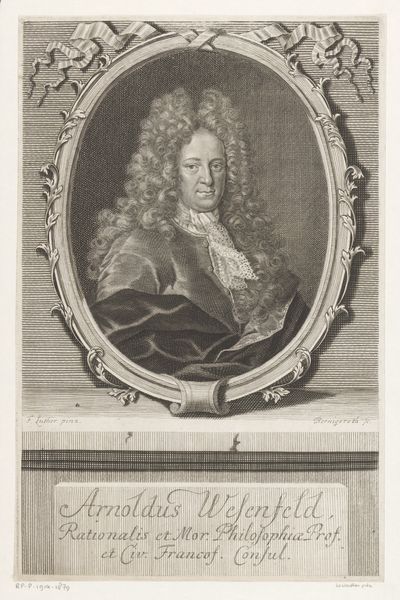
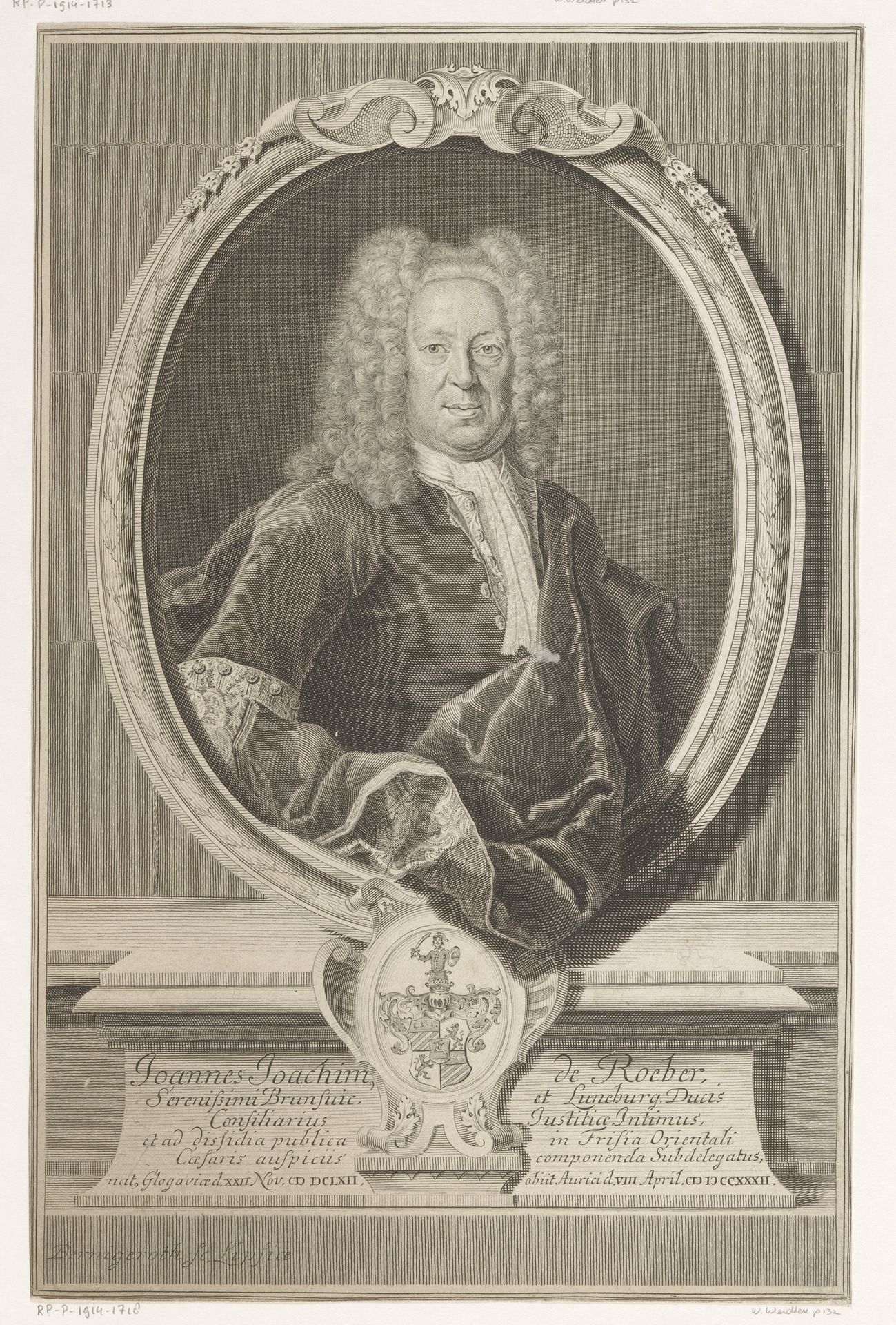
Martin Bernigeroth created this portrait of Johann Joachim von Roeber using etching techniques. The portrait embodies the rigid social structures of its time. Von Roeber's attire and the elaborate frame are visual markers of his status and power. During this era, portraits like these were not just depictions of individuals; they were carefully constructed statements about social standing. Consider how gender and class intersect here: men in positions of power were often immortalized in art, while women and lower classes were largely absent from such representations. Bernigeroth’s choice of etching as a medium also carries its own significance. Etchings allowed for detailed and reproducible images, which democratized portraiture to some extent, making it accessible to a broader audience beyond the aristocracy, however these portraits still convey distinct messages about power and privilege, shaping societal perceptions of identity and worth. How does it feel to consider that the carefully constructed image of a person from centuries ago continues to shape our understanding of that era and its values?
Portret van Johann Joachim von Roeber
1732 - 1733

Martin Bernigeroth
1670 - 1733Location
RijksmuseumArtwork details
- Dimensions
- height 309 mm, width 200 mm
- Location
- Rijksmuseum
- Copyright
- Rijks Museum: Open Domain
Comments
Share your thoughts
About this artwork
Martin Bernigeroth created this portrait of Johann Joachim von Roeber using etching techniques. The portrait embodies the rigid social structures of its time. Von Roeber's attire and the elaborate frame are visual markers of his status and power. During this era, portraits like these were not just depictions of individuals; they were carefully constructed statements about social standing. Consider how gender and class intersect here: men in positions of power were often immortalized in art, while women and lower classes were largely absent from such representations. Bernigeroth’s choice of etching as a medium also carries its own significance. Etchings allowed for detailed and reproducible images, which democratized portraiture to some extent, making it accessible to a broader audience beyond the aristocracy, however these portraits still convey distinct messages about power and privilege, shaping societal perceptions of identity and worth. How does it feel to consider that the carefully constructed image of a person from centuries ago continues to shape our understanding of that era and its values?
Comments
Share your thoughts