

1790 - 1800
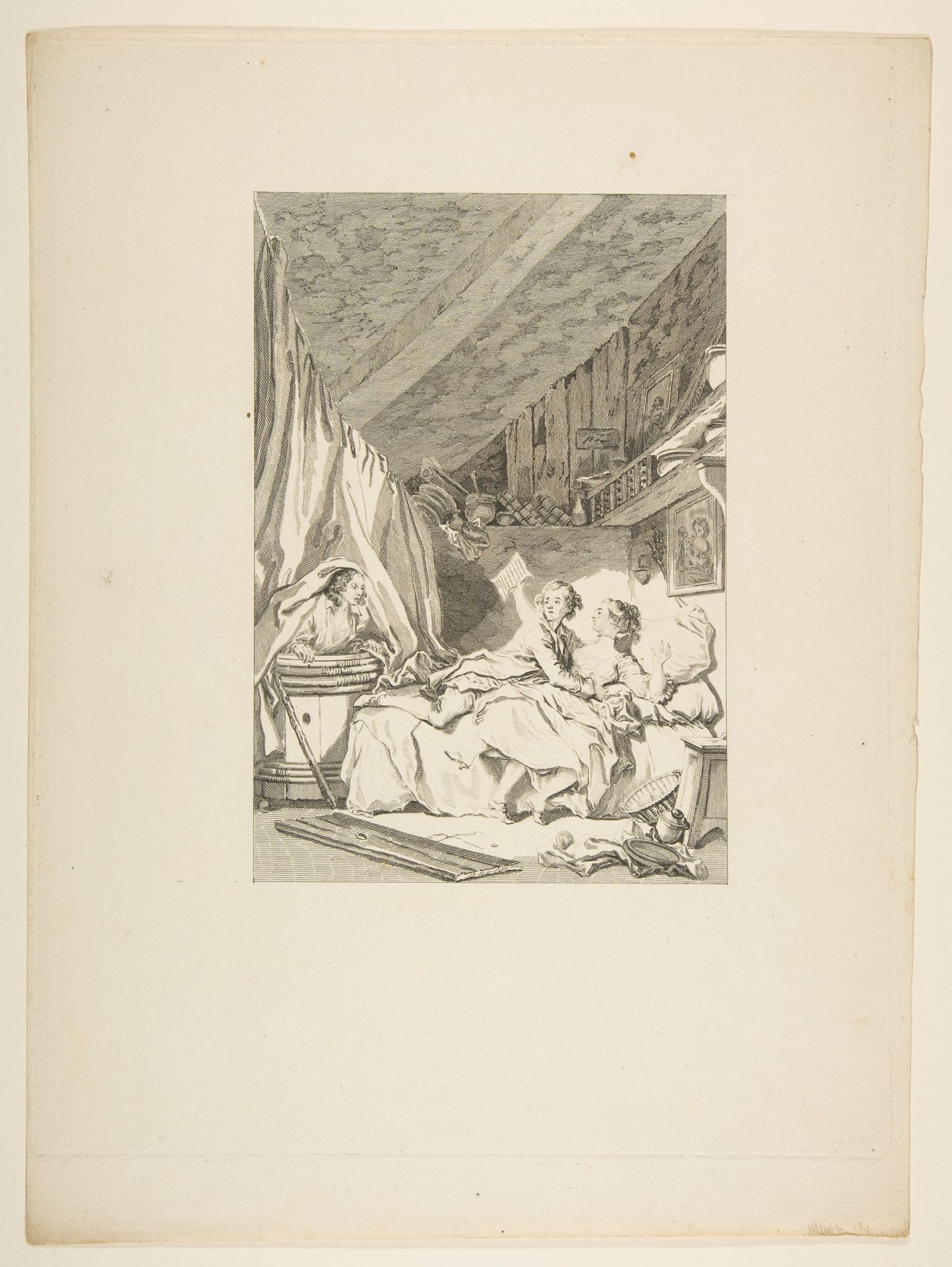
Le Savetier, from "Contes et nouvelles en vers par Jean de La Fontaine. A Paris, de l'imprimerie de P. Didot, l'an III de la République, 1795"


Listen to curator's interpretation
Curatorial notes
Jean Dambrun etched "Le Savetier" in 1795 for Jean de La Fontaine's "Contes et nouvelles en vers," and the image depicts a scene from one of La Fontaine’s tales. Notice the bed at the center, a symbol of intimacy and vulnerability. Such a motif appears throughout art history, from medieval tapestries to Renaissance paintings, often signaling a space of great emotion and transformation. Here, the domestic setting is disrupted by the intrusion of an outsider: the cobbler peering into the space. This voyeuristic perspective recalls ancient myths, where hidden observation often leads to revelation or tragedy. Consider how the bed, a place of rest, becomes charged with tension. The gazes, postures, and the overall composition evoke a primal, emotional response, engaging us on a subconscious level. Like a recurring dream, this scene captures something fundamentally human. Ultimately, this image, like the tale it illustrates, reminds us that these symbols have a non-linear progression. They resurface, evolve, and take on new meanings in different contexts, endlessly weaving through our cultural narrative.