About this artwork
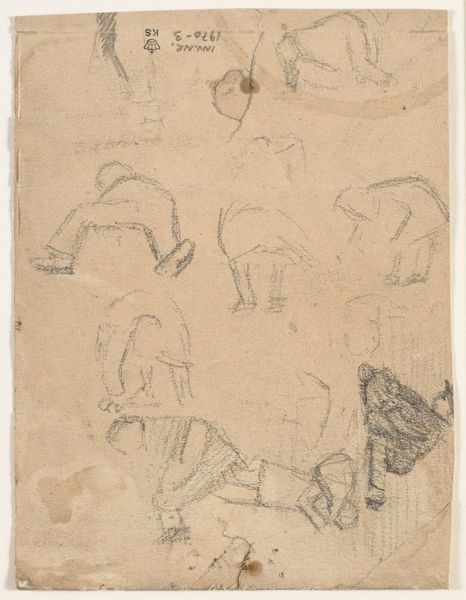
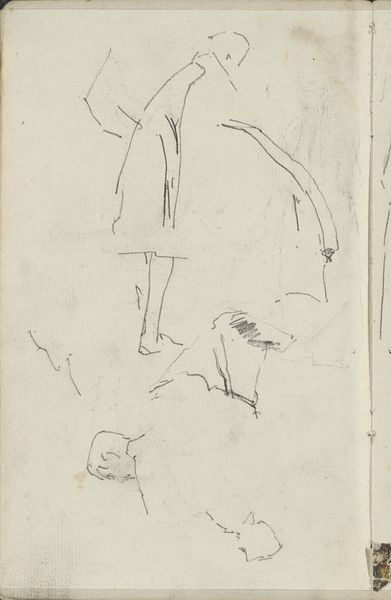
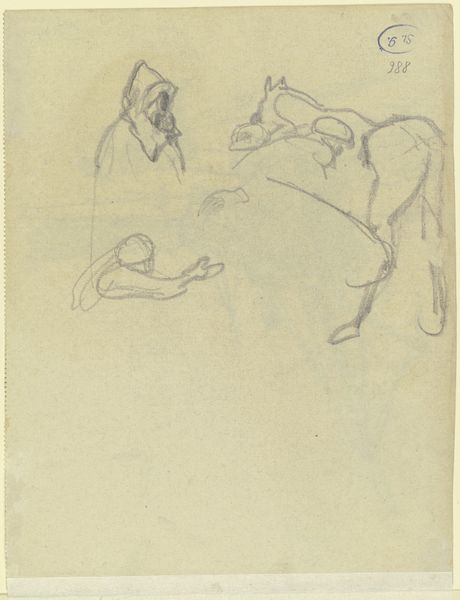
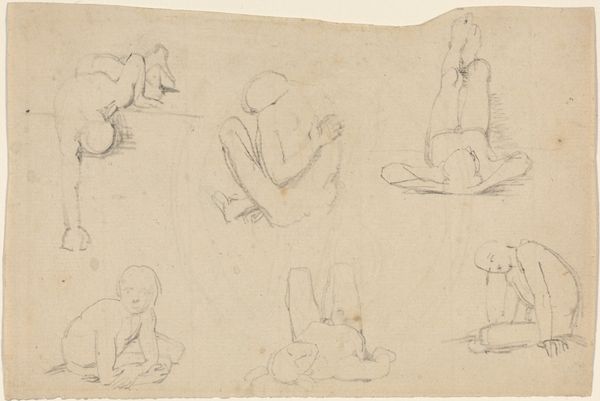
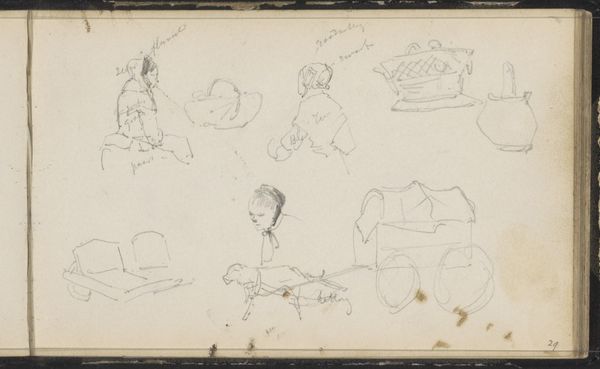
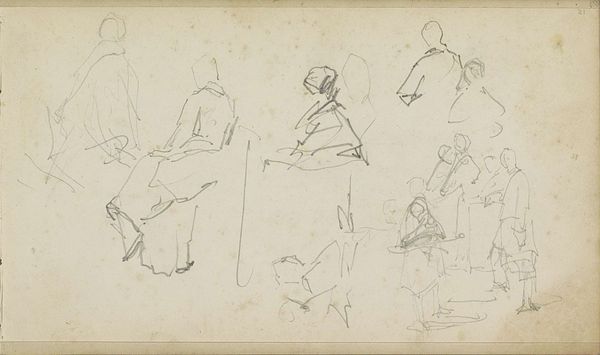
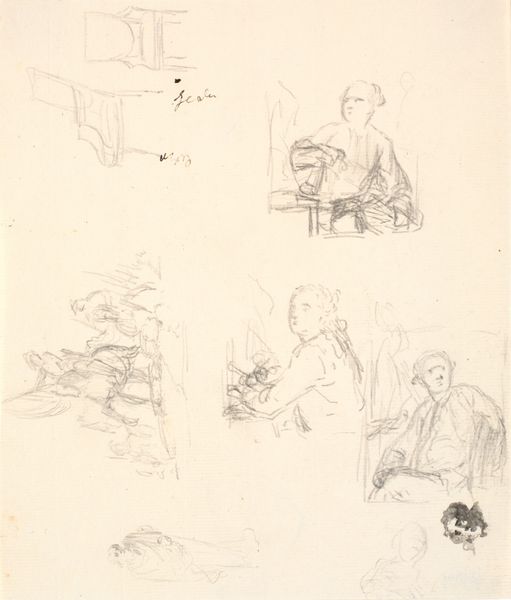
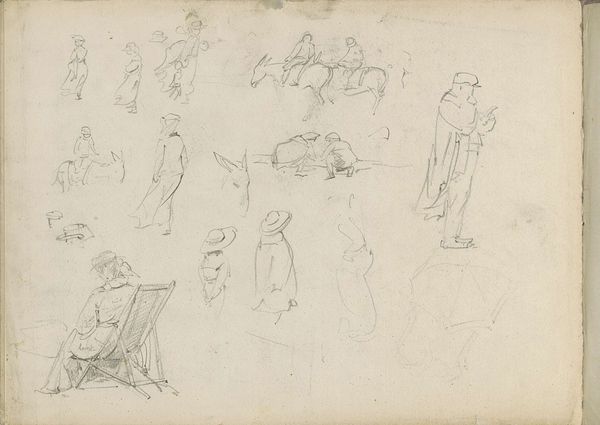
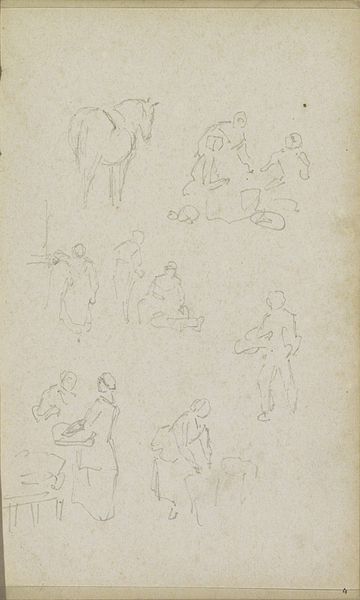
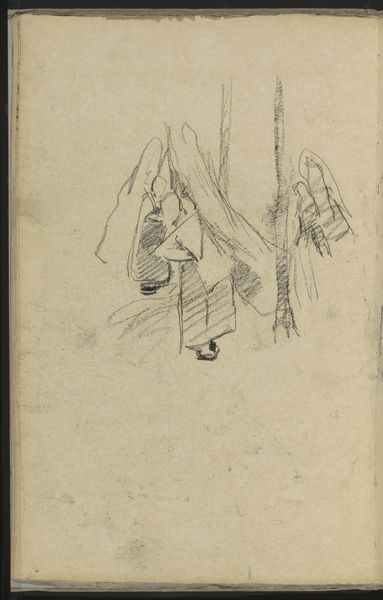
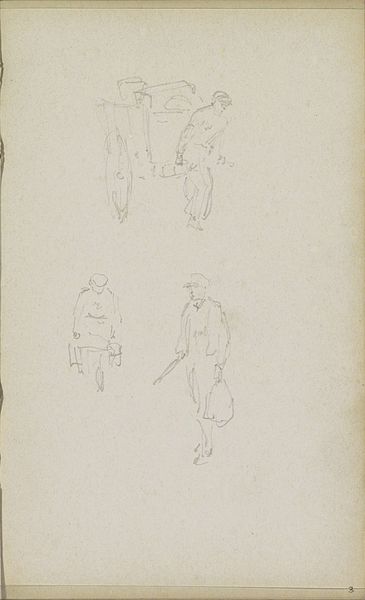
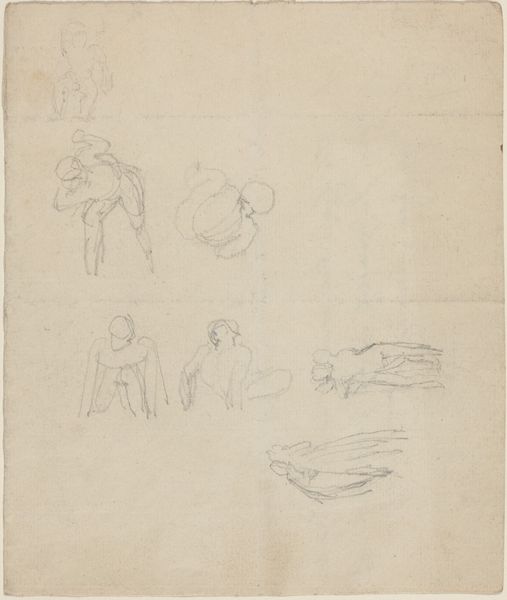
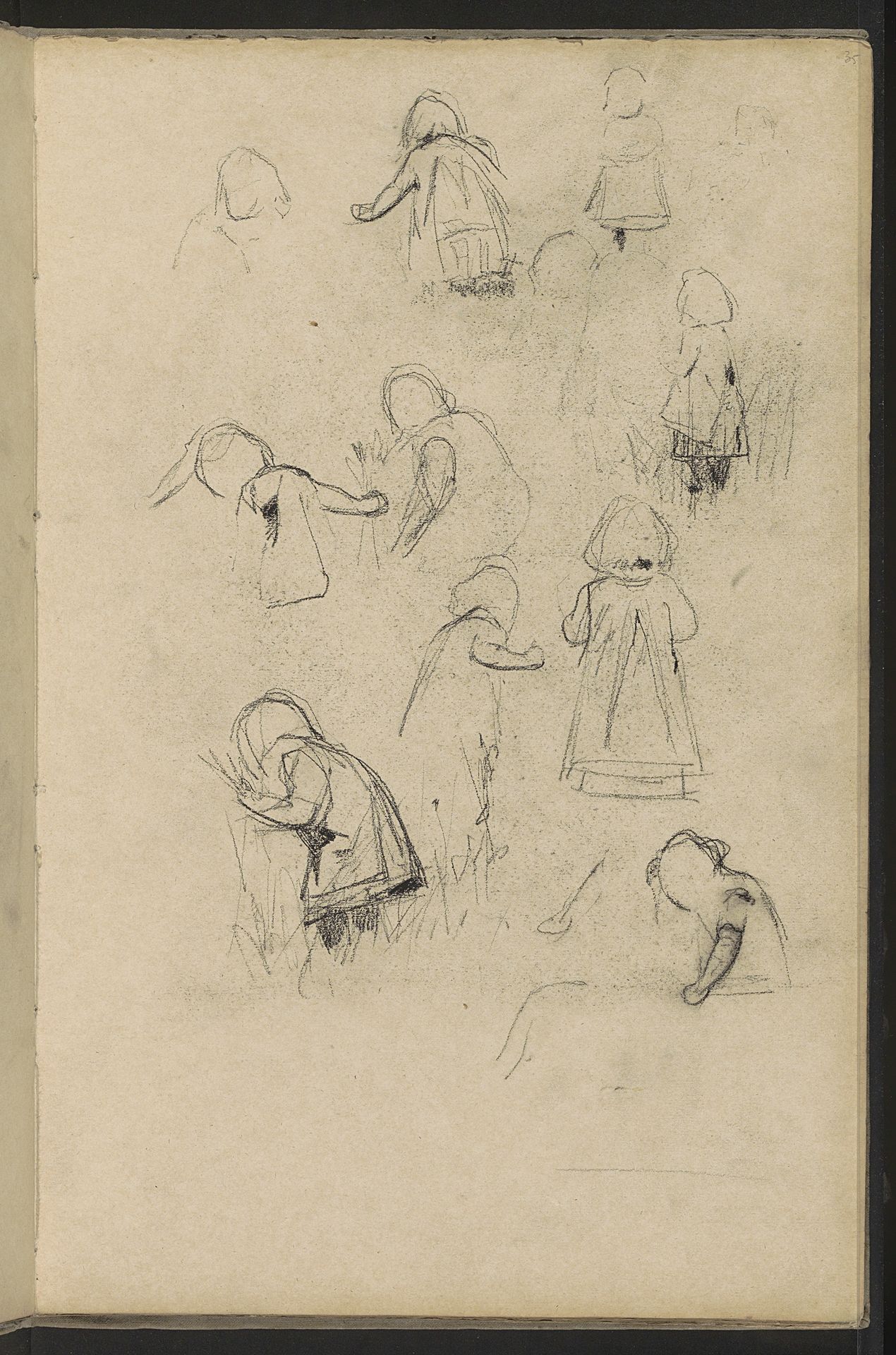
Willem Witsen made these sketches of a girl in the grass with graphite on paper. Witsen, living from 1860 to 1923, navigated a society undergoing rapid industrialization and urbanization in the Netherlands, so his art often captured intimate, personal scenes, reflecting a longing for simpler times. This sketchbook page presents a series of quick studies of a young girl in various poses, seemingly absorbed in play outdoors. The vulnerability and freedom of childhood are central themes. The girl, possibly from a working-class background, is depicted in her everyday environment. Her clothing suggests a life lived outside the confines of bourgeois society. Witsen doesn't idealize her; instead, he captures her natural movements and interactions with her surroundings. The work reflects a broader cultural interest in the lives of ordinary people and a shift away from traditional, idealized representations of childhood. It reminds us of the importance of recognizing and valuing the diverse experiences of individuals within a society.
Studies van een meisje in het gras c. 1884 - 1887

Willem Witsen
1860 - 1923Location
RijksmuseumArtwork details
- Medium
- drawing, pencil
- Location
- Rijksmuseum
- Copyright
- Rijks Museum: Open Domain
Tags
portrait
drawing
quirky sketch
impressionism
pen sketch
sketch book
figuration
personal sketchbook
sketchwork
ink drawing experimentation
pen-ink sketch
pencil
sketchbook drawing
storyboard and sketchbook work
sketchbook art
Comments
No comments
About this artwork
Willem Witsen made these sketches of a girl in the grass with graphite on paper. Witsen, living from 1860 to 1923, navigated a society undergoing rapid industrialization and urbanization in the Netherlands, so his art often captured intimate, personal scenes, reflecting a longing for simpler times. This sketchbook page presents a series of quick studies of a young girl in various poses, seemingly absorbed in play outdoors. The vulnerability and freedom of childhood are central themes. The girl, possibly from a working-class background, is depicted in her everyday environment. Her clothing suggests a life lived outside the confines of bourgeois society. Witsen doesn't idealize her; instead, he captures her natural movements and interactions with her surroundings. The work reflects a broader cultural interest in the lives of ordinary people and a shift away from traditional, idealized representations of childhood. It reminds us of the importance of recognizing and valuing the diverse experiences of individuals within a society.
Comments
No comments