1870 - 1890
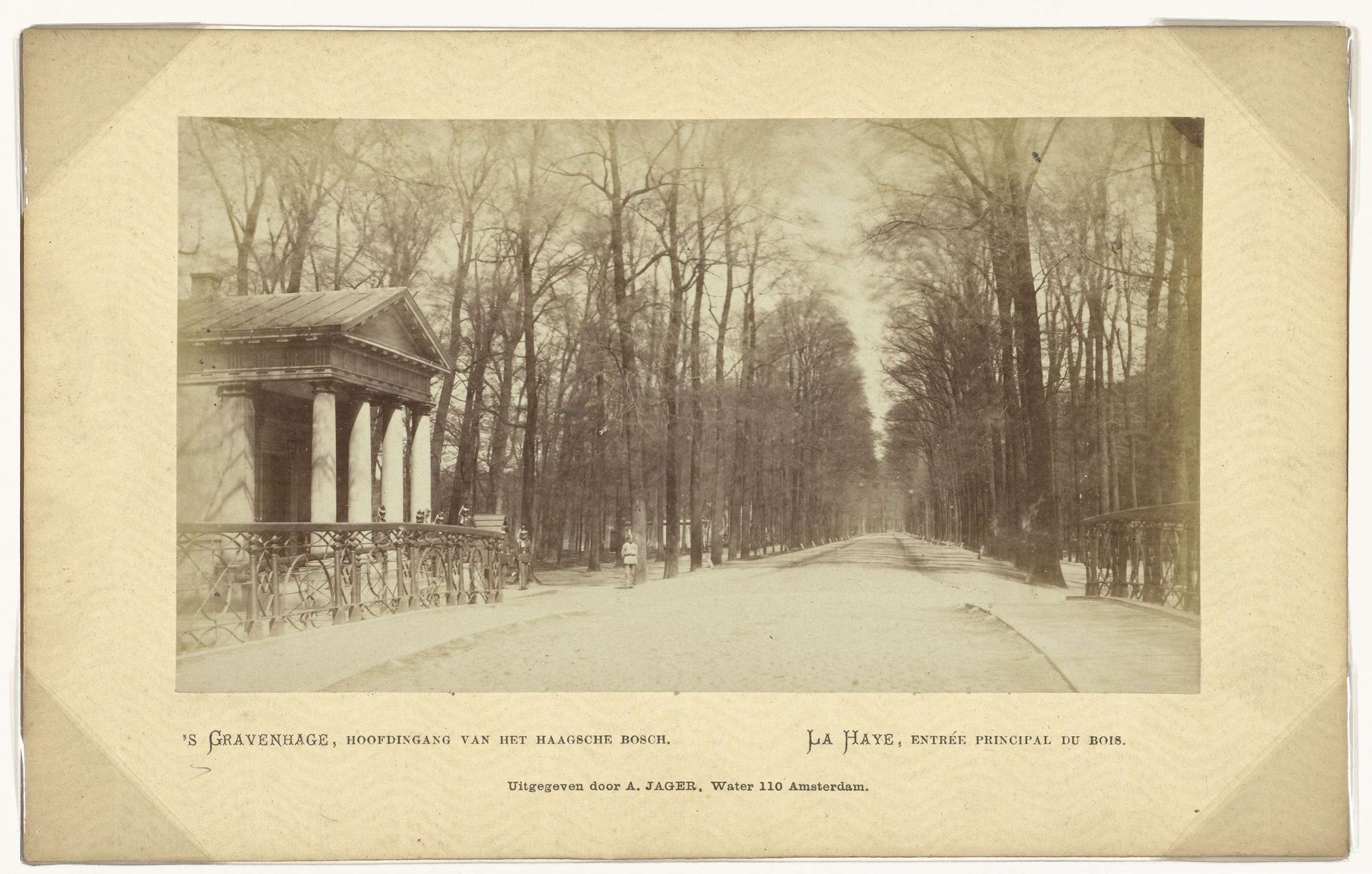
Toegang tot het Haagse Bos in Den Haag

Andries Jager
1825 - 1905Location
RijksmuseumListen to curator's interpretation
Curatorial notes
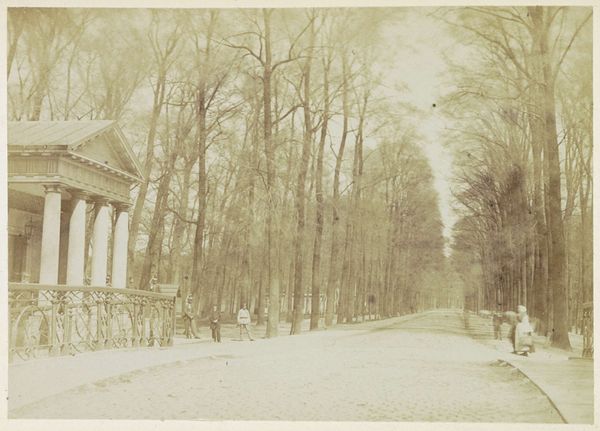
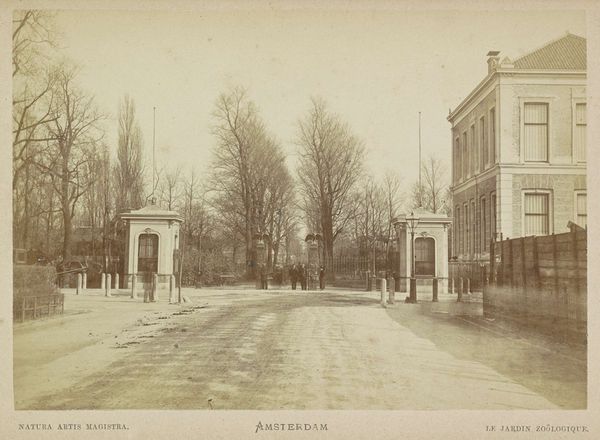
Editor: This is “Toegang tot het Haagse Bos in Den Haag,” or “Entrance to the Hague Forest in The Hague,” created sometime between 1870 and 1890 by Andries Jager. It’s an albumen print from a photograph, and I find the symmetry and starkness of it really striking. What jumps out at you? Curator: The neoclassical pavilion immediately grabs my attention. It acts as a gateway, but a very specific kind of gateway. Don't you feel it evokes a sense of civic pride and ordered society? These structures borrow imagery from classical Greece and Rome, societies we've long associated with democracy and republic values. Editor: I do, it’s very stately! Almost…Roman. So, by photographing this entrance in this way, what statement might Jager be making? Curator: Perhaps about the Dutch identity at the time? Consider the date—mid to late 19th century. Europe was undergoing immense social and political shifts. Photography was also relatively new. The decision to portray this entrance, combining classical architectural motifs with the “new” medium of photography, could be a way of visually grounding the Netherlands in a historical and ideological narrative. How does that make you think about the road leading into the forest? Editor: That's fascinating. Thinking about the road...it seems to beckon the viewer, offering a promise of escape into nature but only *after* passing through this symbolic portal of civic ideals. Almost like a negotiation between civilization and the wild. Curator: Exactly! The artist’s choice of viewpoint emphasizes this symbolic meeting. Considering these symbols, it’s much more than just a pretty picture. Editor: I never would have considered how much a building says about cultural identity. I'll certainly view images with far more awareness of such cultural references in the future. Curator: And hopefully recognize how a building can also make statements that are tied to a national narrative. It's a photograph that layers meaning within what appears to be a simple composition.