About this artwork
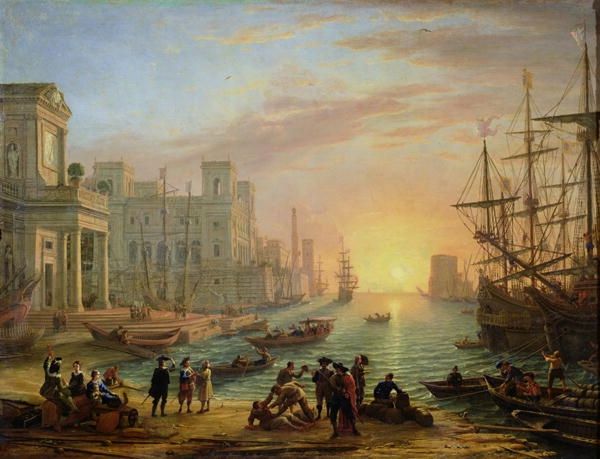
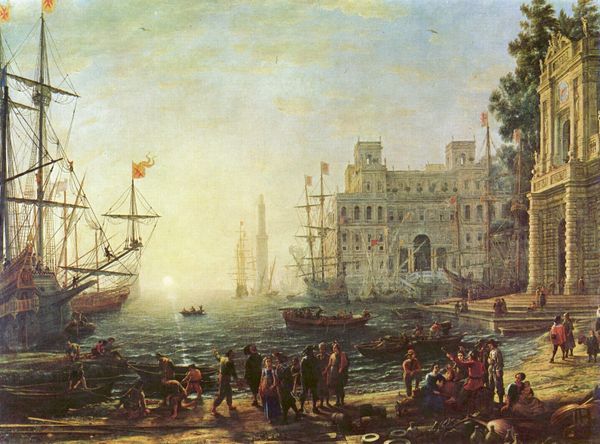
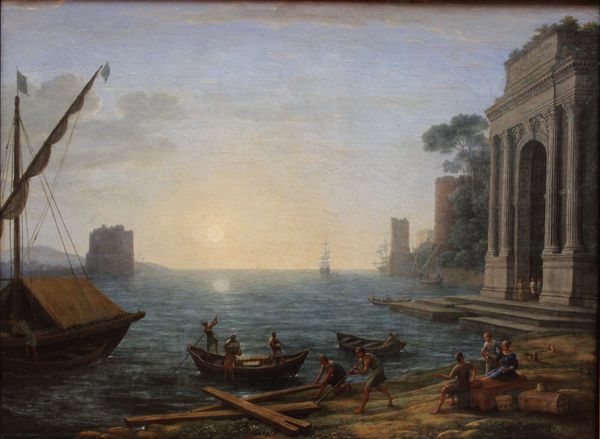
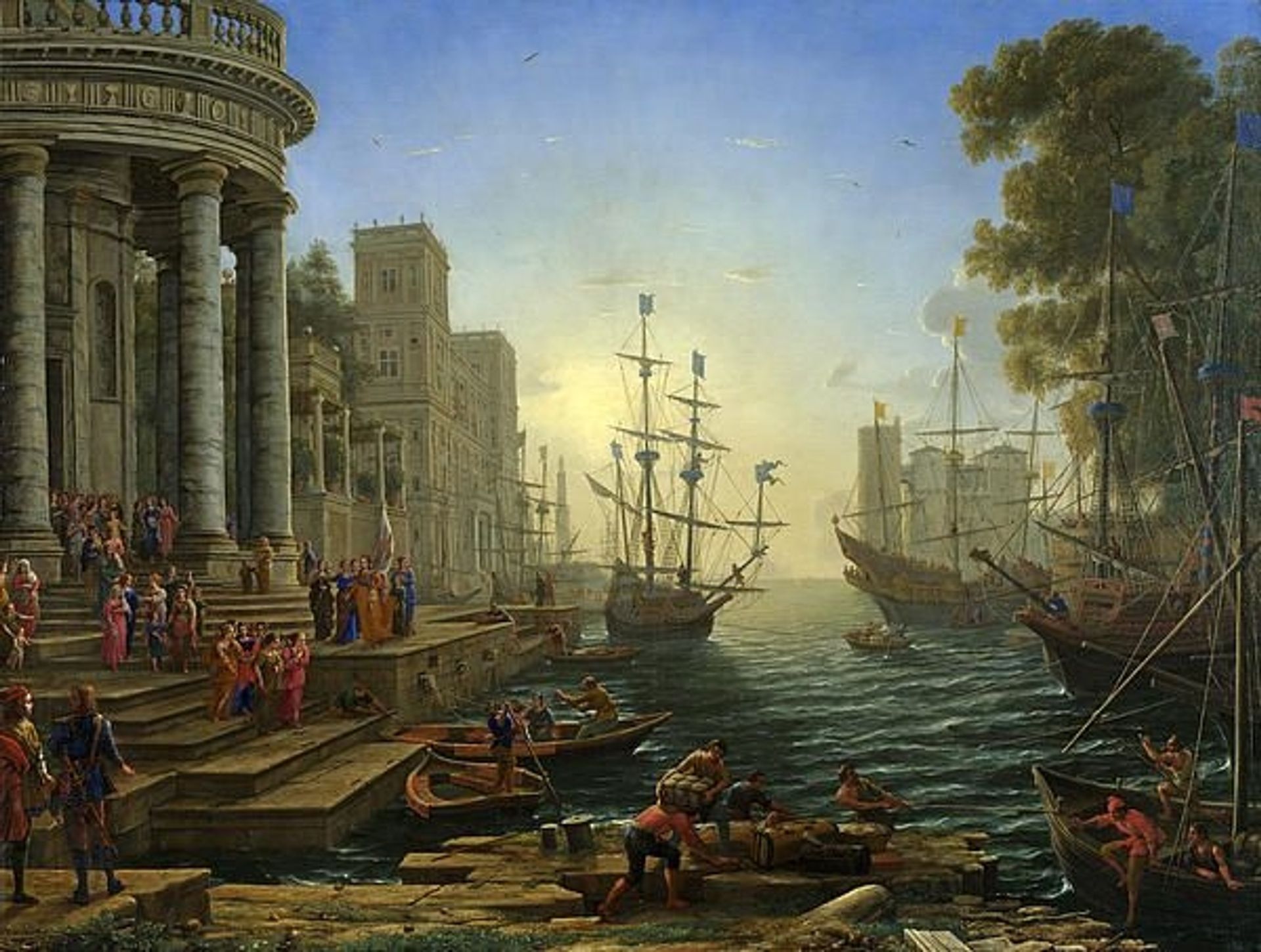
Claude Lorrain painted 'Seaport with the Embarkation of St. Ursula' using oil on canvas, a process that entails a commitment to layering and glazing, building up luminous effects. Consider the implications of these techniques: Lorrain wasn't just recording a scene. He was orchestrating it through laborious construction, manipulating color and light. The port depicted is not just a place, but a stage. The figures in the foreground, dwarfed by classical architecture and towering ships, perform their roles as porters and passengers. Notice the way the light catches the water, reflecting off the hulls of the ships, each detail carefully rendered. This precision speaks to the burgeoning mercantile culture of the 17th century, where art served to ennoble commerce. Lorrain’s technique involved priming the canvas, sketching the composition, applying layers of paint, and glazing to achieve luminosity. The painting's value lay not only in its aesthetic appeal but also in the labor and skill invested in its creation. Ultimately, this work transcends simple representation, inviting us to reflect on the economic and social forces shaping the world.
Seaport with the Embarkation of St. Ursula
1641


Artwork details
- Medium
- painting, oil-paint
- Dimensions
- 149 x 113 cm
- Location
- National Gallery, London, UK
- Copyright
- Public domain
Tags
Comments
Share your thoughts
About this artwork
Claude Lorrain painted 'Seaport with the Embarkation of St. Ursula' using oil on canvas, a process that entails a commitment to layering and glazing, building up luminous effects. Consider the implications of these techniques: Lorrain wasn't just recording a scene. He was orchestrating it through laborious construction, manipulating color and light. The port depicted is not just a place, but a stage. The figures in the foreground, dwarfed by classical architecture and towering ships, perform their roles as porters and passengers. Notice the way the light catches the water, reflecting off the hulls of the ships, each detail carefully rendered. This precision speaks to the burgeoning mercantile culture of the 17th century, where art served to ennoble commerce. Lorrain’s technique involved priming the canvas, sketching the composition, applying layers of paint, and glazing to achieve luminosity. The painting's value lay not only in its aesthetic appeal but also in the labor and skill invested in its creation. Ultimately, this work transcends simple representation, inviting us to reflect on the economic and social forces shaping the world.
Comments
Share your thoughts