About this artwork
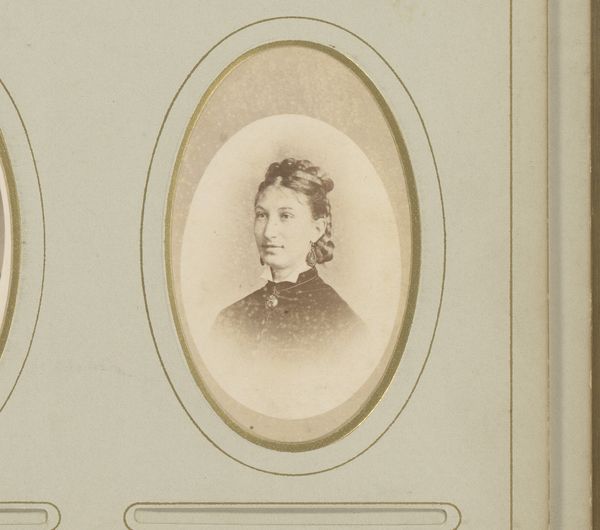
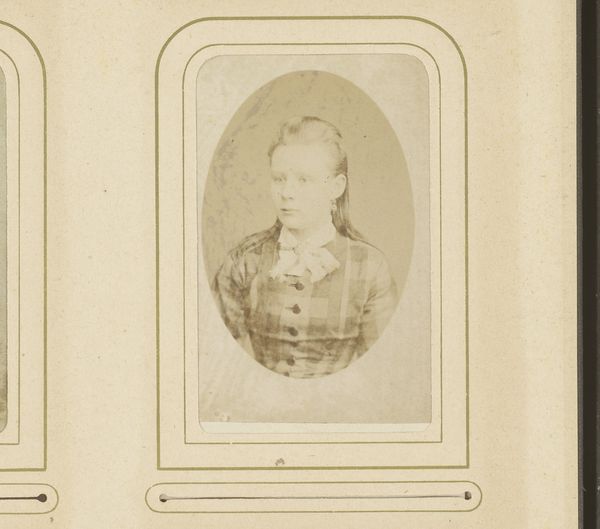
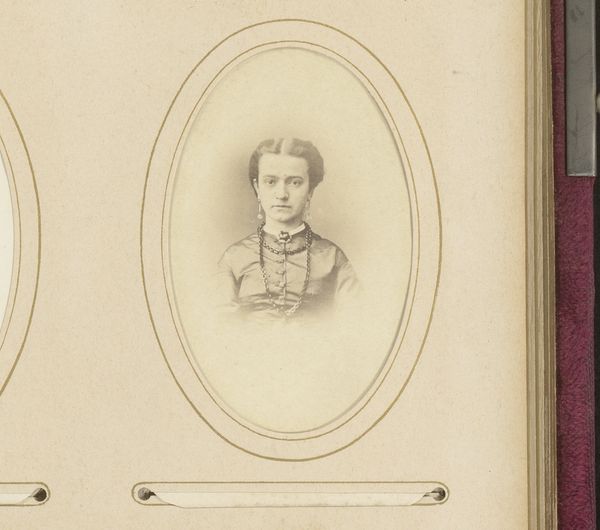
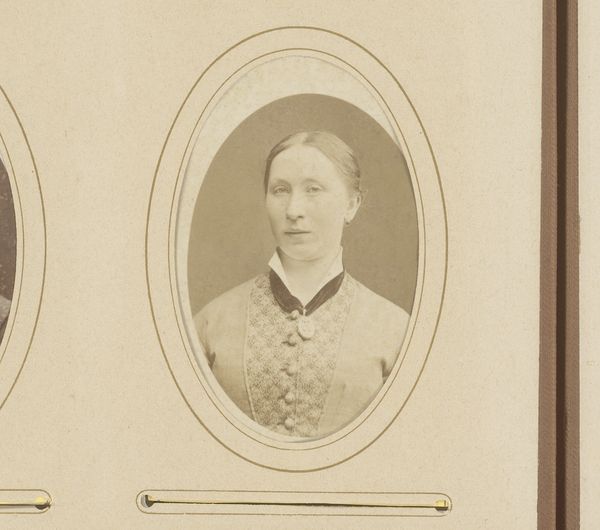
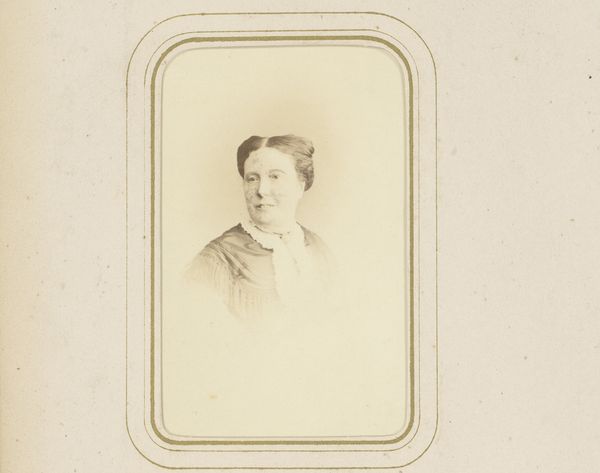
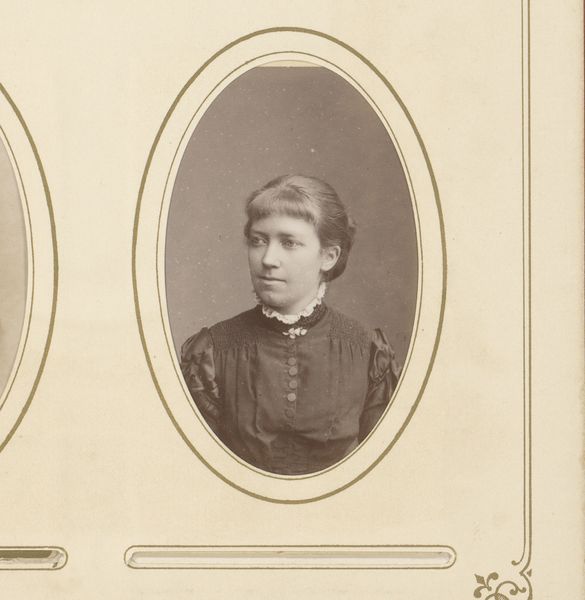
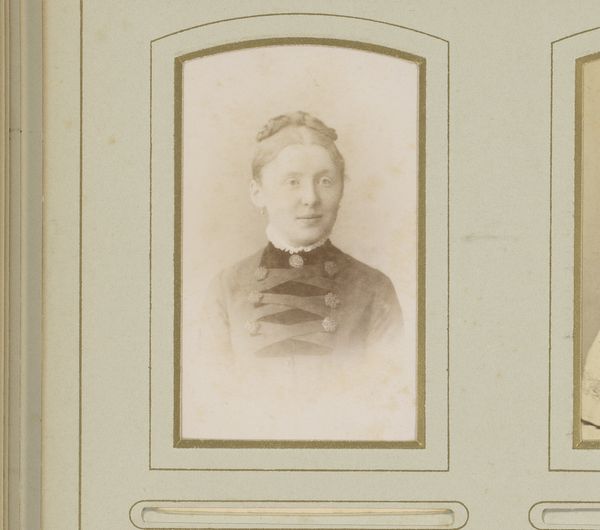
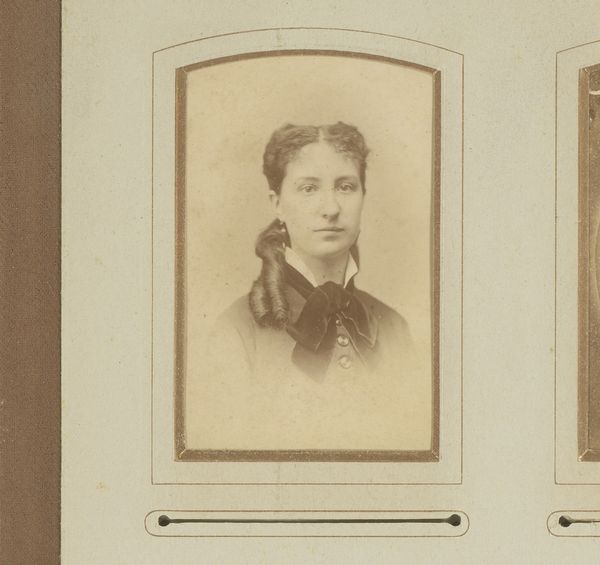
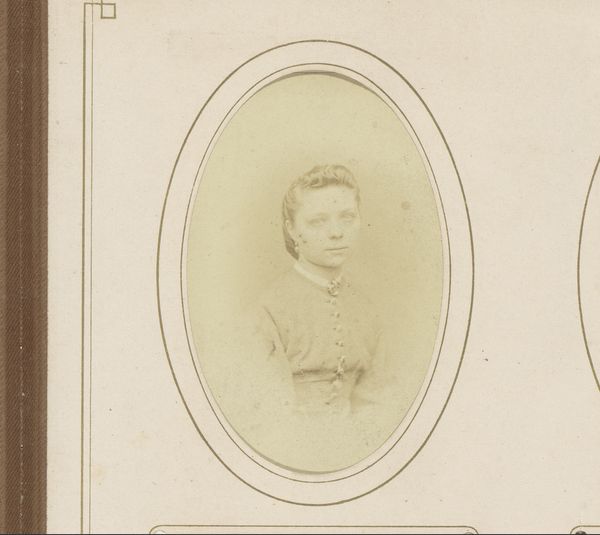
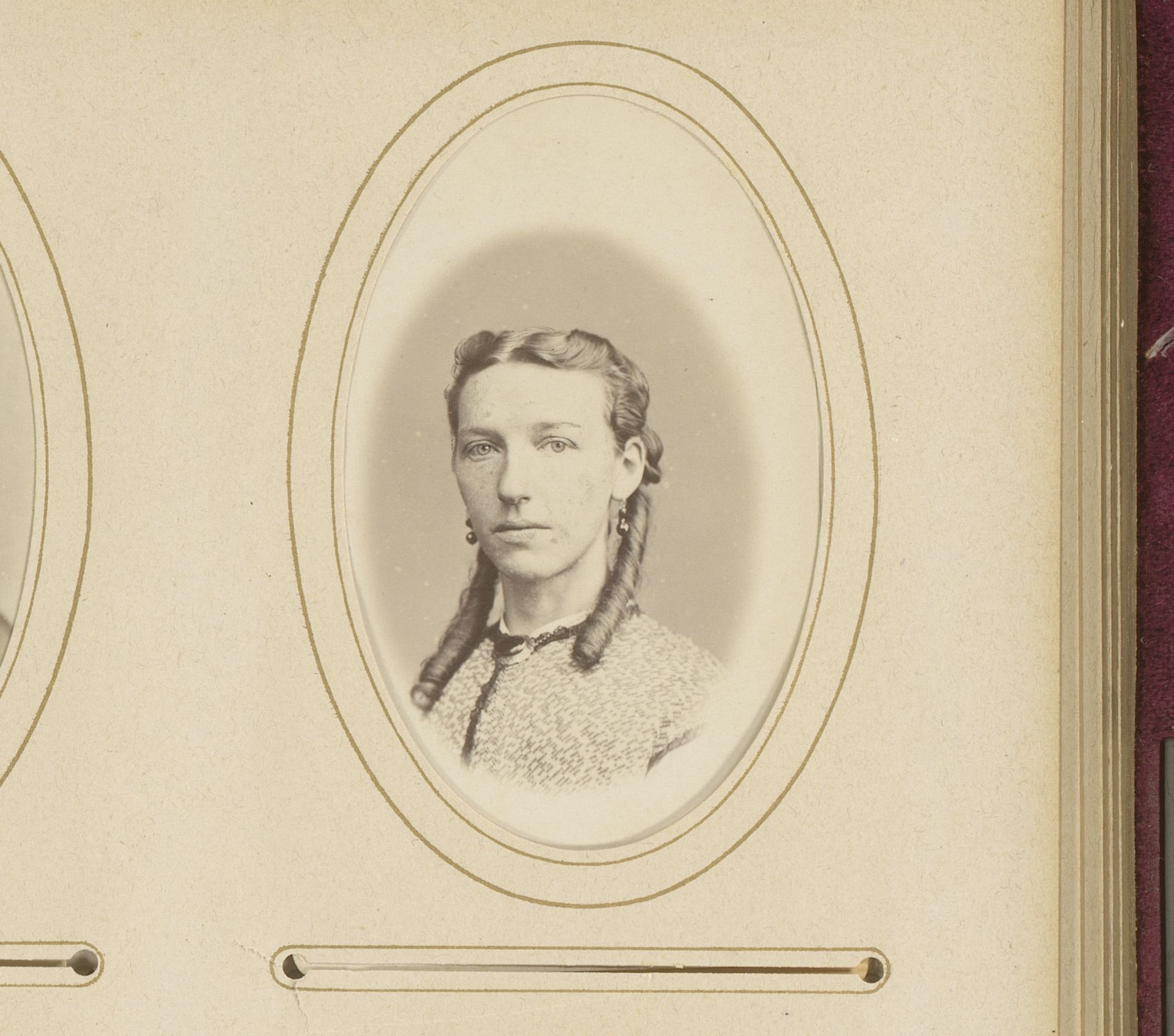
Curator: A. Siegmund's "Portret van een vrouw met pijpenkrullen," a daguerreotype estimated to be from 1860-1880. The oval frame emphasizes a very centered portrait. What strikes you about it? Editor: The intensity of her gaze...and the curious, almost austere presentation! The oval frame feels so constricting. It reminds me of a locket, holding onto a secret, a lost era. Curator: I think you've hit on something about austerity. There's an undeniable clarity about the photograph. She's plainly dressed and posed in such a way that reveals very little beyond what she is willing to expose. This formal framing would have elevated the sitter as one of prestige and nobility. Editor: Absolutely, I agree. Her expression is direct, and I'd almost describe it as a stoicism. And that peculiar hair. Pijpenkrullen... pipe curls? Such tiny ringlets. There is a definite statement about composure here. In viewing this piece, do we get a window into societal standards, what the expectations of the sitter are as she is immortalized? Curator: Exactly! It gives the daguerreotype a timeless quality because her gaze transcends historical portrait conventions. The framing would not be anything outside of the standard. Editor: And speaking of framing, did these types of portraits fulfill something that painting hadn't? The average citizen now having the chance to present themselves within a context usually reserved for royalty and aristocracy? Curator: That’s the beauty of this technology! Daguerreotypes, along with advancements like ambrotypes, did that. In a sense, it democratized portraiture, but did not eliminate the established rules. It offered accessibility without erasing established cultural codes. Editor: The stoicism might then also speak of a solemn understanding of sitting to be photographed. And these symbols become more interesting over time. This simple photographic artifact gains increasing layers with time. Curator: It is! This artwork is a humble testament to enduring themes of cultural identity. I will ponder on these concepts in more artworks I see here. Editor: Yes, an almost eerie yet intimate window into another person's experience in time. This perspective of stoicism speaks of character in ways modern portraiture cannot fully reach.

Artwork details
- Medium
- daguerreotype, photography
- Dimensions
- height 81 mm, width 52 mm
- Copyright
- Rijks Museum: Open Domain
Tags
Comments
Share your thoughts
About this artwork
Curator: A. Siegmund's "Portret van een vrouw met pijpenkrullen," a daguerreotype estimated to be from 1860-1880. The oval frame emphasizes a very centered portrait. What strikes you about it? Editor: The intensity of her gaze...and the curious, almost austere presentation! The oval frame feels so constricting. It reminds me of a locket, holding onto a secret, a lost era. Curator: I think you've hit on something about austerity. There's an undeniable clarity about the photograph. She's plainly dressed and posed in such a way that reveals very little beyond what she is willing to expose. This formal framing would have elevated the sitter as one of prestige and nobility. Editor: Absolutely, I agree. Her expression is direct, and I'd almost describe it as a stoicism. And that peculiar hair. Pijpenkrullen... pipe curls? Such tiny ringlets. There is a definite statement about composure here. In viewing this piece, do we get a window into societal standards, what the expectations of the sitter are as she is immortalized? Curator: Exactly! It gives the daguerreotype a timeless quality because her gaze transcends historical portrait conventions. The framing would not be anything outside of the standard. Editor: And speaking of framing, did these types of portraits fulfill something that painting hadn't? The average citizen now having the chance to present themselves within a context usually reserved for royalty and aristocracy? Curator: That’s the beauty of this technology! Daguerreotypes, along with advancements like ambrotypes, did that. In a sense, it democratized portraiture, but did not eliminate the established rules. It offered accessibility without erasing established cultural codes. Editor: The stoicism might then also speak of a solemn understanding of sitting to be photographed. And these symbols become more interesting over time. This simple photographic artifact gains increasing layers with time. Curator: It is! This artwork is a humble testament to enduring themes of cultural identity. I will ponder on these concepts in more artworks I see here. Editor: Yes, an almost eerie yet intimate window into another person's experience in time. This perspective of stoicism speaks of character in ways modern portraiture cannot fully reach.
Comments
Share your thoughts