1889
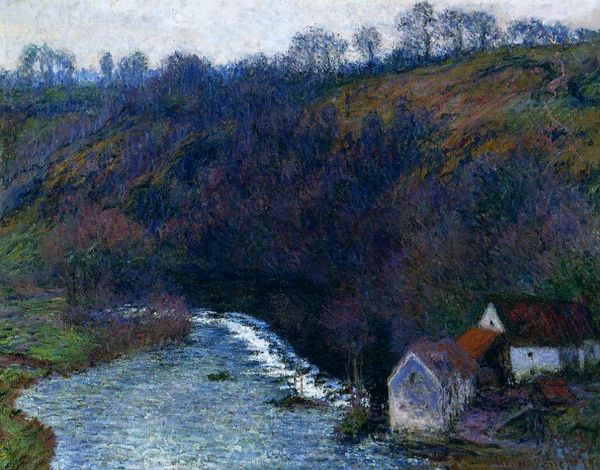
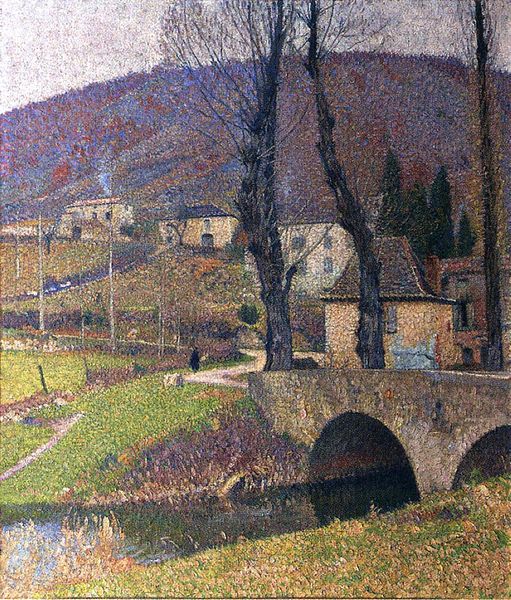
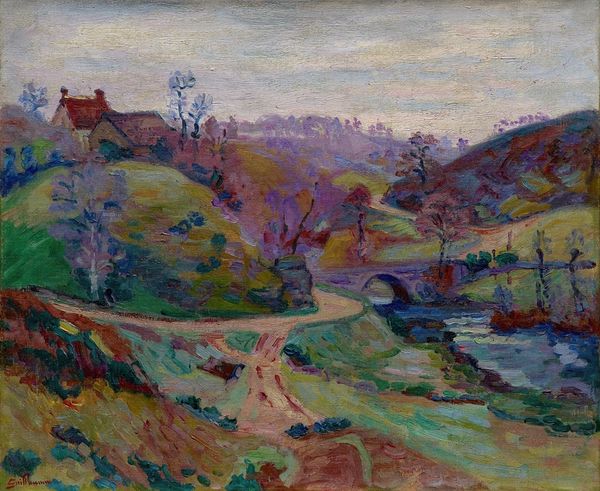
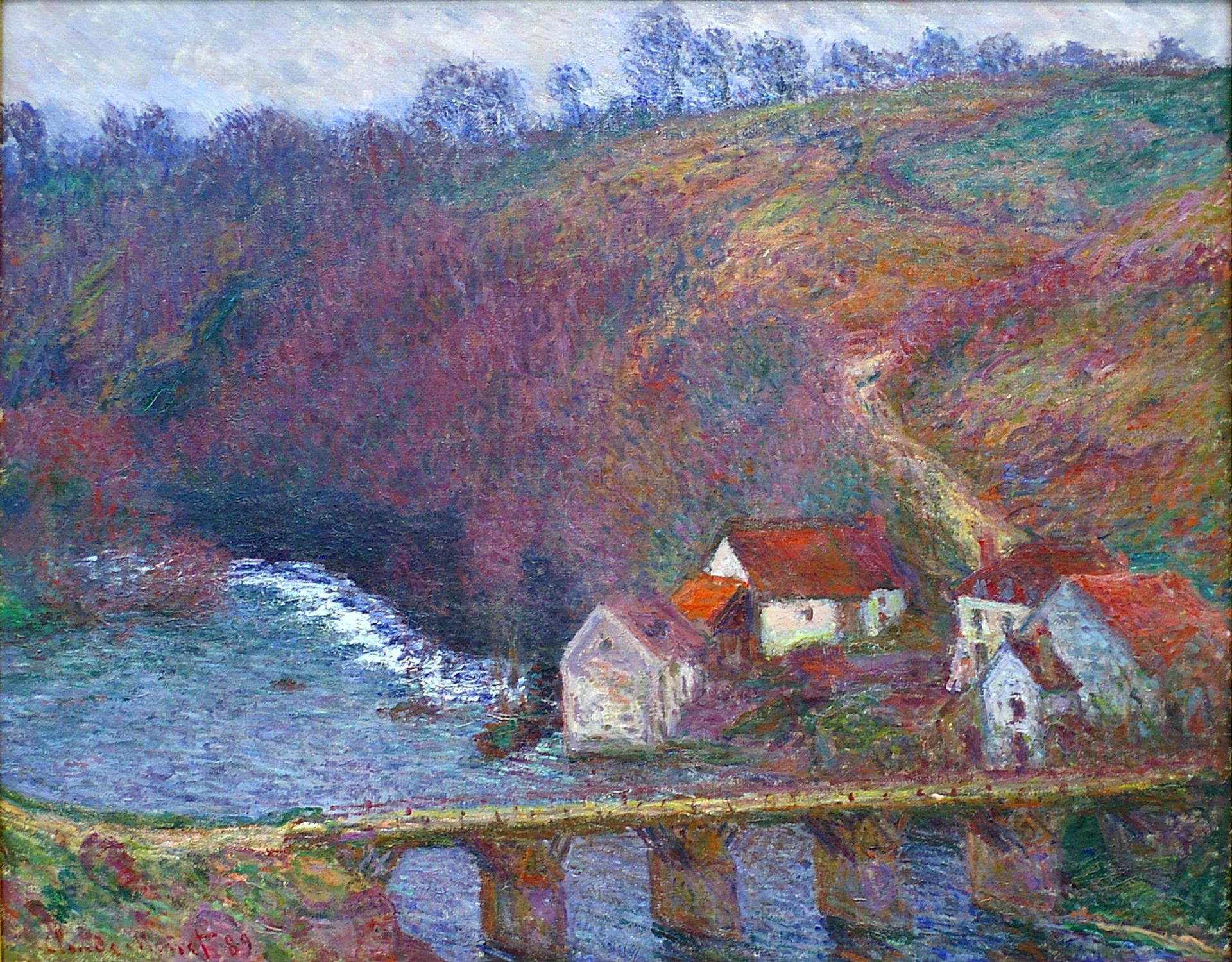
The Grande Creuse by the Bridge at Vervy

Listen to curator's interpretation
Curatorial notes
Curator: This is Claude Monet's "The Grande Creuse by the Bridge at Vervy," painted in 1889. Notice how he captures this landscape with such dynamic color and brushstrokes. Editor: Immediately, I feel the chill of a late autumn day. It’s almost melancholic; the colors, while vibrant, hint at the impending winter and perhaps also point at the dramatic upheavals happening socially at the time. Curator: Precisely! The composition is quite fascinating; Monet is, as usual, deeply concerned with the effects of light and how it plays across different surfaces – water, stone, foliage. He's broken down the scene into individual flecks of color. How does it all synthesize? Editor: I see the town almost nestled into the hillside, the water mirroring its structures and perhaps also reflecting a yearning for a harmonious relationship between people and place. But it is a relationship often strained. This painting to me represents a kind of romantic tension of man coexisting with, but also impacting the environment around him. Look at the smokestack, is it industry emerging into idyllic nature? Curator: I think focusing on the social issues distracts a bit too much from the picture, no? But, notice how the bridge functions as a horizontal stabilizer, dividing the painting into distinct zones – the wildness of the river below, and the domesticity above? I mean, Monet is concerned foremost with creating a cohesive pictorial structure through color relationships. Editor: Perhaps, but even these artistic choices are products of the culture in which Monet lived. It wasn’t an accident that Monet painted these scenes – he had privilege to engage with his work and the world around him in this way. What would a person of color see in this painting, when the dominant discourse centered around privileged perspectives, at that moment in time, or even this one? Curator: I appreciate how it evokes not only the sense of a specific place but also a fleeting moment in time, the transient quality of light. The forms may dissolve but their structure stands tall as Monet is considered. Editor: This encounter with Monet's perspective allows us to interrogate broader questions about whose gaze we privilege and whose stories we often overlook. This painting asks that. Curator: I walk away reminded how painting is first and foremost about color and form relationships that give meaning to a subject Editor: It reminds me of our responsibility to broaden our perspectives on beauty, and who has historically been denied access to it.