1704
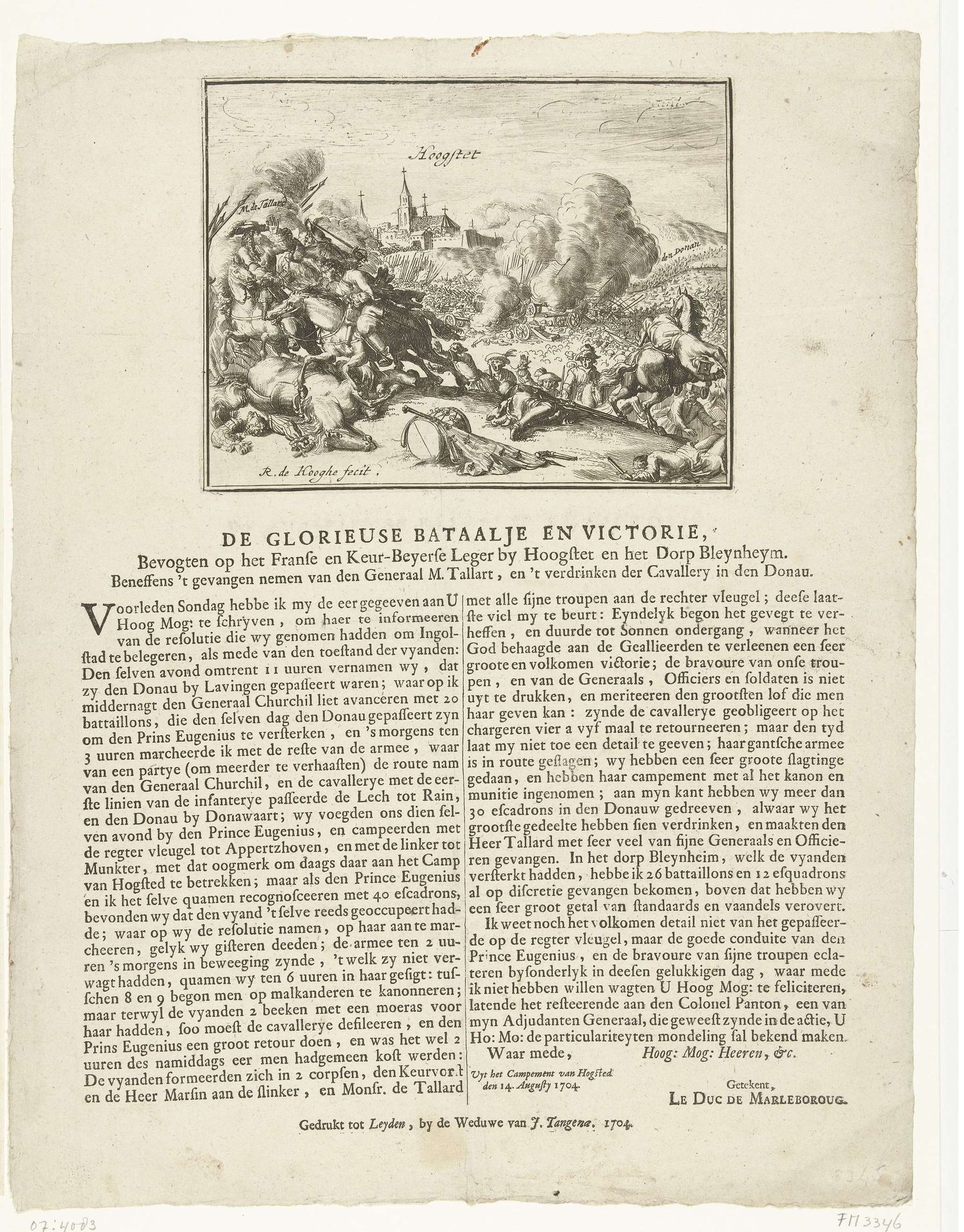
Slag bij Höchstädt, 1704

Romeyn de Hooghe
1645 - 1708Location
RijksmuseumListen to curator's interpretation
Curatorial notes
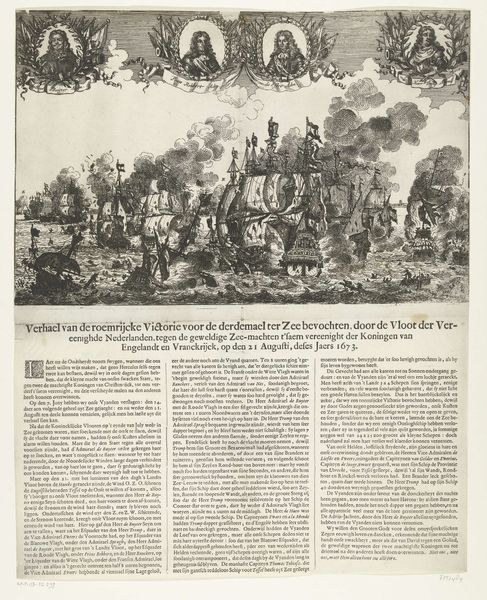
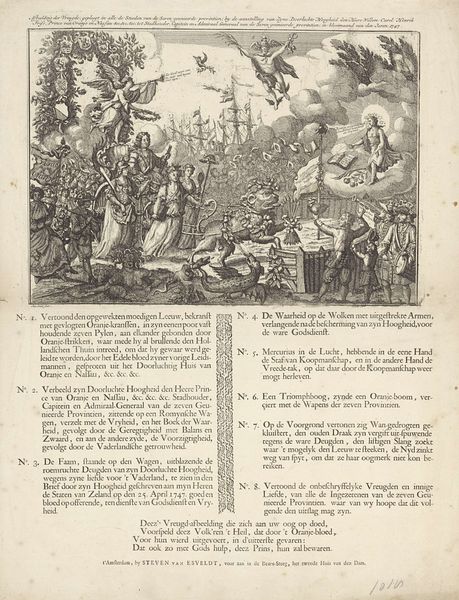
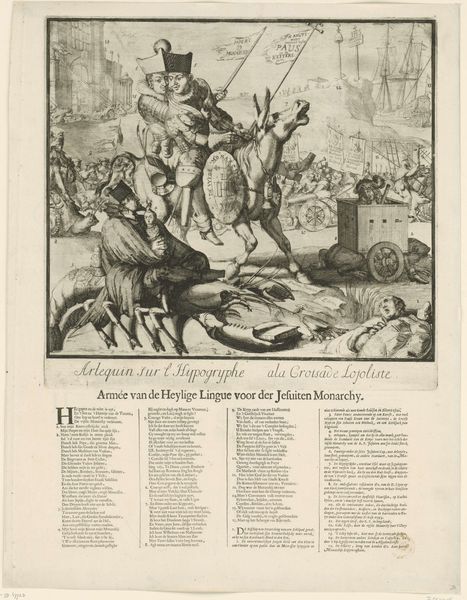
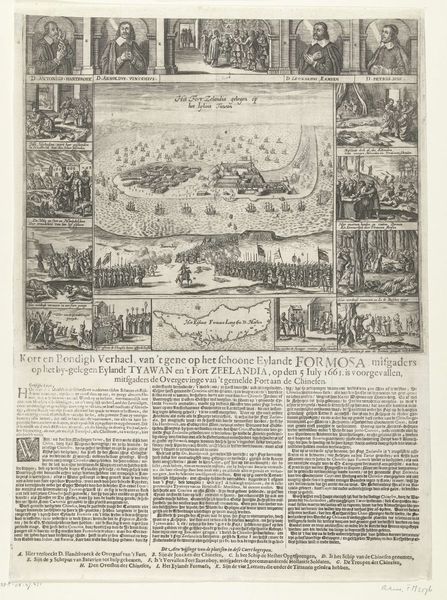
Editor: This is "Battle of Höchstädt, 1704" by Romeyn de Hooghe, a print dating back to, well, 1704. The medium is engraving. It strikes me as a quite chaotic, but impressive snapshot of 18th-century warfare. What details jump out at you in this piece? Curator: The process of creating this engraving—the labour involved in disseminating this depiction of war—is my focus. Consider the cultural and political context: this wasn't just a visual record, but propaganda. How would you see the relationship between production and reception? Editor: That's interesting! I hadn't thought about it in terms of production so much. The sheer detail suggests meticulous craftsmanship, and now I think the process probably influenced its reception. What kind of social consumption was happening at this time, do you think? Curator: Think about it. This print made its way to a wide public during the Golden Age. It depicts warfare, something remote for many but supported through taxation. How did prints like these justify or legitimize that economic transaction? Did it shape the popular imagination surrounding warfare itself? Editor: So, it's not just about showing the battle; it's about controlling how people understand the costs, in terms of both money and lives. A materialist approach makes so much sense now, it contextualizes how it could function to solidify national sentiment! Curator: Precisely. Looking at art this way—as a product of labour and social forces—helps us go beyond simply admiring aesthetics and really interrogating its place within the historical power structures. Editor: Right, I get it. I never thought about prints quite this way before.