About this artwork
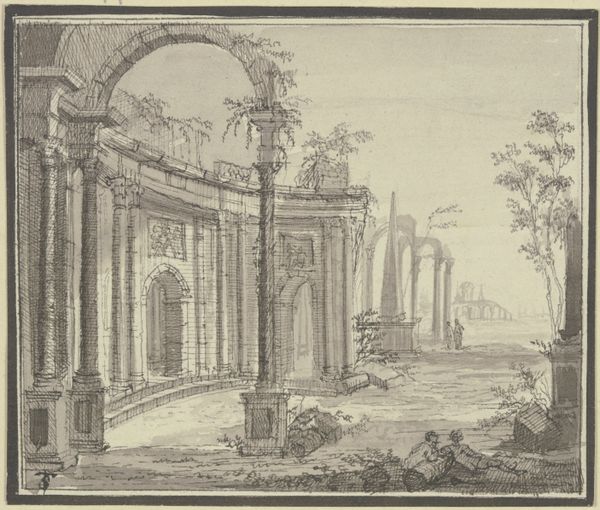
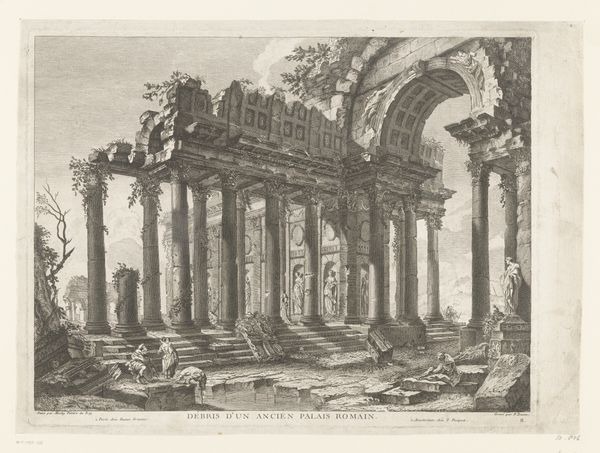
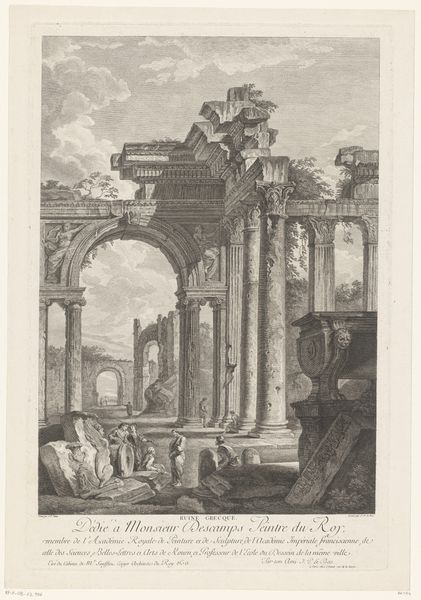
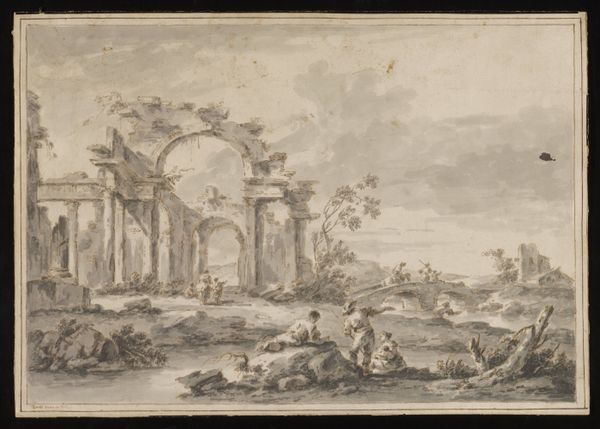
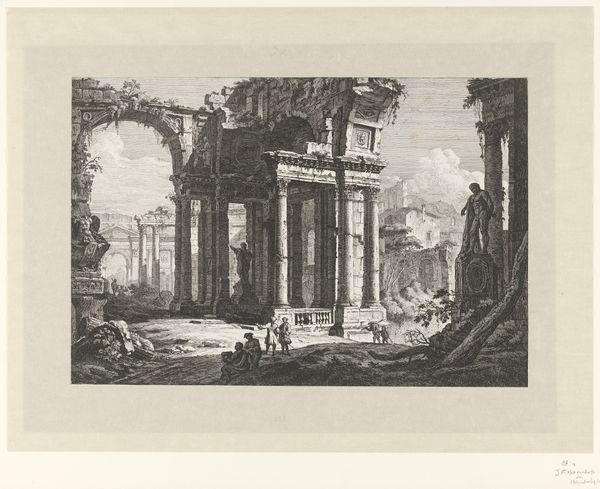
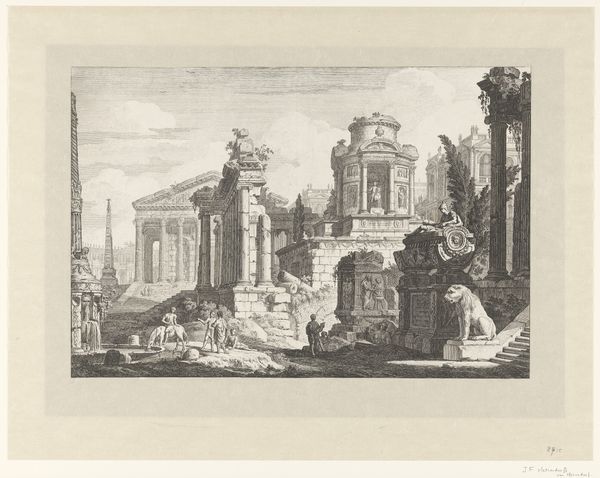
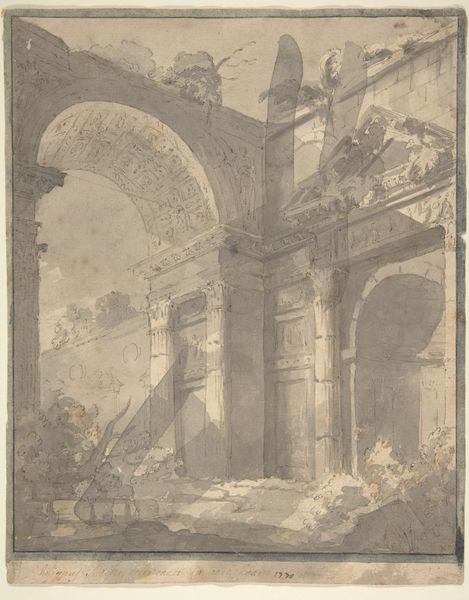
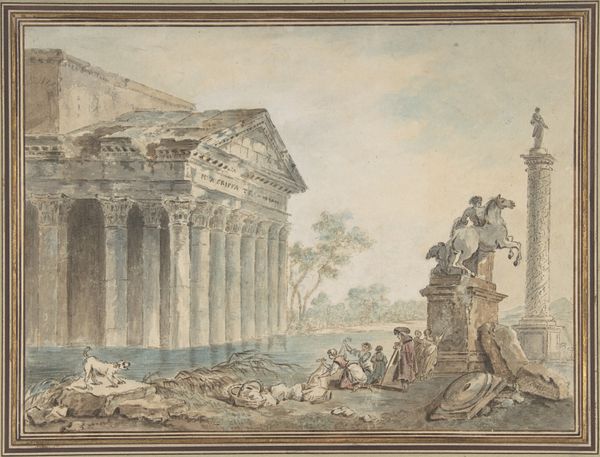
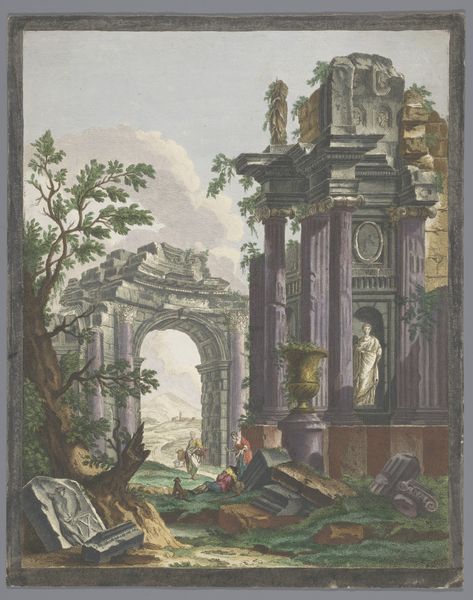
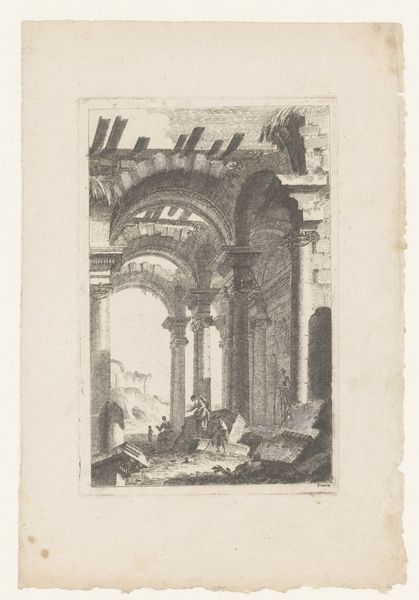
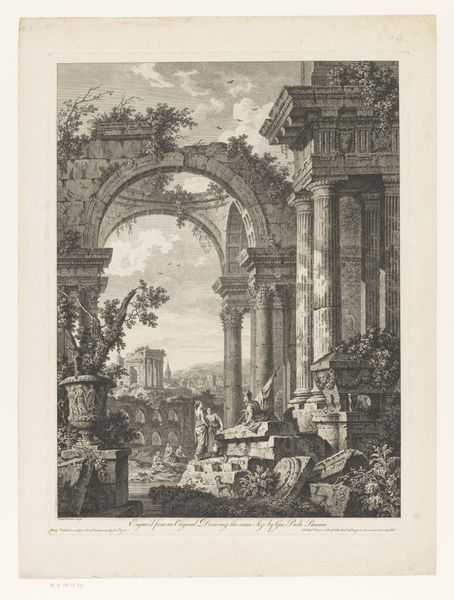
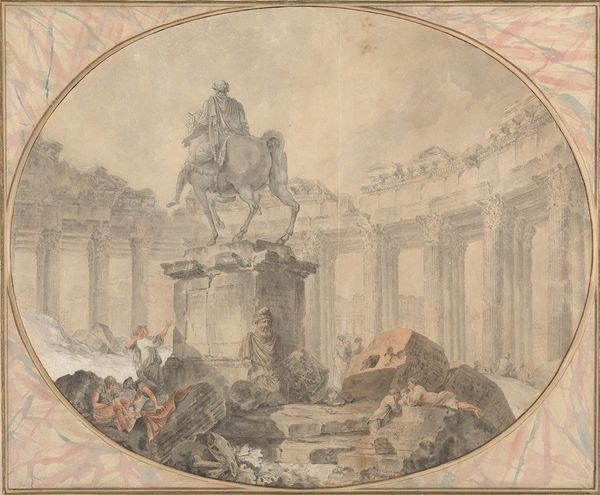
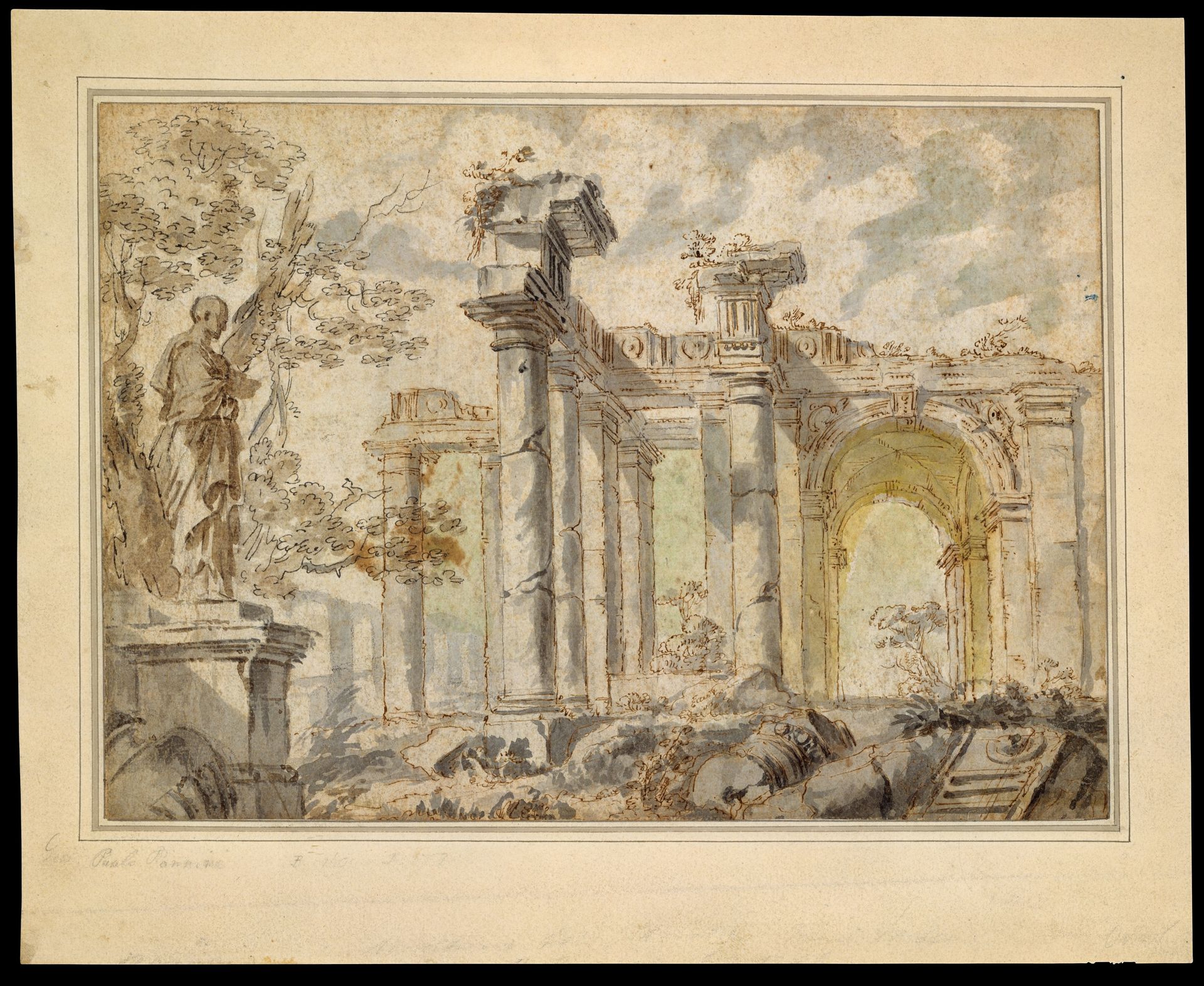
Giovanni Paolo Panini created this watercolor and pen artwork, "Ruins, with a Statue on the Left," sometime in the 18th century. Panini, an Italian painter and architect, was known for his vedute—detailed, often large-scale cityscapes and views of ruins. This piece captures a romanticized vision of ancient Roman ruins, a popular subject during the period known as the Grand Tour. These ruins weren't just stone and mortar; they were potent symbols of a bygone era, laden with narratives of power, decay, and the cyclical nature of history. The statue, standing solemnly amidst the wreckage, serves as a poignant reminder of human ambition and the inevitable passage of time. Panini invites us to reflect on how civilizations rise and fall, and how art and culture endure—or don't—through the ages. It’s a meditation on what we choose to remember, and how we grapple with the legacies of the past.
Ruins, with a Statue on the Left
1725 - 1731

Giovanni Paolo Panini
1691 - 1765
The Metropolitan Museum of Art
Metropolitan Museum of Art, New York, NYArtwork details
- Medium
- drawing, architecture
- Dimensions
- 7 1/2 x 10 7/16 in. (19 x 26.5 cm)
- Location
- Metropolitan Museum of Art, New York, NY
- Copyright
- Public Domain
Tags
Comments
Share your thoughts
About this artwork
Giovanni Paolo Panini created this watercolor and pen artwork, "Ruins, with a Statue on the Left," sometime in the 18th century. Panini, an Italian painter and architect, was known for his vedute—detailed, often large-scale cityscapes and views of ruins. This piece captures a romanticized vision of ancient Roman ruins, a popular subject during the period known as the Grand Tour. These ruins weren't just stone and mortar; they were potent symbols of a bygone era, laden with narratives of power, decay, and the cyclical nature of history. The statue, standing solemnly amidst the wreckage, serves as a poignant reminder of human ambition and the inevitable passage of time. Panini invites us to reflect on how civilizations rise and fall, and how art and culture endure—or don't—through the ages. It’s a meditation on what we choose to remember, and how we grapple with the legacies of the past.
Comments
Share your thoughts