About this artwork
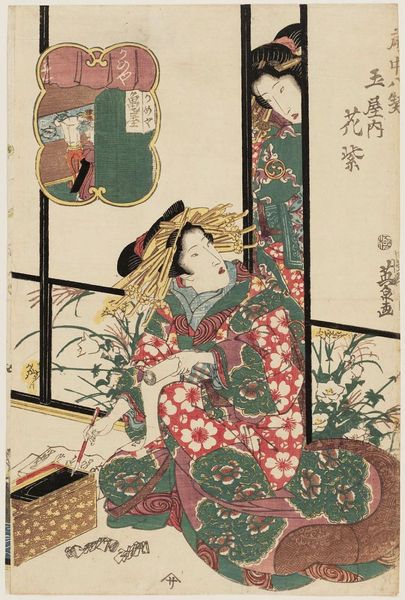
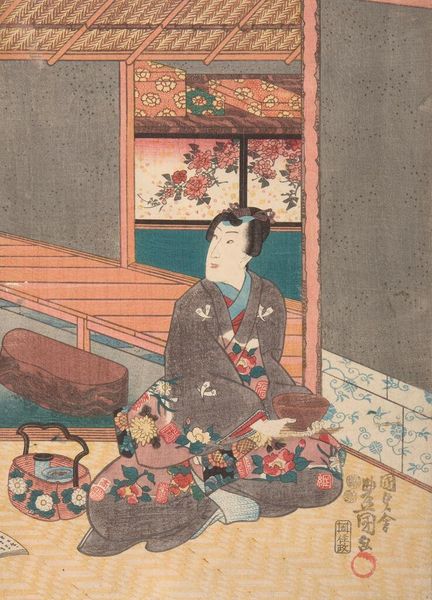
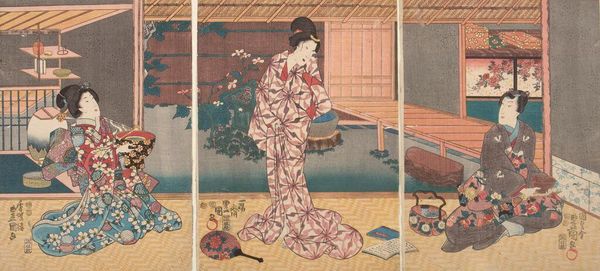
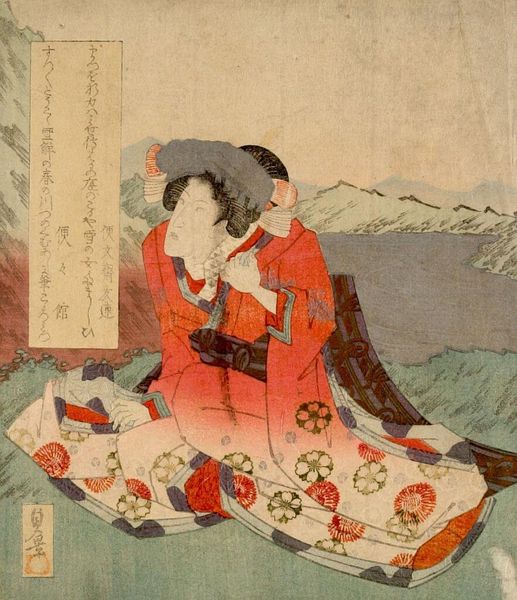
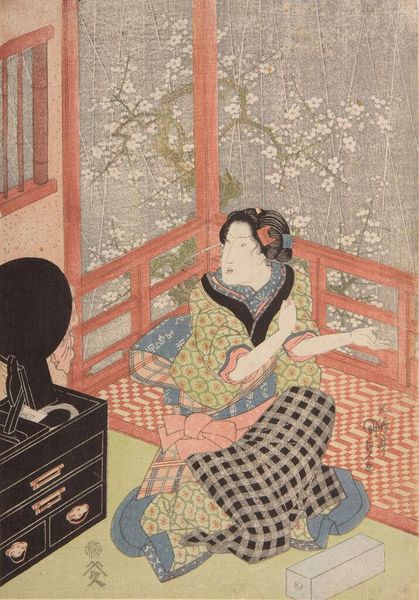
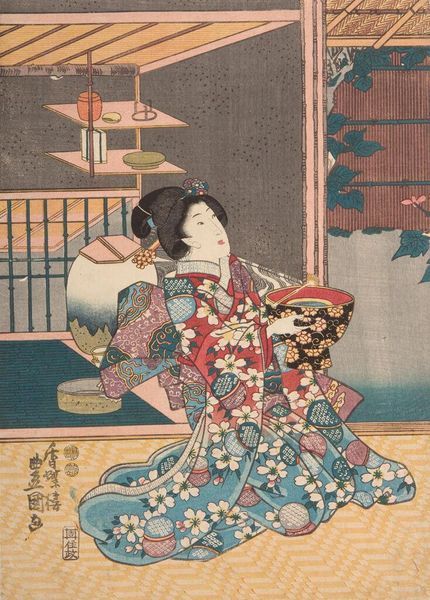
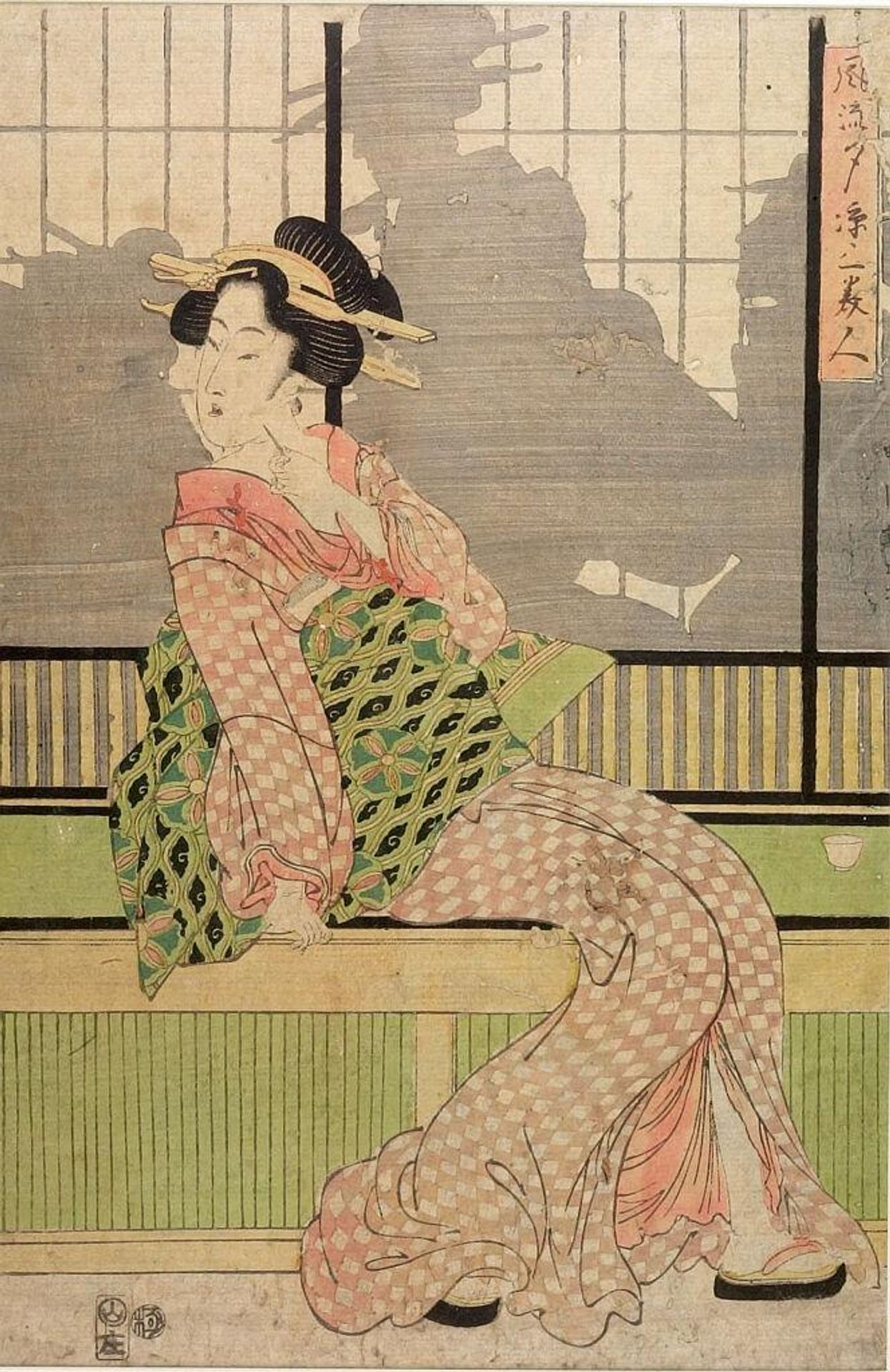
Curator: This is Kikugawa Eizan's "Woman Seated in Front of a Sliding Door." I'm immediately drawn to the composition, the way the planes intersect and the patterning creates a visual rhythm. Editor: It's striking how the artist uses the subject's clothing, the screen, and the room to create a sense of material wealth and domesticity. Woodblock prints like this were produced for mass consumption, showcasing the lifestyle of courtesans. Curator: Agreed, but consider the lines themselves. The curve of her neck mirrors the soft, blurred mountains seen through the shoji screen. It's a delicate contrast. Editor: The printing process itself—the labor involved in carving each block, the cost of the pigments, the economics of distribution—shaped the artwork’s aesthetics and its accessibility to a broader public. Curator: Perhaps, yet the subtle color gradations and the subject's elegant pose are clearly designed for aesthetic pleasure, regardless of who produced it. Editor: Ultimately, understanding the social and economic context enhances, not diminishes, our appreciation of the artwork's formal qualities and Eizan's skill.
Woman Seated in Front of a Sliding Door
c. late to early to mid 19th century


Artwork details
- Location
- Harvard Art Museums
- Copyright
- CC0 1.0
Comments
Share your thoughts
About this artwork
Curator: This is Kikugawa Eizan's "Woman Seated in Front of a Sliding Door." I'm immediately drawn to the composition, the way the planes intersect and the patterning creates a visual rhythm. Editor: It's striking how the artist uses the subject's clothing, the screen, and the room to create a sense of material wealth and domesticity. Woodblock prints like this were produced for mass consumption, showcasing the lifestyle of courtesans. Curator: Agreed, but consider the lines themselves. The curve of her neck mirrors the soft, blurred mountains seen through the shoji screen. It's a delicate contrast. Editor: The printing process itself—the labor involved in carving each block, the cost of the pigments, the economics of distribution—shaped the artwork’s aesthetics and its accessibility to a broader public. Curator: Perhaps, yet the subtle color gradations and the subject's elegant pose are clearly designed for aesthetic pleasure, regardless of who produced it. Editor: Ultimately, understanding the social and economic context enhances, not diminishes, our appreciation of the artwork's formal qualities and Eizan's skill.
Comments
Share your thoughts