About this artwork
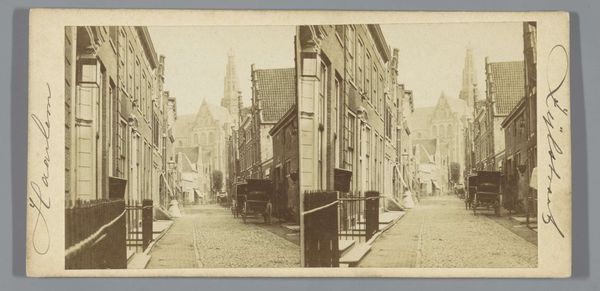
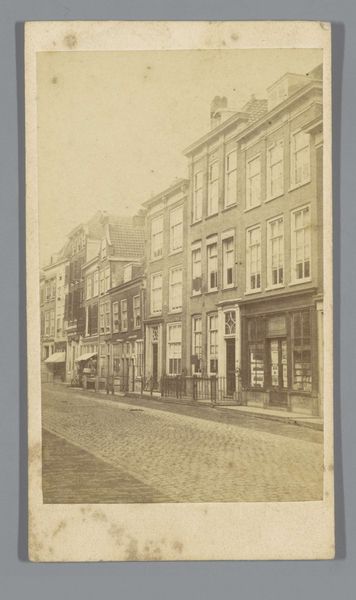
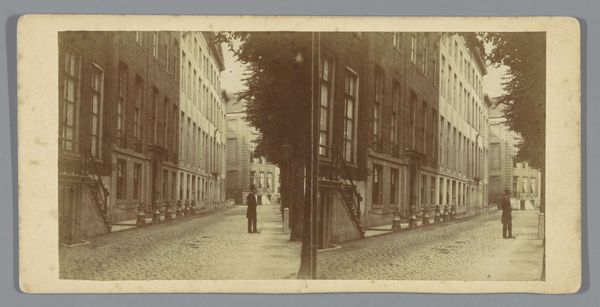
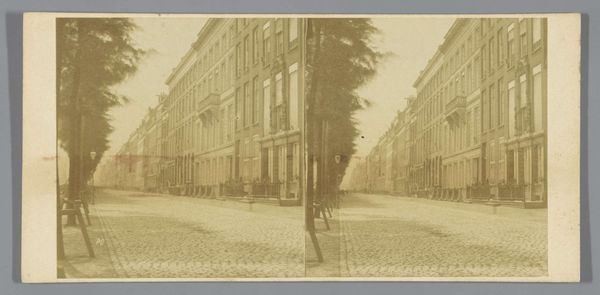
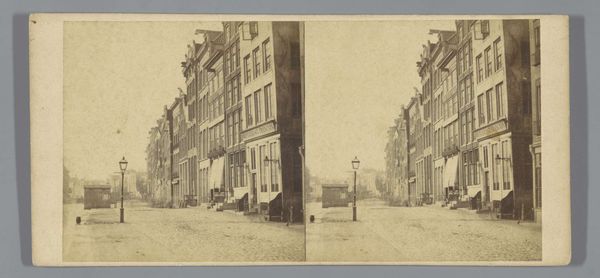
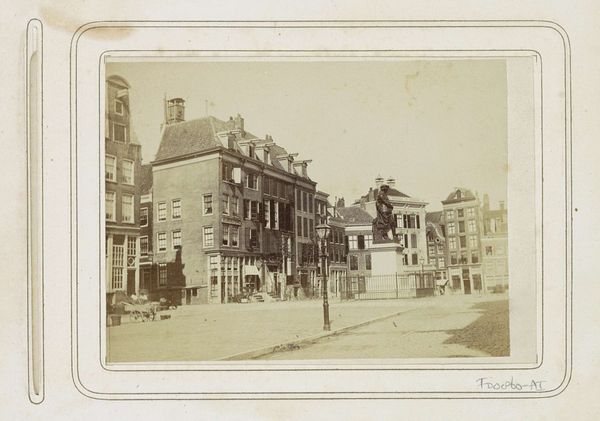
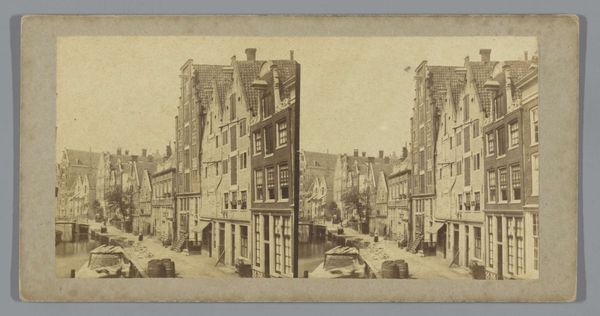
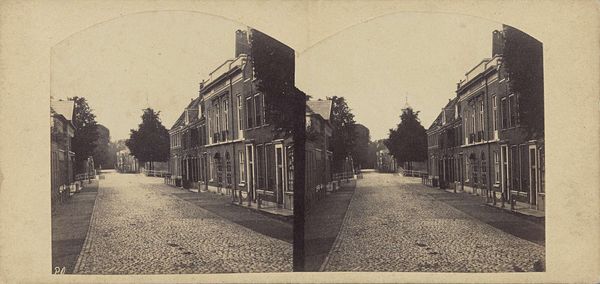
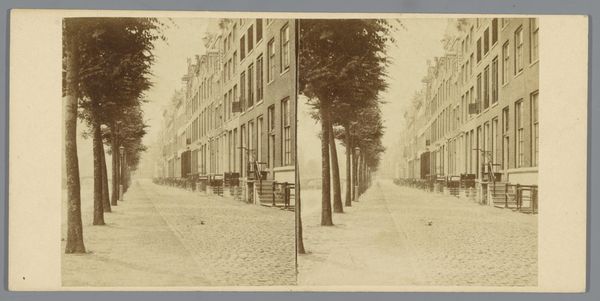
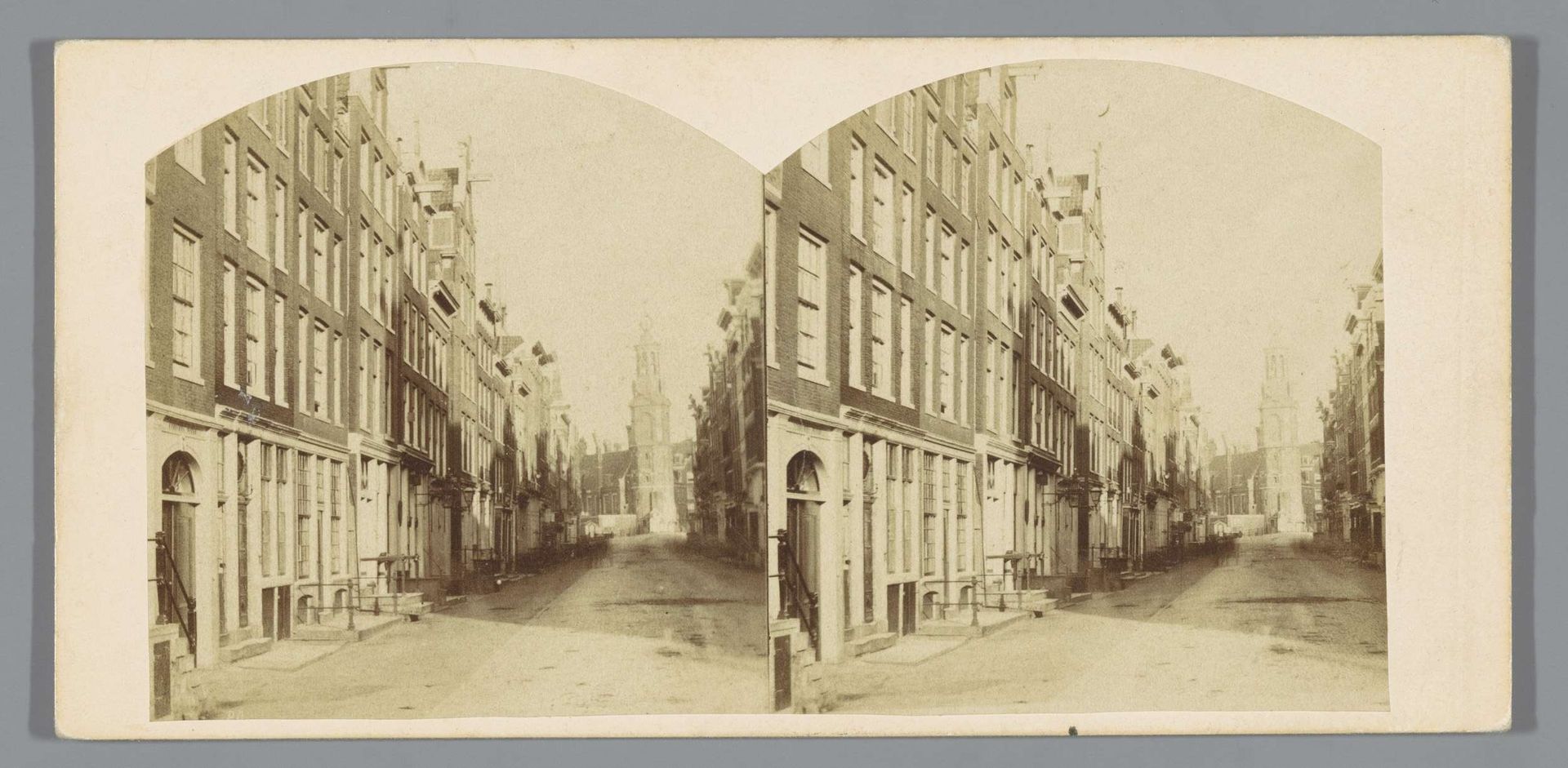
Editor: Here we have Pieter Oosterhuis's 1859 photograph, “Reguliersbreestraat, gezien richting de Munt, Amsterdam,” currently at the Rijksmuseum. The receding lines of buildings create such a feeling of depth. How do you interpret the almost ghostly presence of the distant tower? Curator: That's a fascinating observation! I see that tower as an echo of a deeply embedded civic identity. Towers often symbolize power, aspiration, and connection to both the earthly and the divine. Here, shrouded in the photographic haze, it speaks to the enduring presence of established institutions amid the bustle of everyday life. Note the angle of view: why do you think Oosterhuis situated his camera precisely at this point in the street? Editor: Maybe he was interested in showing the street as an artery, something connecting people to something greater beyond their individual experiences. Is the photographic process itself important here? Curator: Absolutely. The nascent technology of photography aimed, at least initially, for a truthful representation. However, even here, in this pursuit of realism, we have a symbolic rendering. Consider the stillness of the street, made possible by the long exposure. Is that stillness literal? What deeper meaning can be ascribed to the seeming emptiness of the thoroughfare? Editor: That’s true; I hadn’t considered the effect of the exposure time on the image's symbolism. It seems that the symbolism exists in the process as much as the composition. Curator: Precisely! This image speaks to the interwoven narratives of progress and permanence. A cultural memory etched in light and shadow. Editor: That's given me so much to consider. Thanks! Curator: My pleasure. It's these visual echoes that keep history alive, wouldn’t you agree?
Reguliersbreestraat, gezien richting de Munt, Amsterdam 1859

Pieter Oosterhuis
1816 - 1885Location
RijksmuseumArtwork details
- Medium
- print, daguerreotype, photography
- Dimensions
- height 83 mm, width 173 mm
- Location
- Rijksmuseum
- Copyright
- Rijks Museum: Open Domain
Tags
16_19th-century
daguerreotype
photography
cityscape
realism
Comments
No comments
About this artwork
Editor: Here we have Pieter Oosterhuis's 1859 photograph, “Reguliersbreestraat, gezien richting de Munt, Amsterdam,” currently at the Rijksmuseum. The receding lines of buildings create such a feeling of depth. How do you interpret the almost ghostly presence of the distant tower? Curator: That's a fascinating observation! I see that tower as an echo of a deeply embedded civic identity. Towers often symbolize power, aspiration, and connection to both the earthly and the divine. Here, shrouded in the photographic haze, it speaks to the enduring presence of established institutions amid the bustle of everyday life. Note the angle of view: why do you think Oosterhuis situated his camera precisely at this point in the street? Editor: Maybe he was interested in showing the street as an artery, something connecting people to something greater beyond their individual experiences. Is the photographic process itself important here? Curator: Absolutely. The nascent technology of photography aimed, at least initially, for a truthful representation. However, even here, in this pursuit of realism, we have a symbolic rendering. Consider the stillness of the street, made possible by the long exposure. Is that stillness literal? What deeper meaning can be ascribed to the seeming emptiness of the thoroughfare? Editor: That’s true; I hadn’t considered the effect of the exposure time on the image's symbolism. It seems that the symbolism exists in the process as much as the composition. Curator: Precisely! This image speaks to the interwoven narratives of progress and permanence. A cultural memory etched in light and shadow. Editor: That's given me so much to consider. Thanks! Curator: My pleasure. It's these visual echoes that keep history alive, wouldn’t you agree?
Comments
No comments