About this artwork
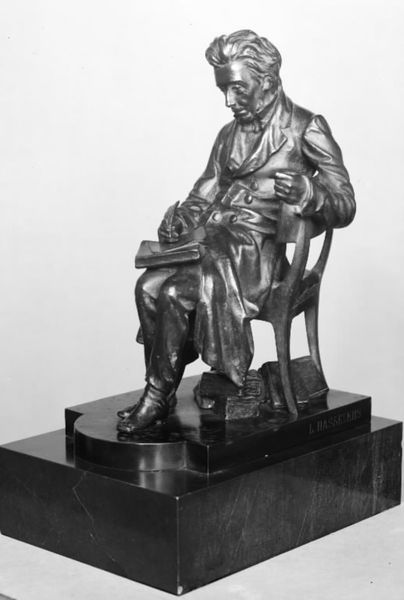
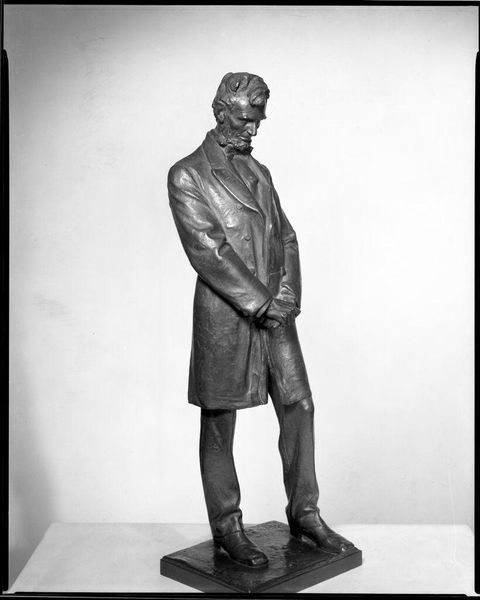
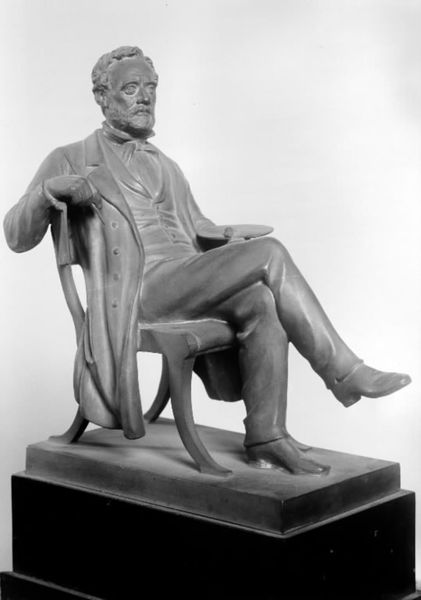
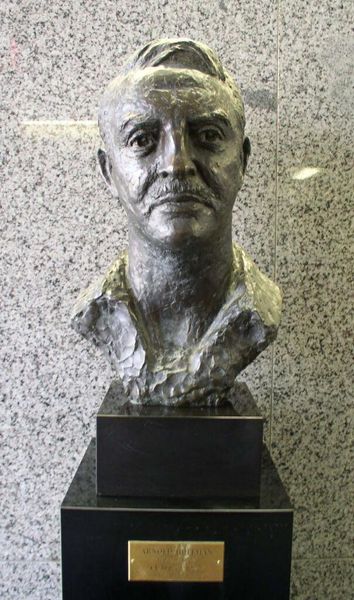
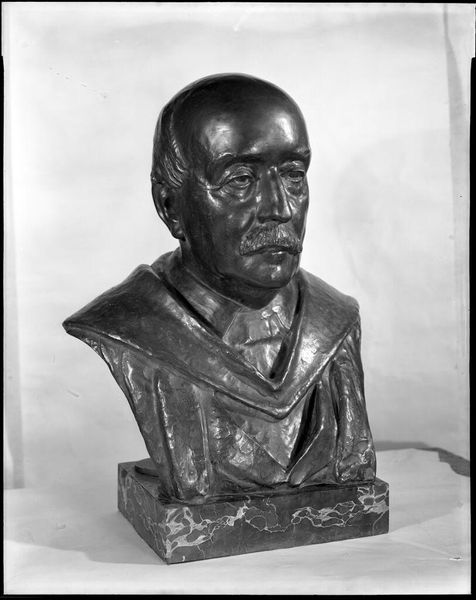
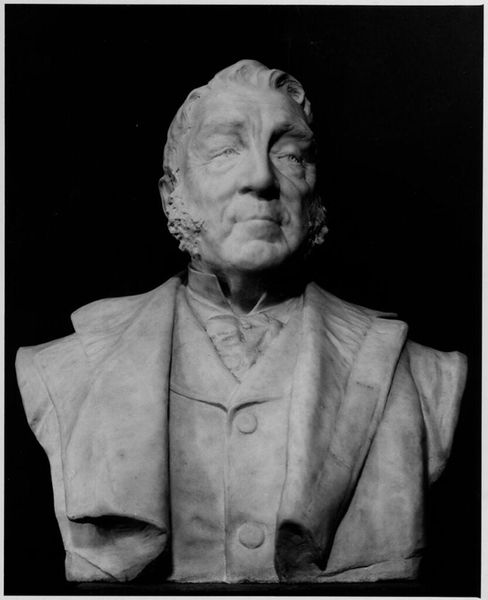
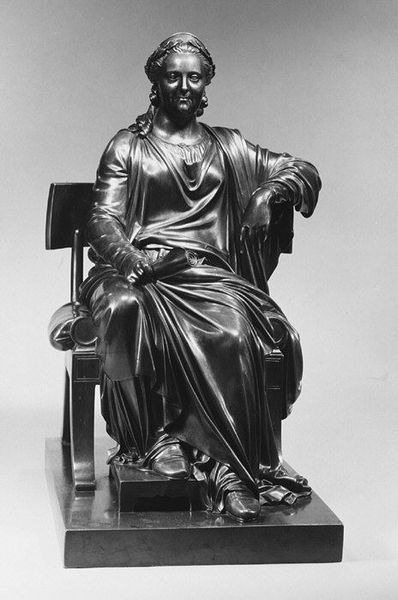
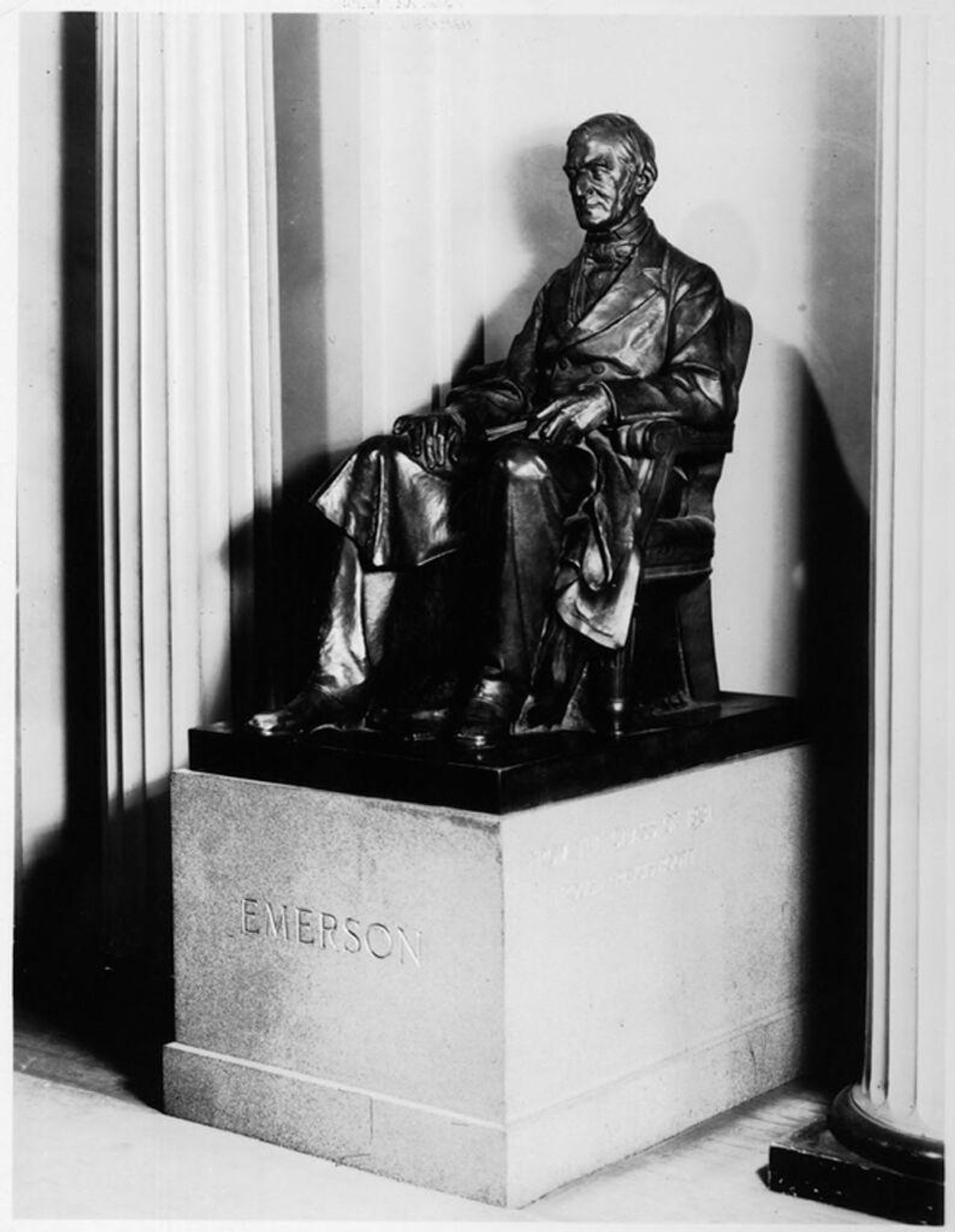
Editor: Here we have Frank Duveneck's sculpture of Ralph Waldo Emerson. It's quite imposing, and the way he's seated gives him a relaxed, contemplative air. What strikes you most about this piece? Curator: I'm drawn to how it represents Emerson, not just as an individual, but as a figure of intellectual authority in a time of significant social upheaval. The sculpture invites us to consider the role of intellectuals in shaping societal values. Does the sculpture reflect the complicated legacy of transcendentalism? Editor: The role of intellectuals, I see that. Curator: Yes, think about the power dynamics inherent in representing a philosopher as a monument. It begs the question, who gets memorialized and why? What values are being enshrined in this very act of commemoration? Editor: That's a powerful point. I hadn't considered the implications of the monument itself. Curator: Understanding this sculpture requires a critical assessment of the social and political forces that shaped its creation and reception, as well as the ongoing relevance of Emerson's ideas today. Editor: Thank you. It's helped me think about it in an entirely new way.
Ralph Waldo Emerson (1803-1882) 1903 - 1905


Artwork details
- Dimensions
- 153 x 93 x 133 cm (60 1/4 x 36 5/8 x 52 3/8 in.)
- Location
- Harvard Art Museums
- Copyright
- CC0 1.0
Comments
No comments
About this artwork
Editor: Here we have Frank Duveneck's sculpture of Ralph Waldo Emerson. It's quite imposing, and the way he's seated gives him a relaxed, contemplative air. What strikes you most about this piece? Curator: I'm drawn to how it represents Emerson, not just as an individual, but as a figure of intellectual authority in a time of significant social upheaval. The sculpture invites us to consider the role of intellectuals in shaping societal values. Does the sculpture reflect the complicated legacy of transcendentalism? Editor: The role of intellectuals, I see that. Curator: Yes, think about the power dynamics inherent in representing a philosopher as a monument. It begs the question, who gets memorialized and why? What values are being enshrined in this very act of commemoration? Editor: That's a powerful point. I hadn't considered the implications of the monument itself. Curator: Understanding this sculpture requires a critical assessment of the social and political forces that shaped its creation and reception, as well as the ongoing relevance of Emerson's ideas today. Editor: Thank you. It's helped me think about it in an entirely new way.
Comments
No comments