About this artwork
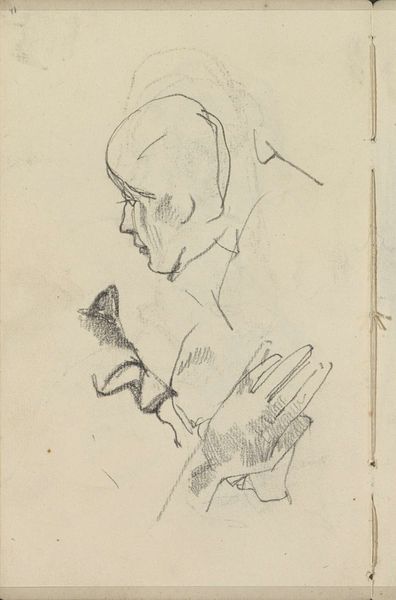
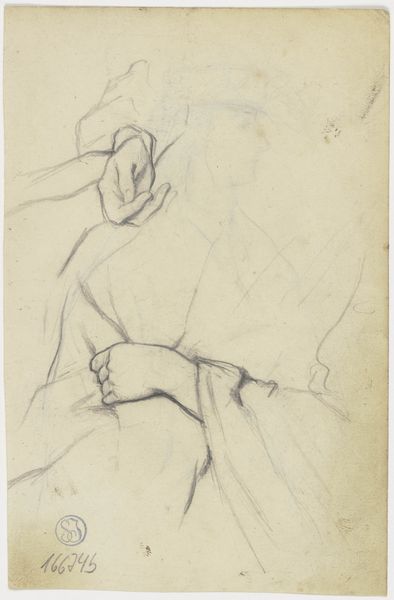
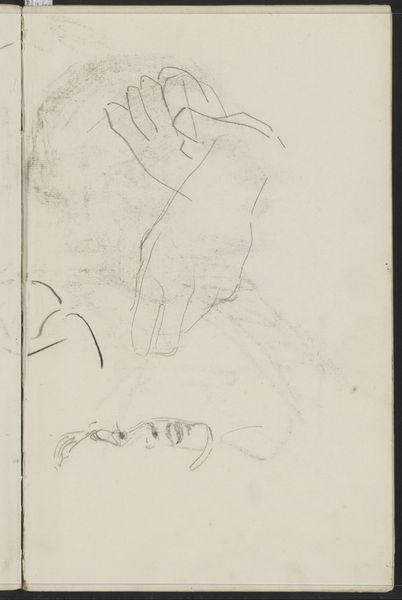
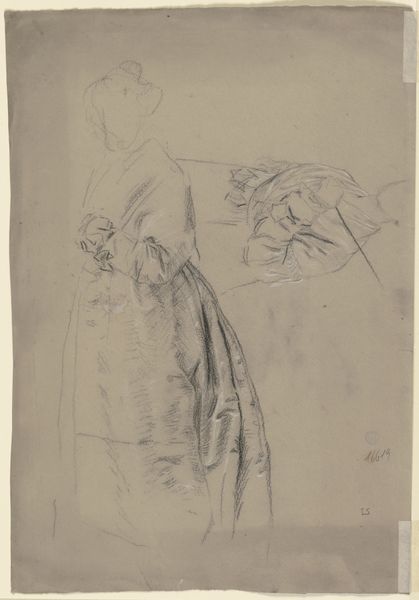
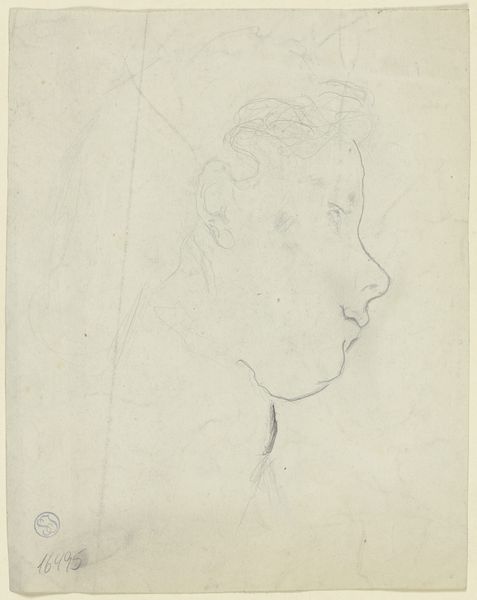
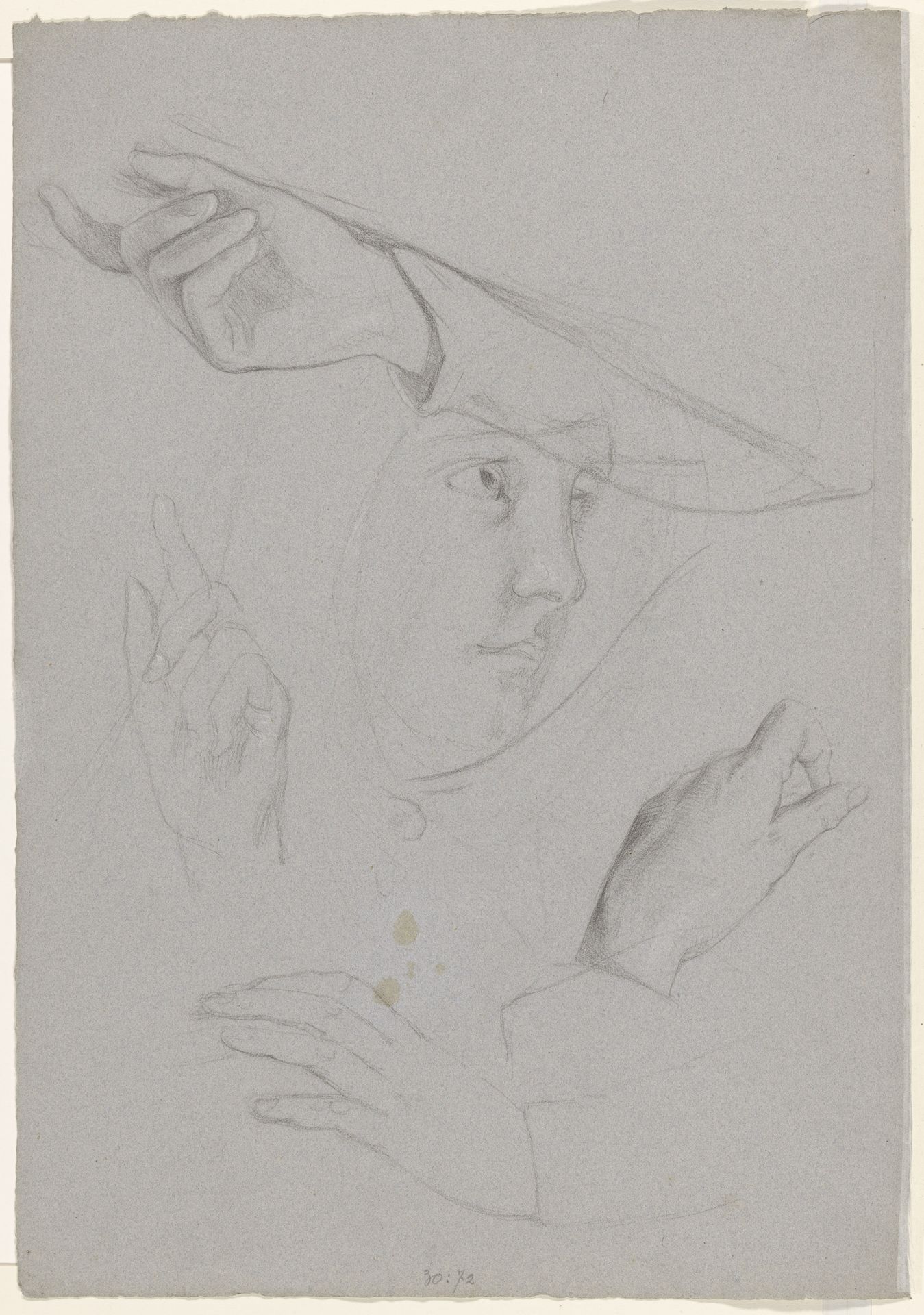
Jan Adam Kruseman made this study of hands and a woman's head in the Netherlands, probably in the first half of the 19th century. It's a preparatory sketch, a glimpse into the artist's working process. Kruseman was a sought-after portrait painter, particularly among the Dutch elite. This drawing, although not a finished portrait, reflects the prevailing artistic conventions of the time. The careful attention to detail, especially in the hands, reveals a concern with conveying character and social standing. The Rijksmuseum, where this drawing is housed, plays a crucial role in shaping our understanding of Dutch art history. The museum's collection and display practices influence which artists and artworks are deemed important. Art historians often turn to archival sources such as letters and exhibition records to reconstruct the social and institutional context in which art was created and consumed.
Studies van handen en een vrouwenkop
1814 - 1862

Jan Adam Kruseman
1804 - 1862Location
RijksmuseumArtwork details
- Medium
- drawing, paper, pencil
- Dimensions
- height 540 mm, width 375 mm
- Location
- Rijksmuseum
- Copyright
- Rijks Museum: Open Domain
Tags
portrait
drawing
amateur sketch
toned paper
light pencil work
pencil sketch
figuration
paper
personal sketchbook
pencil drawing
ink drawing experimentation
pencil
sketchbook drawing
portrait drawing
pencil work
Comments
Be the first to share your thoughts about this work.
About this artwork
Jan Adam Kruseman made this study of hands and a woman's head in the Netherlands, probably in the first half of the 19th century. It's a preparatory sketch, a glimpse into the artist's working process. Kruseman was a sought-after portrait painter, particularly among the Dutch elite. This drawing, although not a finished portrait, reflects the prevailing artistic conventions of the time. The careful attention to detail, especially in the hands, reveals a concern with conveying character and social standing. The Rijksmuseum, where this drawing is housed, plays a crucial role in shaping our understanding of Dutch art history. The museum's collection and display practices influence which artists and artworks are deemed important. Art historians often turn to archival sources such as letters and exhibition records to reconstruct the social and institutional context in which art was created and consumed.
Comments
Be the first to share your thoughts about this work.