print, etching, engraving
#
dutch-golden-age
# print
#
pen sketch
#
etching
#
old engraving style
#
landscape
#
figuration
#
pen-ink sketch
#
line
#
pen work
#
cityscape
#
genre-painting
#
history-painting
#
northern-renaissance
#
engraving
Dimensions: height 135 mm, width 158 mm
Copyright: Rijks Museum: Open Domain
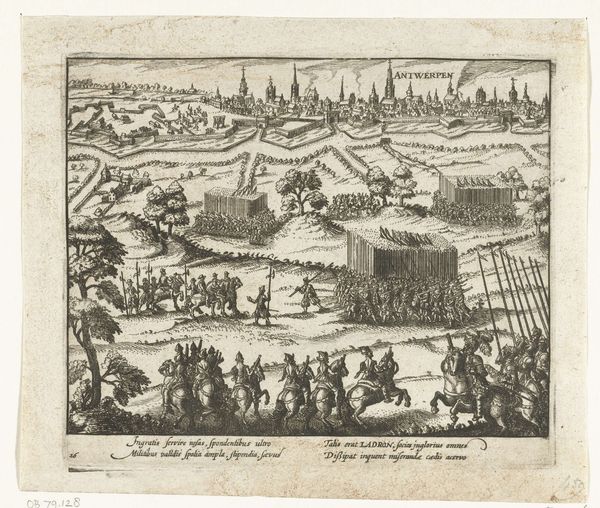
Editor: We’re looking at "Hagenpreken buiten Antwerpen, 1566," an etching from between 1613 and 1615. It’s incredibly detailed, showing a large outdoor gathering, and the mood seems…tense, watchful. What do you see in this piece, beyond the immediate scene? Curator: Beyond the depiction of an open-air sermon, or *hagenpreek*, I see a coded representation of religious and political resistance. Remember, these sermons were often held in secret, outside city walls, because they were led by Protestants defying Catholic rule in the Spanish Netherlands. Editor: So, it's not just a gathering; it's an act of defiance? Curator: Precisely. The "landscape" isn't merely decorative; it becomes a space of dissidence. Consider the way the artist subtly portrays the city of Antwerp in the background, looming, but separate from the vibrant activity of the sermon. How does this visual separation speak to the relationship between the governing authorities and the burgeoning Protestant movement? Editor: It’s like two different worlds existing side by side, one dominating, one trying to break free. Is the choice of printmaking itself a form of resistance? Curator: Absolutely. Prints were easily disseminated, acting as visual propaganda. This image could circulate widely, fostering a sense of community and shared struggle among Protestants across geographical boundaries. It's fascinating to consider how a work of art becomes a tool for shaping public opinion and solidifying identity. Editor: I never thought about landscape and medium as active participants in the narrative. Thank you, this really changes my perspective. Curator: And for me, thinking about how contemporary issues of freedom of assembly resonate even within these historical images reveals just how intertwined the past is with the present.
Comments
No comments
Be the first to comment and join the conversation on the ultimate creative platform.
 Collect
 React
React Comment
More like this