About this artwork
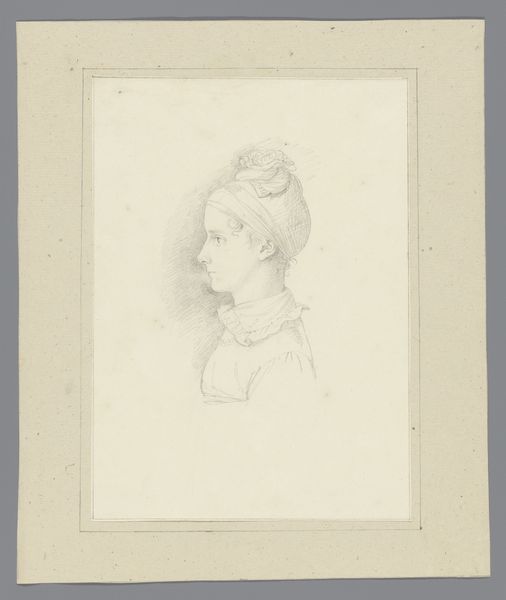
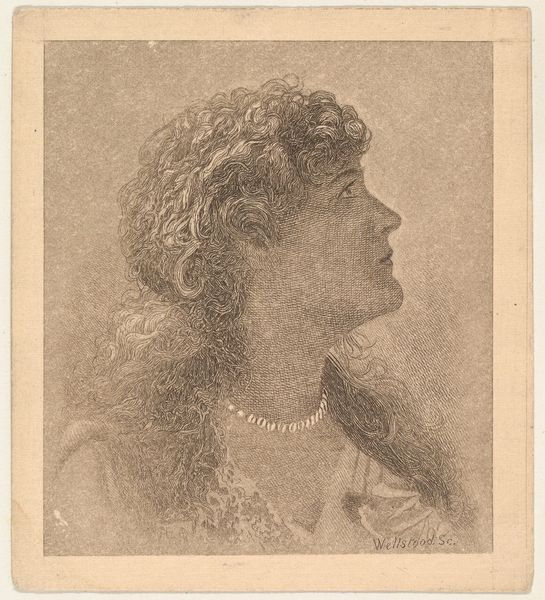
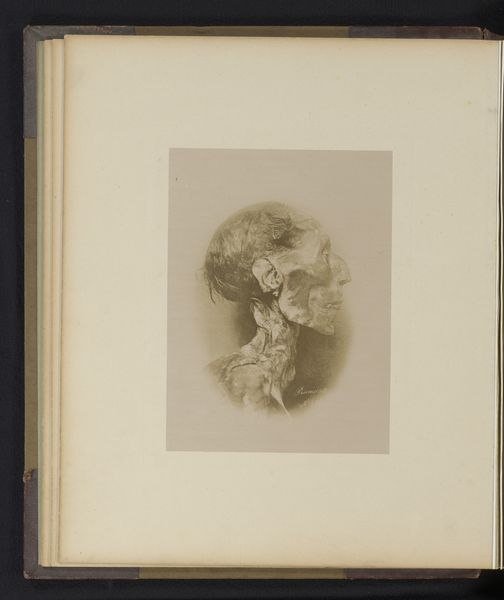
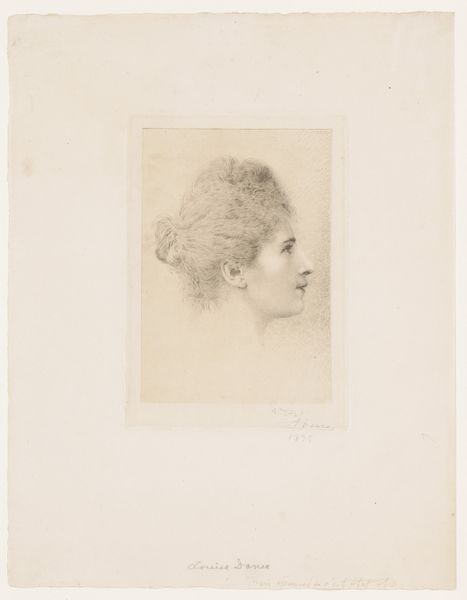
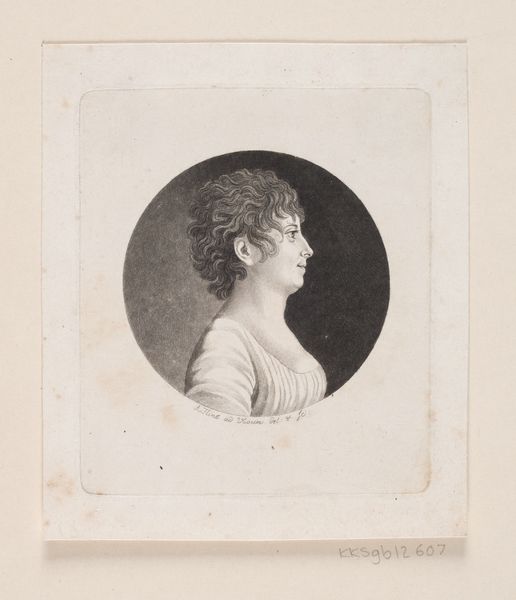
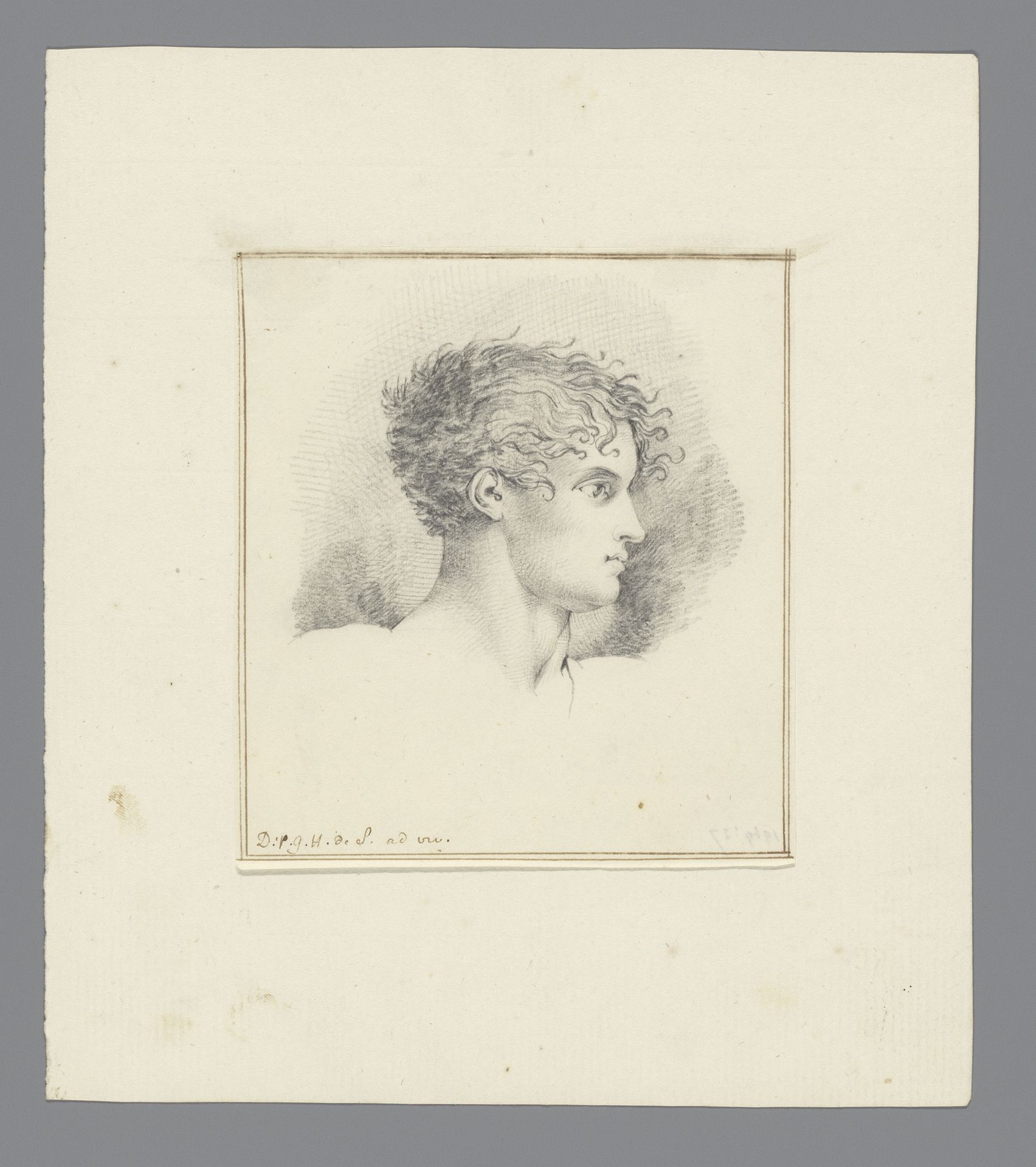
Editor: This is "Manskop met krulhaar, in profiel naar rechts," or "Man's Head with Curly Hair, in Profile to the Right," by David-Pierre Giottino Humbert de Superville, an engraving dating from between 1780 and 1849. I find the subject rather idealized, almost like a classical statue. What strikes you about this piece? Curator: The academic style, evident in the idealized features and the medium of engraving, reflects the art world's deep engagement with classical ideals and the power structures that upheld them. Consider the role of academies in standardizing artistic training during this period. What message did these idealized depictions of the male form convey about power, beauty, and even citizenship within that society? Editor: That's interesting. So you're saying that even a simple portrait like this could be making a statement about social values at the time? Curator: Precisely. Engravings like this circulated widely. They served as models for aspiring artists and reinforced certain notions of beauty and worthiness, especially for the aristocratic class. Think of it as visual propaganda, subtly promoting a specific worldview through aesthetics. Who was being represented in art, and who was left out? Editor: It's unsettling to think how something so seemingly innocent is embedded with that type of historical baggage! Curator: It is important to analyze the context to truly interpret a piece of work such as this one. Consider how the politics of imagery, including portraiture, shape collective memory. Understanding that this era idealized male beauty, how would you say that affects current culture? Editor: I'll certainly never look at neoclassical art the same way again. There's a lot to think about here! Curator: Indeed. And understanding the public role of art is how we engage more deeply with history.
Manskop met krulhaar, in profiel naar rechts
1780 - 1849

David-Pierre Giottino Humbert de Superville
1770 - 1849Location
RijksmuseumArtwork details
- Medium
- print, engraving
- Dimensions
- height 115 mm, width 103 mm
- Location
- Rijksmuseum
- Copyright
- Rijks Museum: Open Domain
Tags
Comments
Share your thoughts
About this artwork
Editor: This is "Manskop met krulhaar, in profiel naar rechts," or "Man's Head with Curly Hair, in Profile to the Right," by David-Pierre Giottino Humbert de Superville, an engraving dating from between 1780 and 1849. I find the subject rather idealized, almost like a classical statue. What strikes you about this piece? Curator: The academic style, evident in the idealized features and the medium of engraving, reflects the art world's deep engagement with classical ideals and the power structures that upheld them. Consider the role of academies in standardizing artistic training during this period. What message did these idealized depictions of the male form convey about power, beauty, and even citizenship within that society? Editor: That's interesting. So you're saying that even a simple portrait like this could be making a statement about social values at the time? Curator: Precisely. Engravings like this circulated widely. They served as models for aspiring artists and reinforced certain notions of beauty and worthiness, especially for the aristocratic class. Think of it as visual propaganda, subtly promoting a specific worldview through aesthetics. Who was being represented in art, and who was left out? Editor: It's unsettling to think how something so seemingly innocent is embedded with that type of historical baggage! Curator: It is important to analyze the context to truly interpret a piece of work such as this one. Consider how the politics of imagery, including portraiture, shape collective memory. Understanding that this era idealized male beauty, how would you say that affects current culture? Editor: I'll certainly never look at neoclassical art the same way again. There's a lot to think about here! Curator: Indeed. And understanding the public role of art is how we engage more deeply with history.
Comments
Share your thoughts