About this artwork
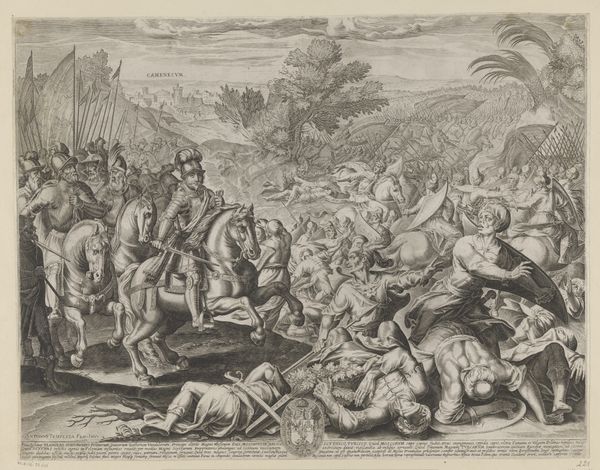
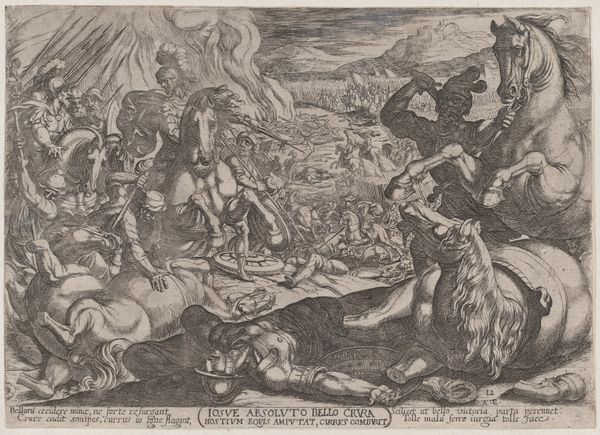
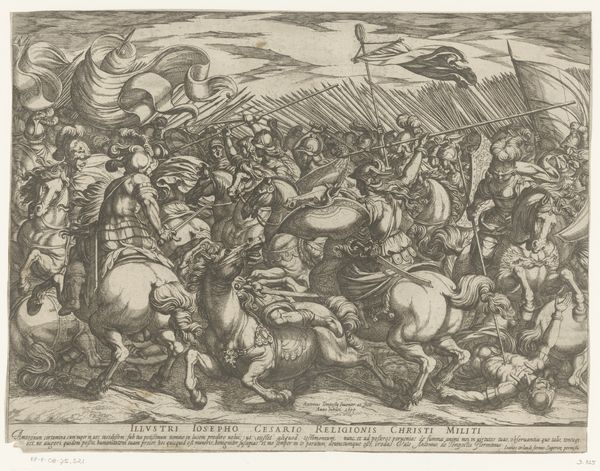
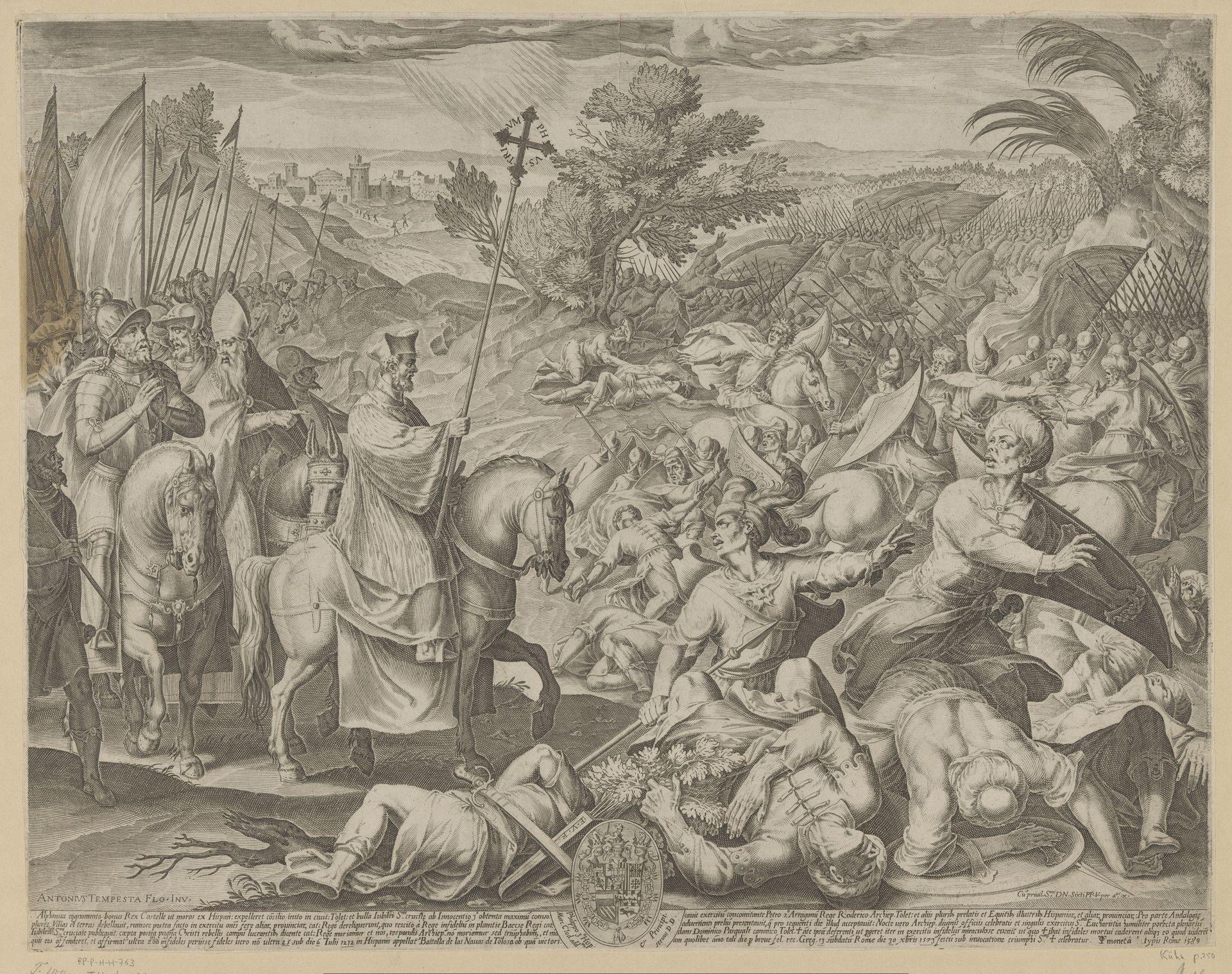
"Slag bij Las Navas de Tolosa" is an engraving made by Francesco Villamena, an Italian printmaker active in the late 16th and early 17th centuries. The image depicts a historical battle of 1212 between the Christian kingdoms of Spain and the Almohad Caliphate, a significant moment in the ‘Reconquista’. Villamena, however, was not Spanish, and neither was he alive to witness the event. So, what does it mean to see this moment through the lens of a 17th-century Italian artist? How did Villamena understand the narratives of power, religion, and identity at play in this battle? It invites us to reflect on how historical events are mediated and interpreted across different cultural contexts, and on the biases that might be embedded in these representations. The detailed depiction of violence is hard to ignore, yet it’s the composition that leaves a lasting impression, posing questions about the role of religion in shaping conflicts and the human cost of these clashes.

Artwork details
- Dimensions
- height 404 mm, width 520 mm
- Copyright
- Rijks Museum: Open Domain
Comments
No comments
About this artwork
"Slag bij Las Navas de Tolosa" is an engraving made by Francesco Villamena, an Italian printmaker active in the late 16th and early 17th centuries. The image depicts a historical battle of 1212 between the Christian kingdoms of Spain and the Almohad Caliphate, a significant moment in the ‘Reconquista’. Villamena, however, was not Spanish, and neither was he alive to witness the event. So, what does it mean to see this moment through the lens of a 17th-century Italian artist? How did Villamena understand the narratives of power, religion, and identity at play in this battle? It invites us to reflect on how historical events are mediated and interpreted across different cultural contexts, and on the biases that might be embedded in these representations. The detailed depiction of violence is hard to ignore, yet it’s the composition that leaves a lasting impression, posing questions about the role of religion in shaping conflicts and the human cost of these clashes.
Comments
No comments