'Christiansborg, a Danish Settlement on the Gold Coast, Africa' 1806
0:00
0:00


aquatint, print, watercolor
#
aquatint
#
water colours
# print
#
landscape
#
watercolor
#
romanticism
#
cityscape
Dimensions: 470 mm (height) x 595 mm (width) (None)
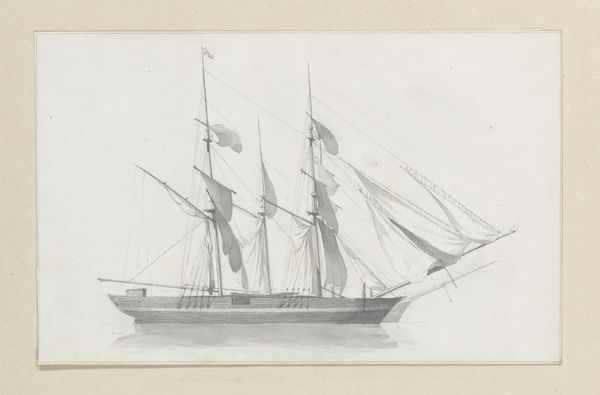
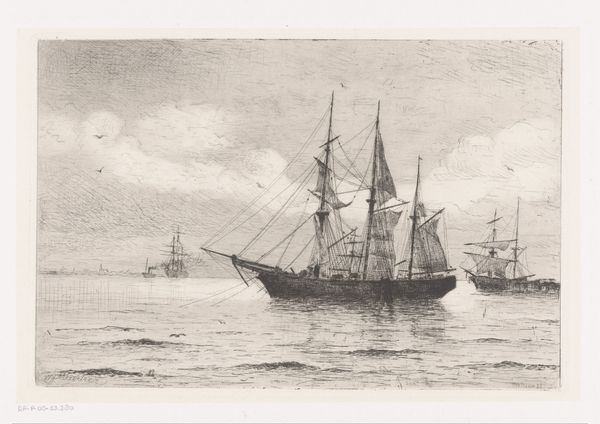
Curator: Let's take a moment with John Hill’s “Christiansborg, a Danish Settlement on the Gold Coast, Africa,” created in 1806. It's currently held at the SMK, the National Gallery of Denmark. Editor: It's strikingly melancholic, isn't it? The watercolor gives it this washed-out feel, and the fort in the distance looks almost ghostly, disconnected from the vibrant blue waves. Curator: The piece depicts the Christiansborg fort, a key site of Danish presence in what is now Ghana. The print uses aquatint, which creates tonal effects to evoke atmosphere. We need to consider the public this image was made for. Who was meant to consume this romantic vision of colonial power? Editor: I’m drawn to the textures, even within the limitations of a print. The way the water is rendered, with individual strokes implying movement and depth… It makes you think about the labor involved, not just in the creation of the print, but in the actual act of sailing, the physicality of maintaining the ships. What kind of ink would hold such pigment? Curator: Precisely. It's a portrayal meant to solidify a sense of imperial authority and adventure back home in Denmark. The focus on the grandeur of the ships and the implied order of the fort were powerful visual tools used to legitimize colonial endeavors. We also shouldn't forget that it was gifted to The Duke of Clarence, further linking the print with political ambitions and prestige. Editor: The sailboats and smaller native boat shown imply an economic exchange dependent on craft production and transportation that, from a distance, appear fluid and organic, belying any indication of exploitation and commodification. You said the image was meant to evoke adventure...what kind? Curator: One tinged with heroism, and nationalistic ambition of expanding political presence and trade opportunities in so-called 'exotic lands'. In its original context, it served to celebrate the Danish colonial project and solidify its role in the public imagination. Editor: Knowing this image lives at SMK challenges me to think about how its materiality contributes to contemporary institutional critique. Thinking of colonialism as embodied knowledge means looking back at images like this as records. Curator: A compelling point. By situating "Christiansborg" within its collection, the SMK creates an opportunity for viewers to reflect on the legacies of colonialism and Denmark's role within it. Editor: Right. It gives the object renewed relevance today as part of a larger critical effort.
Comments
No comments
Be the first to comment and join the conversation on the ultimate creative platform.
 Collect
 React
React Comment
More like this