1934
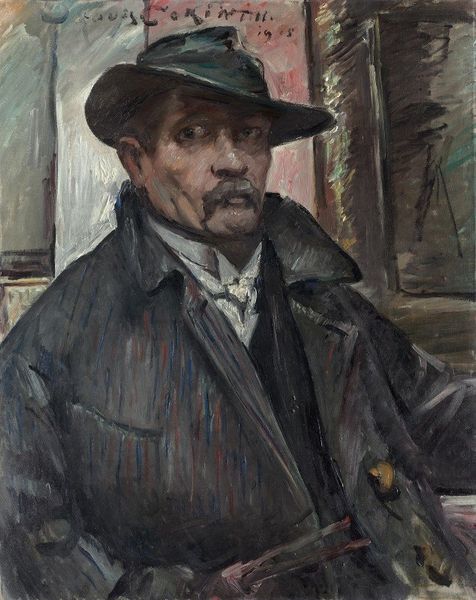
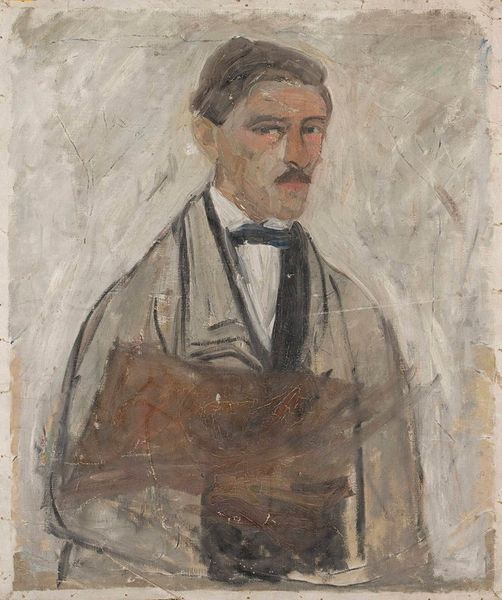
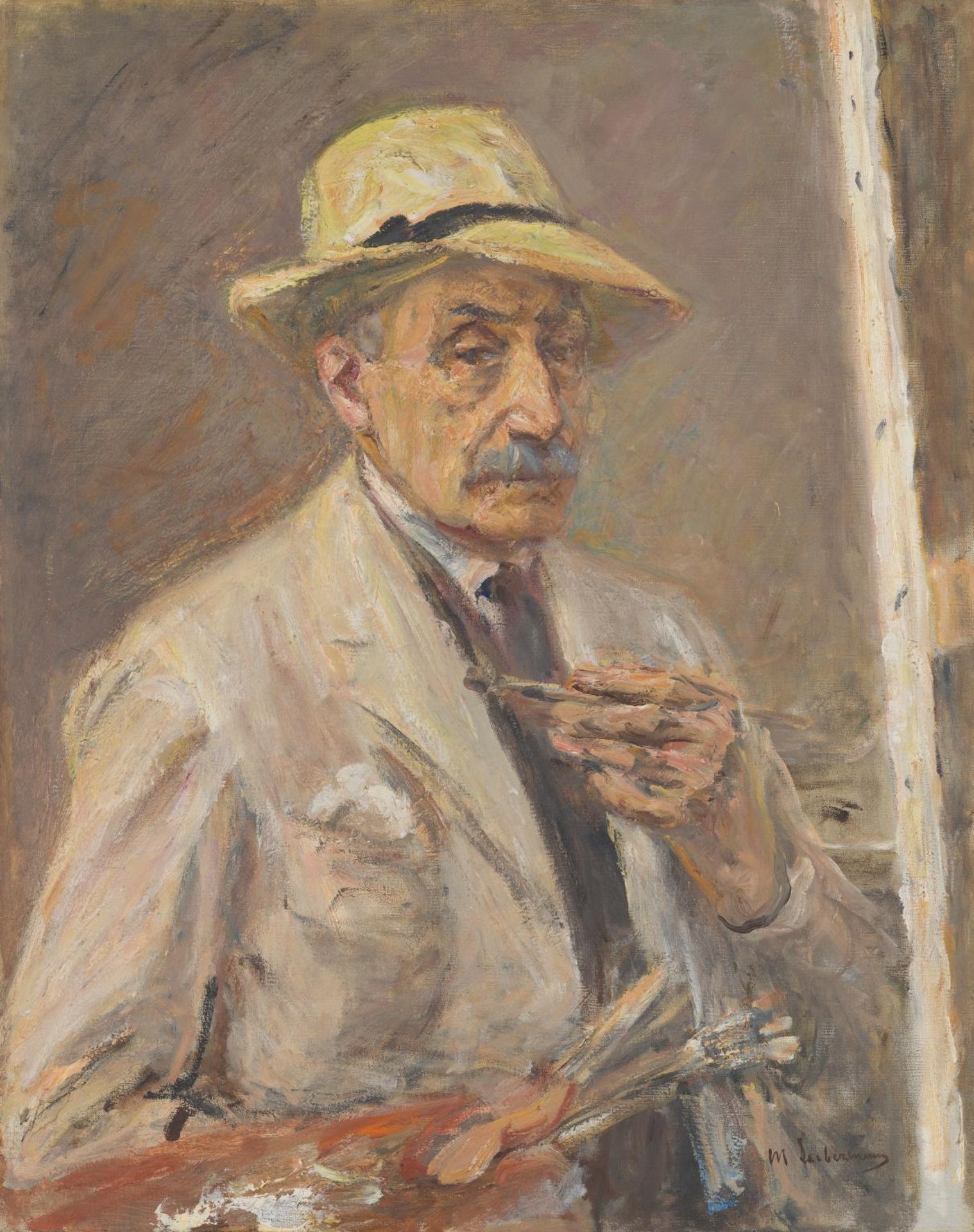
Self-Portrait


Listen to curator's interpretation
Curatorial notes
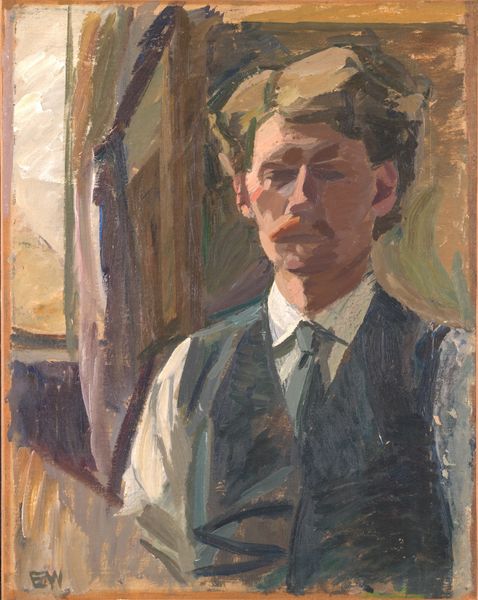
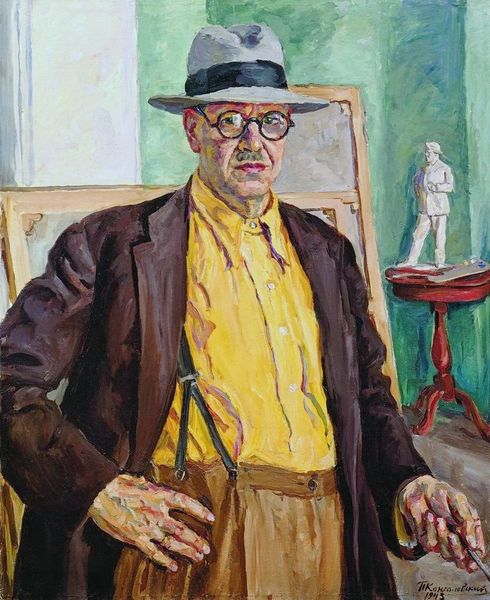
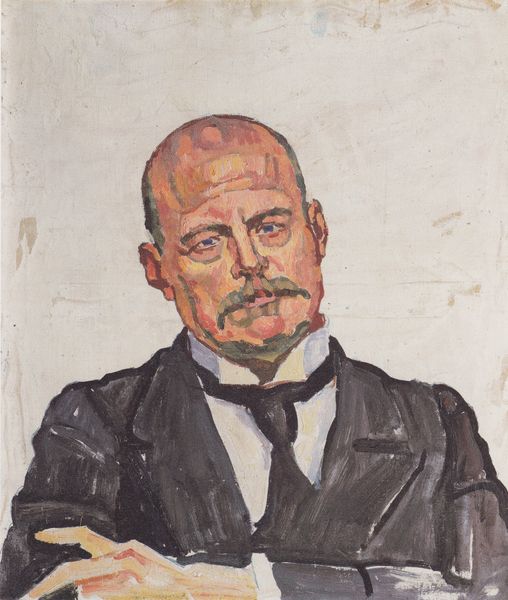
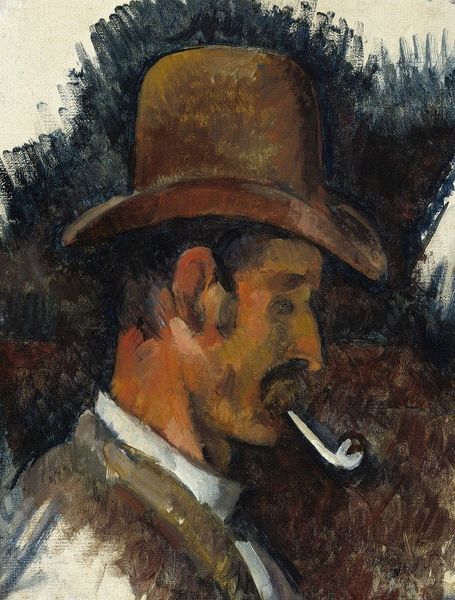
Curator: Liebermann's "Self-Portrait" at the Tate—it’s like catching the man mid-thought. He's got that slightly distracted artist's gaze, doesn’t he? Editor: Distracted, or perhaps intensely focused on his craft? I'm drawn to the texture; you can see the layering of paint, the materiality of the process itself. Curator: Absolutely, you can almost feel him building the image, brushstroke by brushstroke. It feels honest, like a conversation between him and the canvas. Editor: It’s a very straightforward presentation of the artist. He shows himself in his painting clothes, with his tools. It's unpretentious, really. Curator: Yes, he embraces the everyday reality of being a painter. A reminder that even self-portraits are constructed, tangible things. Editor: And that, ultimately, they are made by someone, by a human being at work. It’s grounding to be reminded of that. Curator: It is. And perhaps why Liebermann's directness still resonates with us. Editor: Indeed. The painting feels like an invitation to participate in its making, almost.