1955
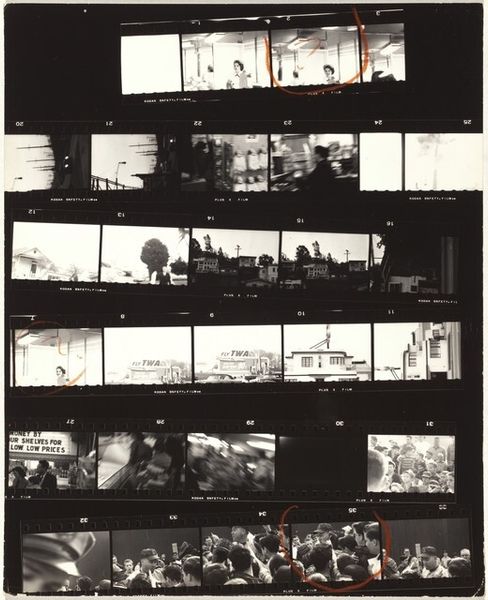
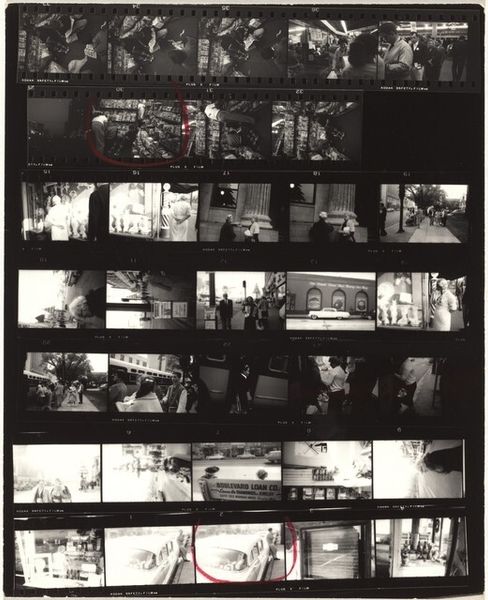
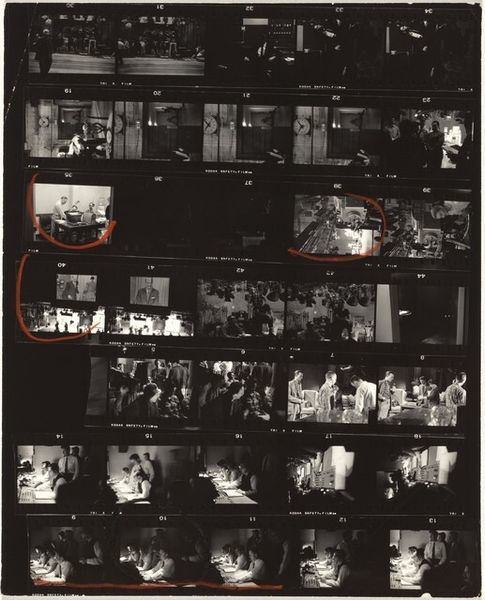
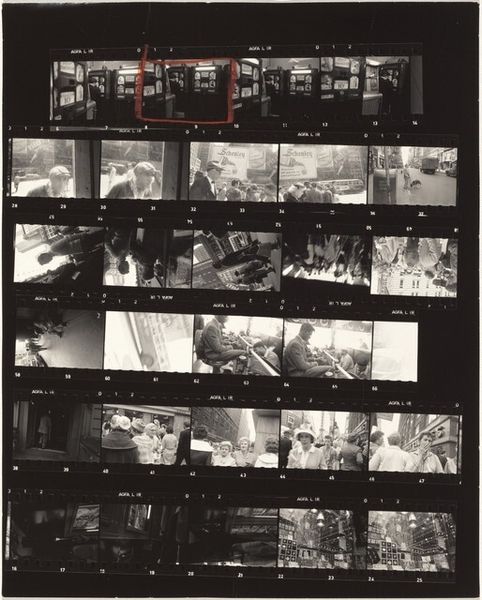
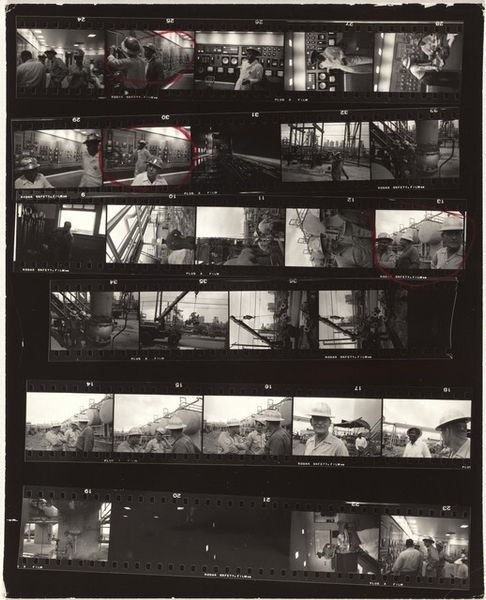
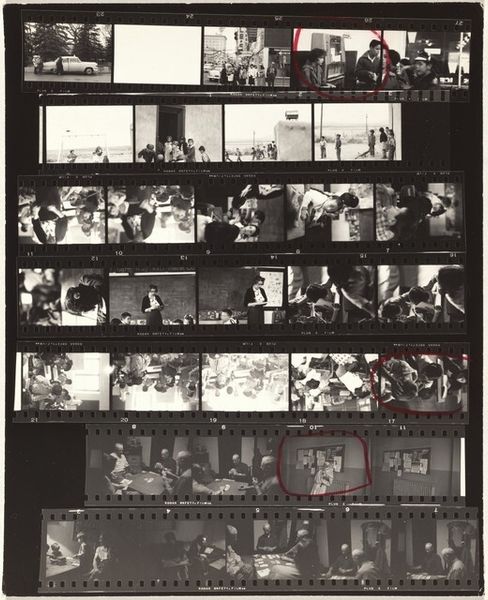
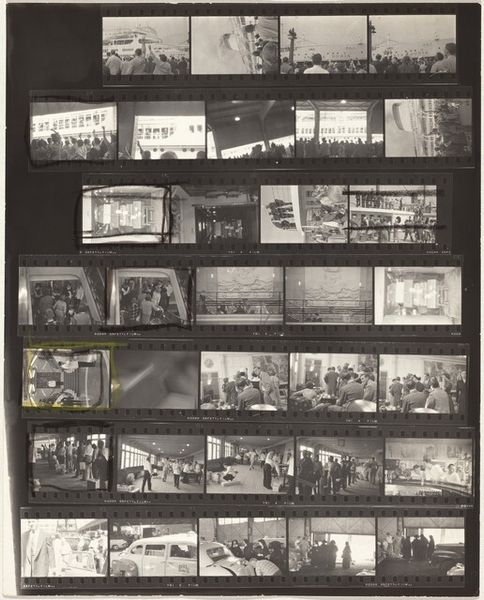
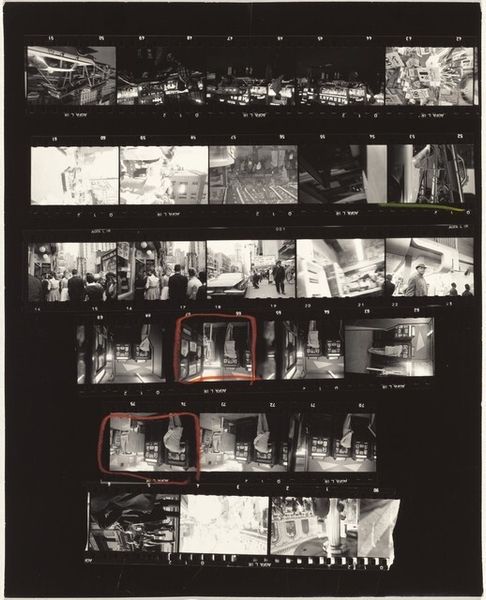
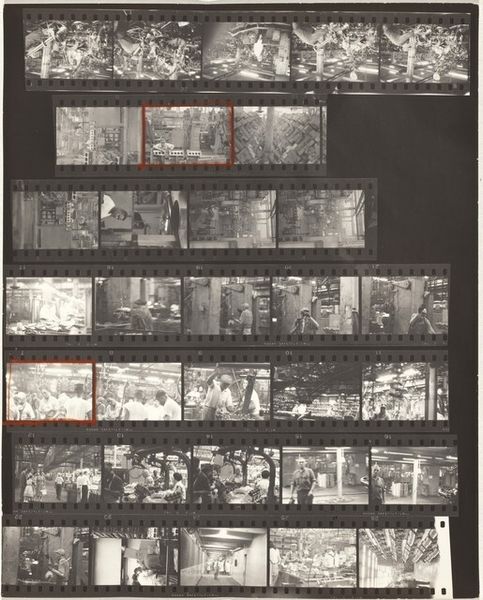
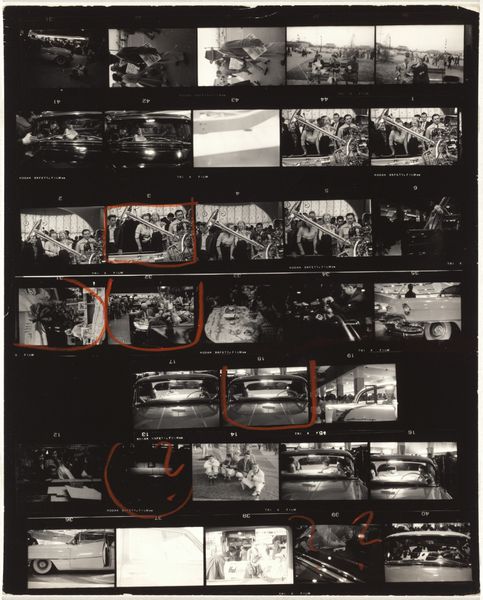
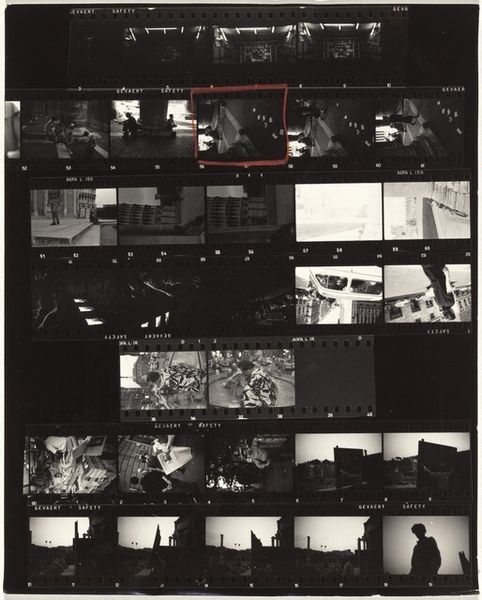
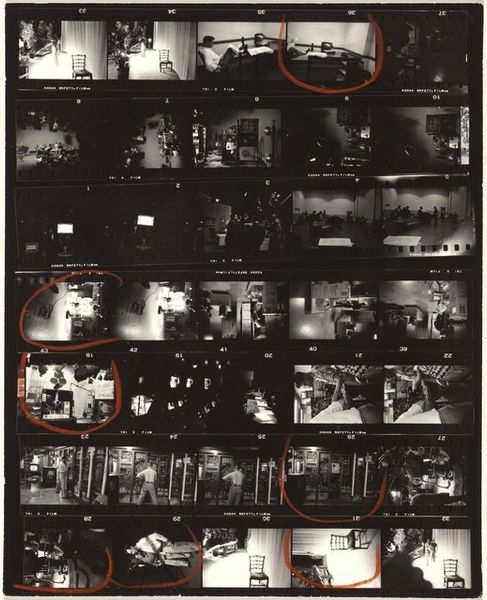
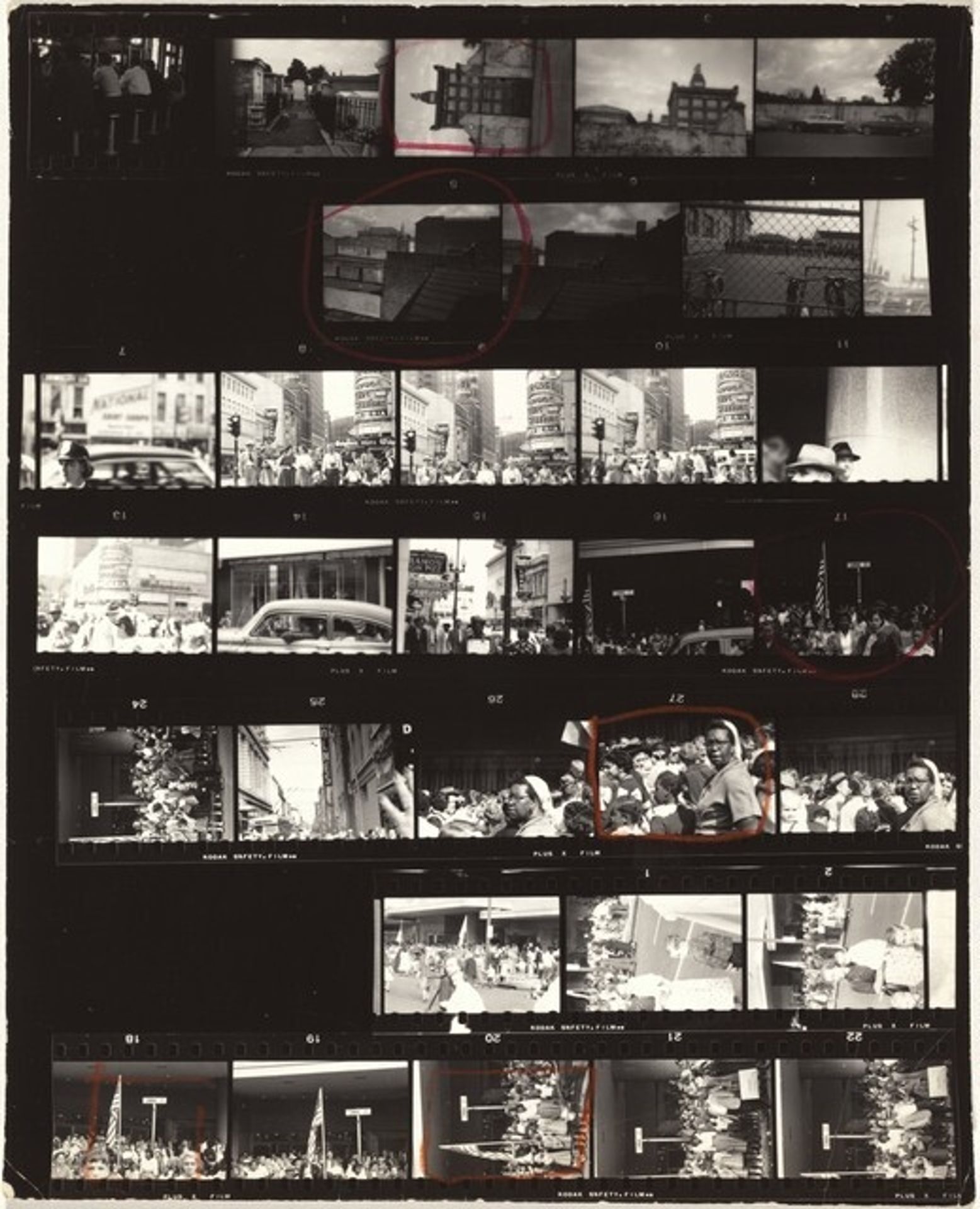
Guggenheim 339--New Orleans, Louisiana


Listen to curator's interpretation
Curatorial notes
Editor: So, here we have Robert Frank's "Guggenheim 339—New Orleans, Louisiana," a gelatin silver print from 1955. What strikes me is the rawness – the high contrast, the almost documentary feel of these street scenes, captured on a film strip. It feels intimate and distant all at once. What's your read on this contact sheet? Curator: Oh, raw is the perfect word. For me, looking at this film strip feels like rifling through someone's memories, haphazard and unfiltered. Frank’s work in *The Americans*, which this probably relates to, redefined street photography by not trying to be "objective". Editor: Interesting, objective...so you're saying it's showing a specific point of view? Curator: Precisely! He wasn't just recording what he saw. Think about the time - mid-50s America, but viewed with a distinct outsider’s gaze. Do you pick up on anything particular from the subjects themselves? Editor: Hmm... Well, seeing several crowded images, including some that look like they could be connected to political rallies… There's definitely a sense of communal activity and collective identity on display. Curator: That's it exactly. I see it as this layered narrative—Frank showing us the everyday, but subtly questioning the accepted version of the American dream, the monochrome palette in and of itself becoming a visual metaphor. Almost as if saying ‘this isn’t as technicolor bright as you believe’. He really forces you to consider what isn’t said in mainstream culture, doesn't he? Editor: Definitely! Looking at it that way, it’s more than just snapshots. Curator: It transforms these fragments into a wider cultural conversation. Food for thought on our own visual narratives, wouldn't you agree? Editor: Absolutely. It’s exciting to see how something seemingly so simple can carry such weight. Thanks for opening my eyes to it!