About this artwork
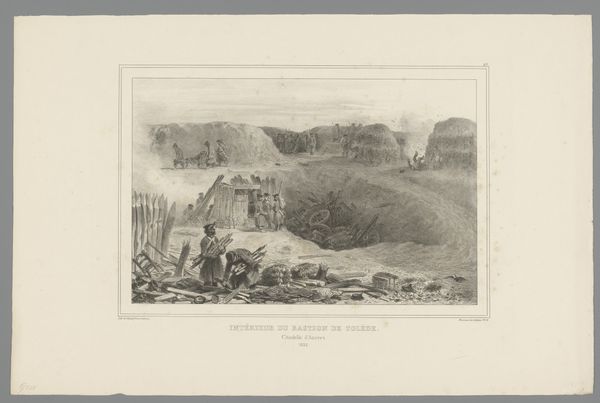
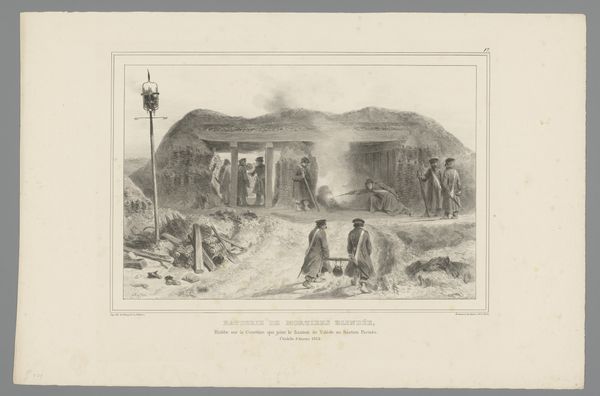
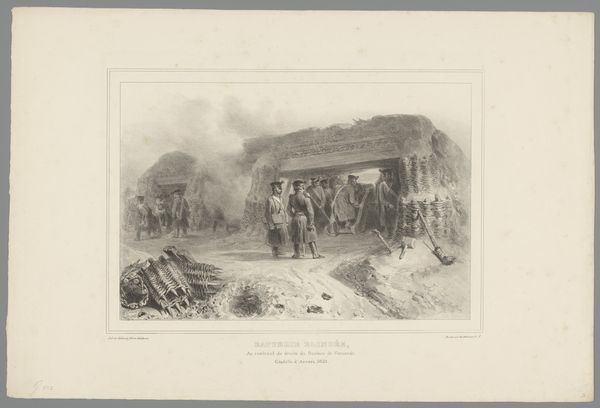
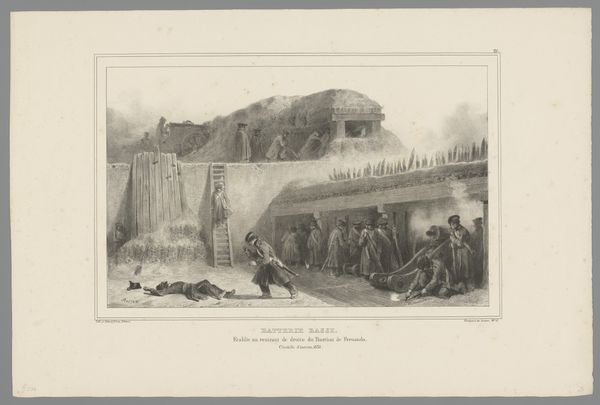
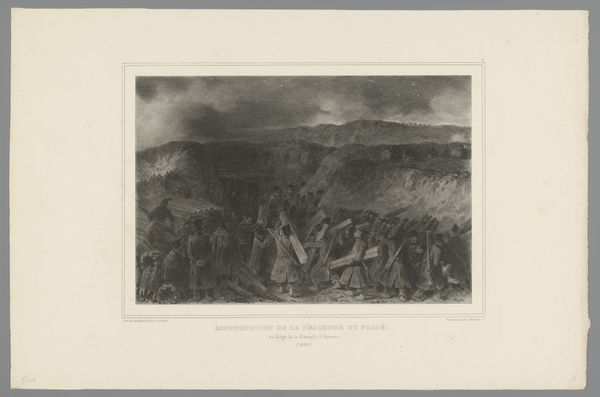
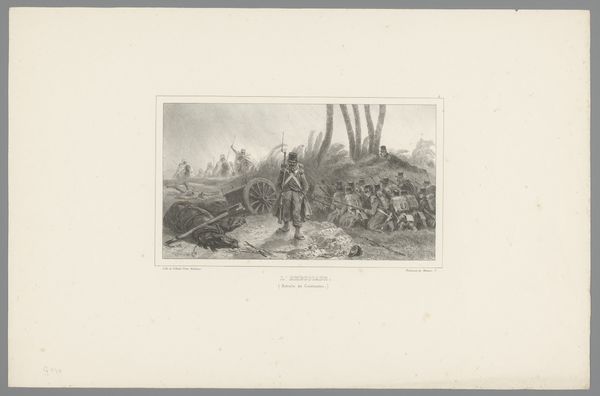
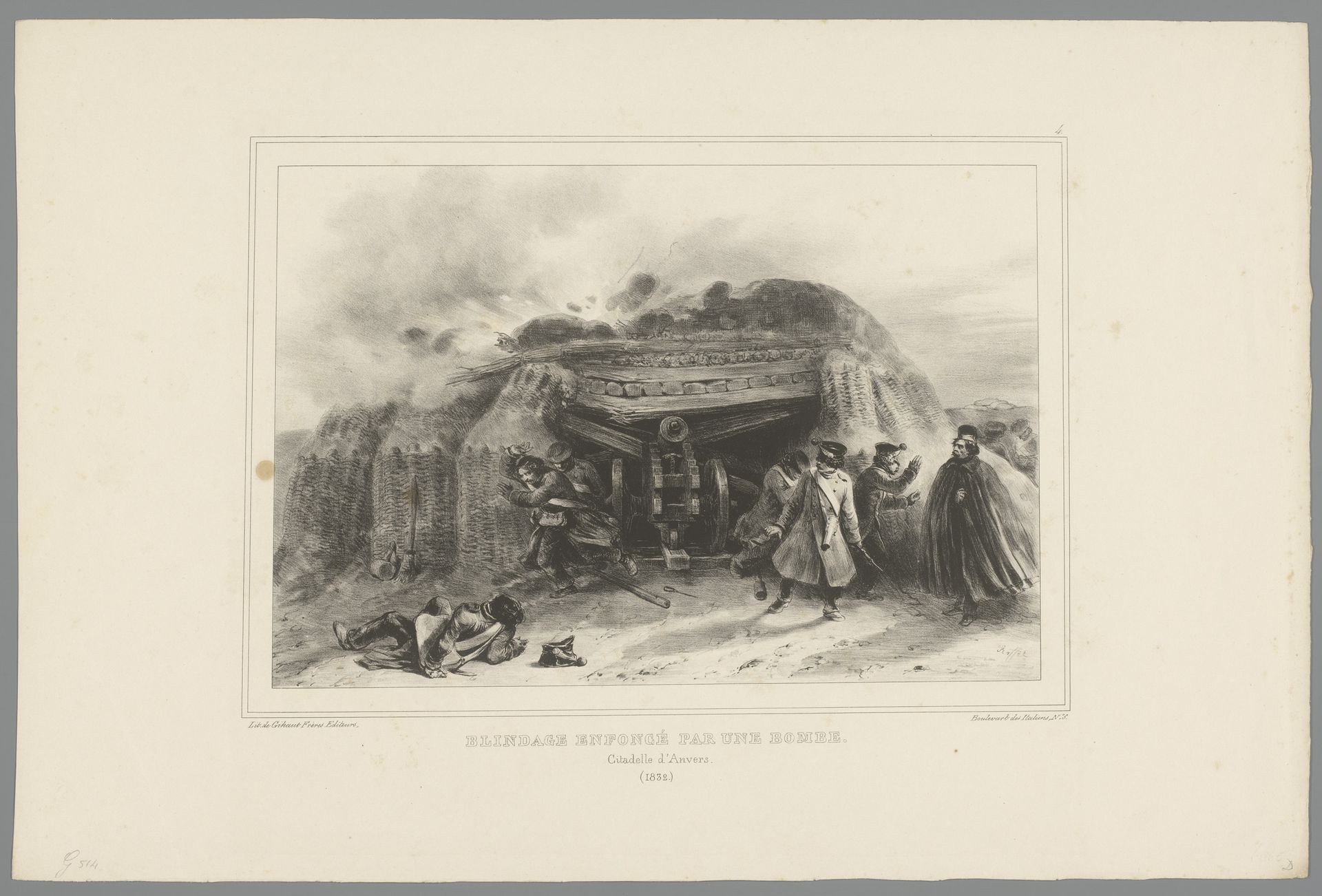
Auguste Raffet created this print, Bombs Exploding on an Embedded Cannon, in 1832, capturing a moment of intense conflict. Note the soldiers' gestures: some recoil in fear, while others, perhaps officers, attempt to maintain a semblance of order amidst the chaos. The cannon, half-buried and smoking, becomes a focal point, a symbol of both defense and vulnerability. Consider the psychological weight of such imagery. The act of burying the cannon speaks to a primal instinct of protection, yet its exposure to the unseen threat of aerial bombardment reveals the futility of such efforts. We see echoes of this tension in ancient siege warfare, where fortifications were both a source of security and a target for destruction. The motif of destruction by bombardment reminds me of images of the fall of Troy. The motif of a man lying prostrate, a hat lying next to him, is a common theme that can be traced through images of war from Antiquity to the present day. This symbol becomes lodged in our collective memory, resurfacing and evolving with each new iteration of conflict.

Artwork details
- Medium
- print, graphite, engraving
- Dimensions
- height 365 mm, width 549 mm
- Location
- Rijksmuseum
- Copyright
- Rijks Museum: Open Domain
Tags
romanticism
graphite
history-painting
engraving
Comments
No comments
About this artwork
Auguste Raffet created this print, Bombs Exploding on an Embedded Cannon, in 1832, capturing a moment of intense conflict. Note the soldiers' gestures: some recoil in fear, while others, perhaps officers, attempt to maintain a semblance of order amidst the chaos. The cannon, half-buried and smoking, becomes a focal point, a symbol of both defense and vulnerability. Consider the psychological weight of such imagery. The act of burying the cannon speaks to a primal instinct of protection, yet its exposure to the unseen threat of aerial bombardment reveals the futility of such efforts. We see echoes of this tension in ancient siege warfare, where fortifications were both a source of security and a target for destruction. The motif of destruction by bombardment reminds me of images of the fall of Troy. The motif of a man lying prostrate, a hat lying next to him, is a common theme that can be traced through images of war from Antiquity to the present day. This symbol becomes lodged in our collective memory, resurfacing and evolving with each new iteration of conflict.
Comments
No comments