About this artwork
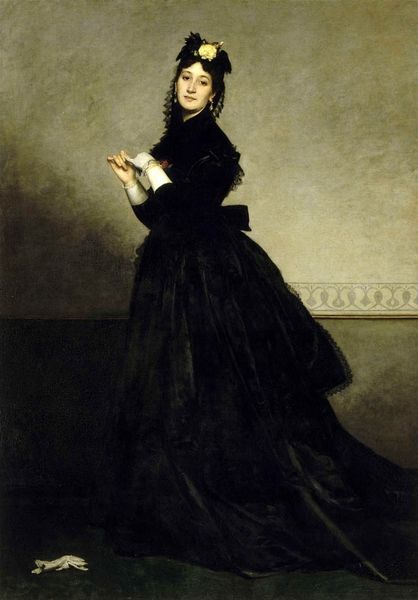
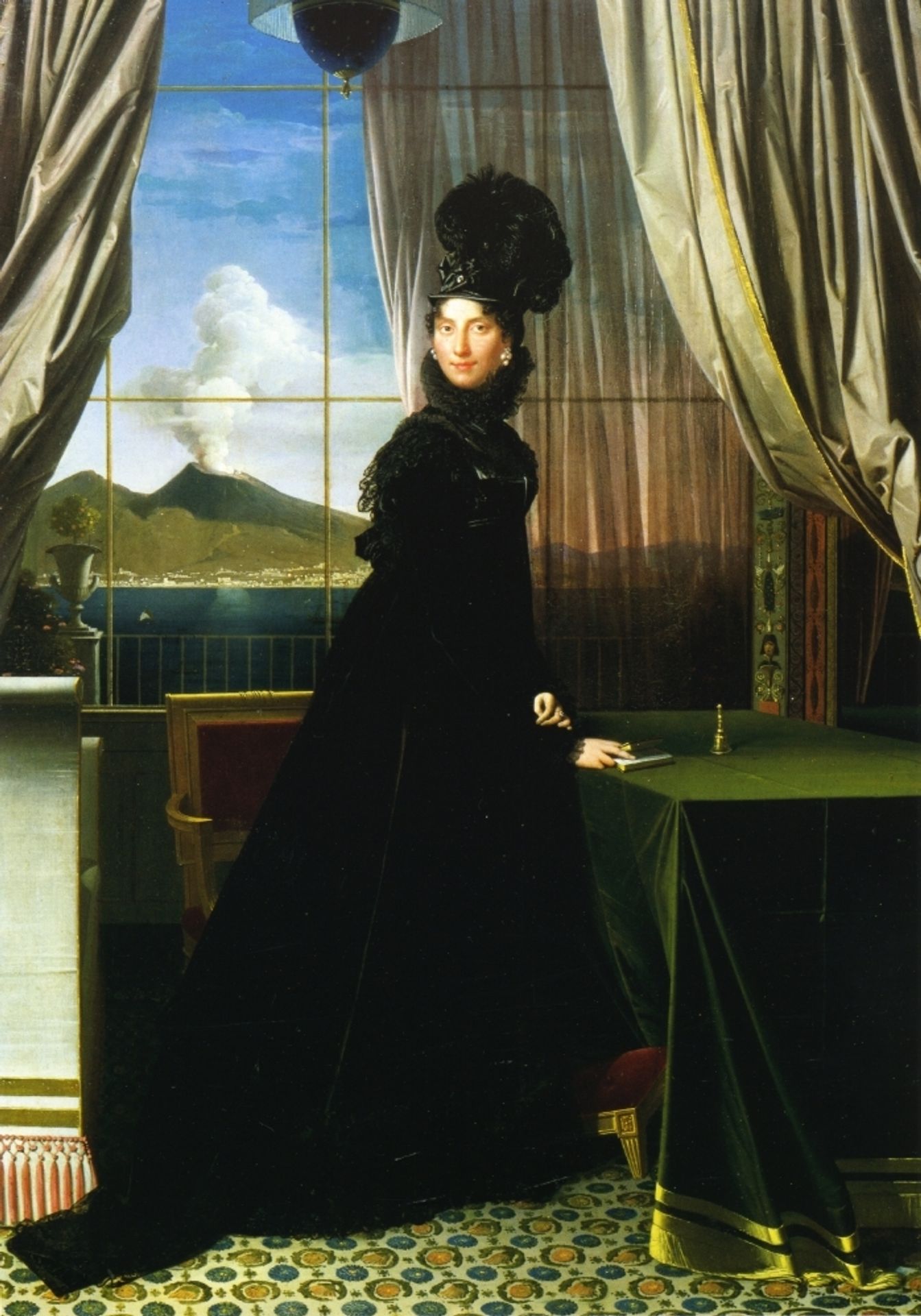
Jean Auguste Dominique Ingres painted Caroline Murat, Queen of Naples, in the neoclassical style with oil on canvas. As Napoleon Bonaparte's younger sister, Caroline occupied a unique position in a male-dominated world. Through marriage to Joachim Murat, she became queen of Naples, a role that placed her at the intersection of politics and society. Her position afforded her influence but also subjected her to scrutiny. This portrait captures her complex identity, as a woman, a royal, and a member of the Bonaparte family. The dark, regal clothing could symbolize mourning or authority, while the backdrop of Mount Vesuvius hints at the volatile landscape of her reign. Does this portrayal reflect Caroline's personal experience, or does it present a narrative shaped by external expectations and the politics of the time? This artwork allows us to consider how one woman navigated the intricate dynamics of power, identity, and representation in the Napoleonic era.
Caroline Murat, Queen of Naples
1814

Jean Auguste Dominique Ingres
1780 - 1867Location
Private CollectionArtwork details
- Medium
- painting, oil-paint
- Dimensions
- 92 x 60 cm
- Location
- Private Collection
- Copyright
- Public domain
Tags
Comments
Share your thoughts
About this artwork
Jean Auguste Dominique Ingres painted Caroline Murat, Queen of Naples, in the neoclassical style with oil on canvas. As Napoleon Bonaparte's younger sister, Caroline occupied a unique position in a male-dominated world. Through marriage to Joachim Murat, she became queen of Naples, a role that placed her at the intersection of politics and society. Her position afforded her influence but also subjected her to scrutiny. This portrait captures her complex identity, as a woman, a royal, and a member of the Bonaparte family. The dark, regal clothing could symbolize mourning or authority, while the backdrop of Mount Vesuvius hints at the volatile landscape of her reign. Does this portrayal reflect Caroline's personal experience, or does it present a narrative shaped by external expectations and the politics of the time? This artwork allows us to consider how one woman navigated the intricate dynamics of power, identity, and representation in the Napoleonic era.
Comments
Share your thoughts