About this artwork
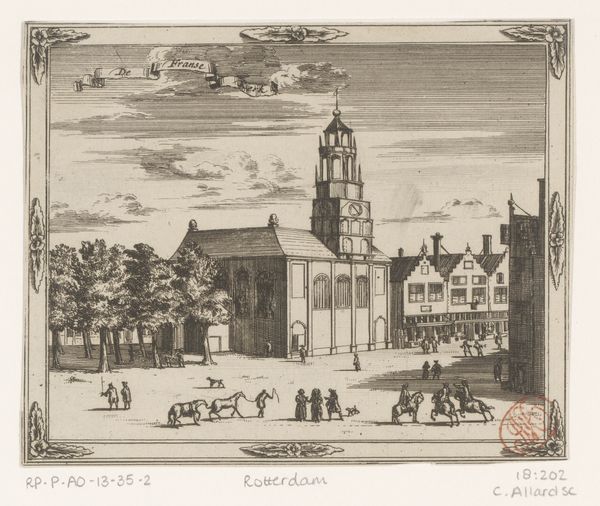
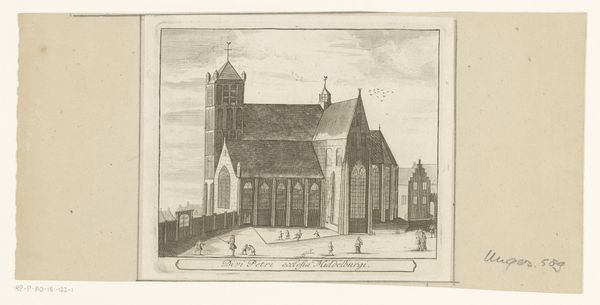
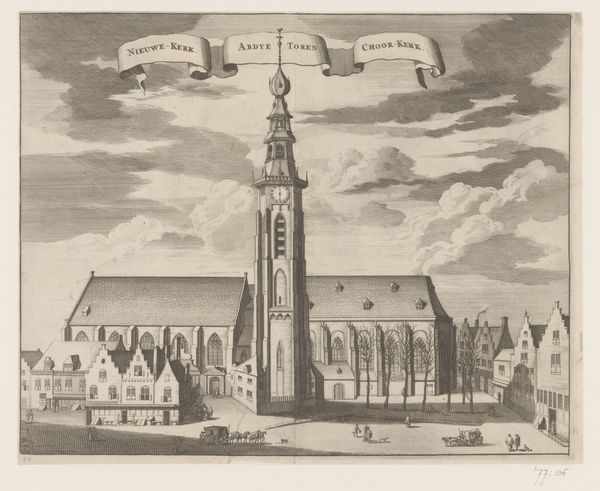
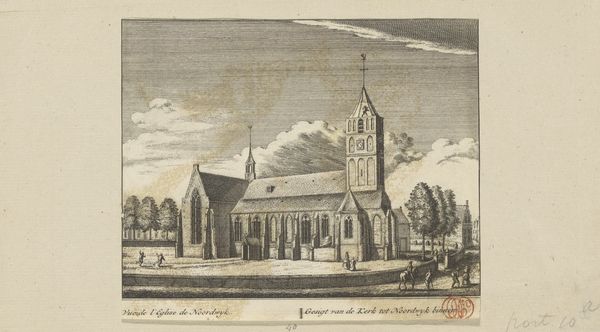
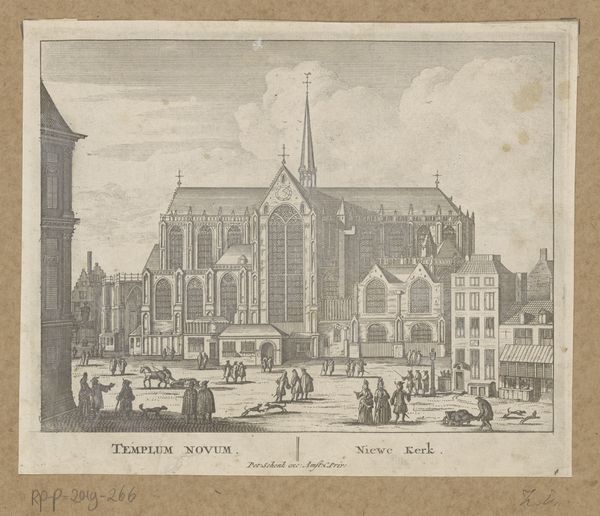
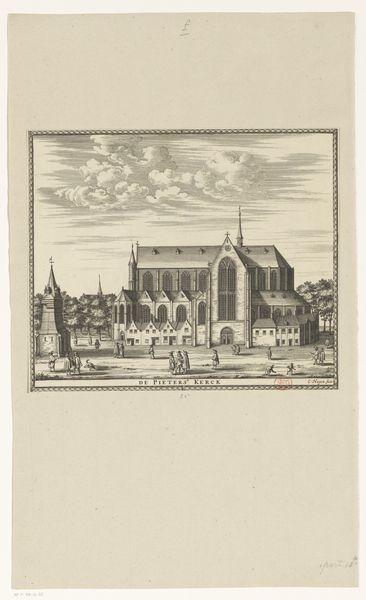
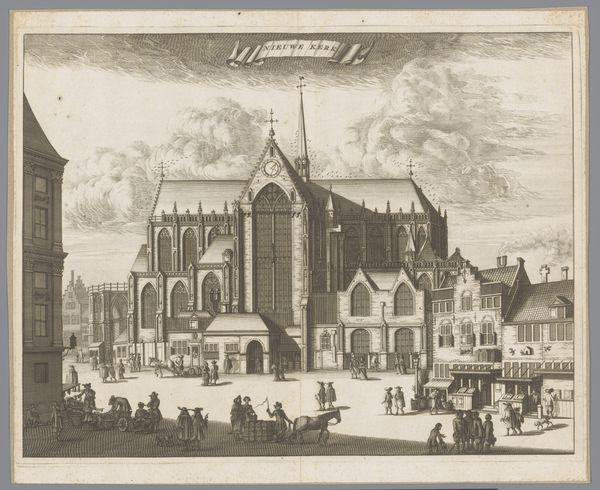
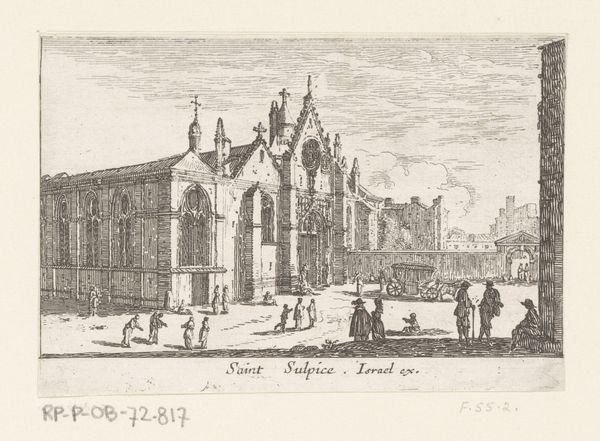
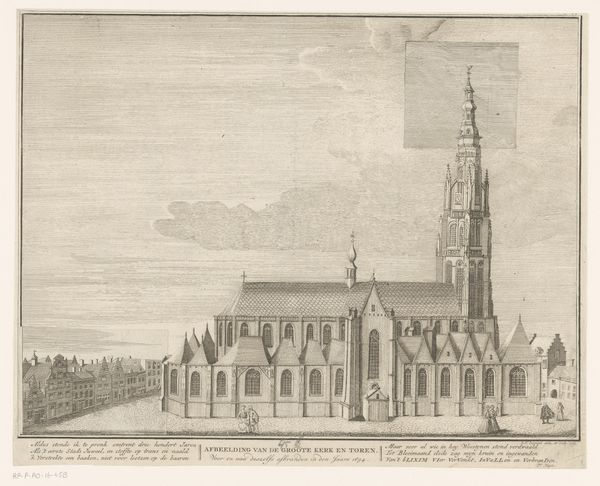
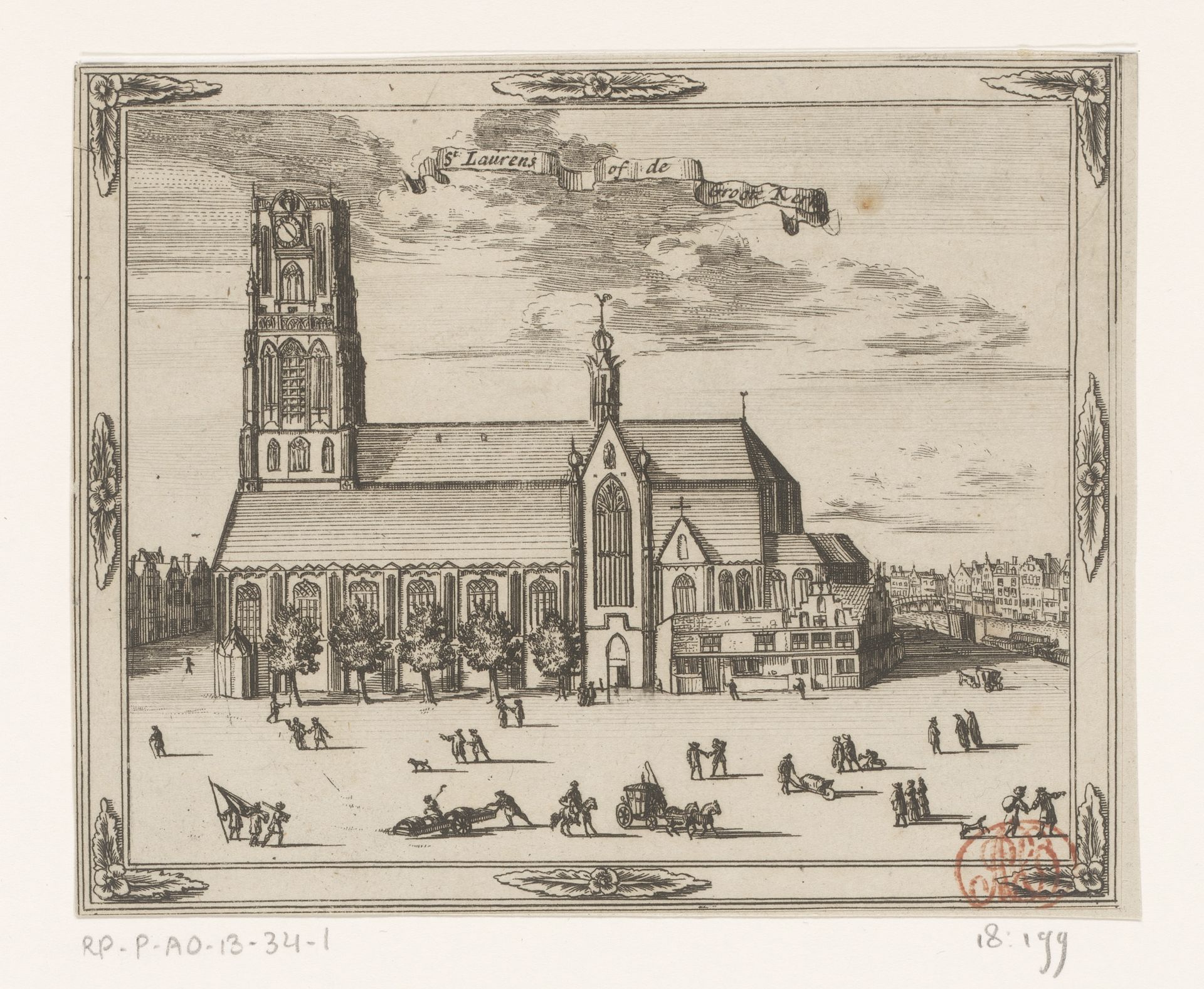
This etching, "Gezicht op de Grote of Sint-Laurenskerk," was created by Jacobus Harrewijn. It captures the Grote Kerk, a prominent church, rendered through meticulous lines and compositional balance. Harrewijn's work is defined by its structural clarity. The church's architecture is geometrically precise, creating a harmonious scene. The perspective, though somewhat flattened, invites our eye to move across the scene, engaging with the church, figures, and surrounding cityscape. Note the lines of the architecture that lead the eye, balanced by the ornate border. The etching engages with the broader cultural context through a semiotic interplay of signs. Harrewijn presents the city as both an ordered space and a display of human activity, suggesting themes of civic pride and social order. The cultural codes in the artwork act as signs, constructing layers of meaning that reflect the values and beliefs of the time. The artwork, therefore, functions not just aesthetically but as part of a cultural dialogue.
Gezicht op de Grote of Sint-Laurenskerk c. 1696 - 1730

Jacobus Harrewijn
1660 - 1732Location
RijksmuseumArtwork details
- Medium
- drawing, print, etching, engraving
- Dimensions
- height 117 mm, width 145 mm
- Location
- Rijksmuseum
- Copyright
- Rijks Museum: Open Domain
Tags
drawing
aged paper
baroque
dutch-golden-age
mechanical pen drawing
etching
old engraving style
sketch book
personal sketchbook
sketchwork
pen-ink sketch
square
line
pen work
sketchbook drawing
cityscape
storyboard and sketchbook work
engraving
Comments
No comments
About this artwork
This etching, "Gezicht op de Grote of Sint-Laurenskerk," was created by Jacobus Harrewijn. It captures the Grote Kerk, a prominent church, rendered through meticulous lines and compositional balance. Harrewijn's work is defined by its structural clarity. The church's architecture is geometrically precise, creating a harmonious scene. The perspective, though somewhat flattened, invites our eye to move across the scene, engaging with the church, figures, and surrounding cityscape. Note the lines of the architecture that lead the eye, balanced by the ornate border. The etching engages with the broader cultural context through a semiotic interplay of signs. Harrewijn presents the city as both an ordered space and a display of human activity, suggesting themes of civic pride and social order. The cultural codes in the artwork act as signs, constructing layers of meaning that reflect the values and beliefs of the time. The artwork, therefore, functions not just aesthetically but as part of a cultural dialogue.
Comments
No comments