About this artwork
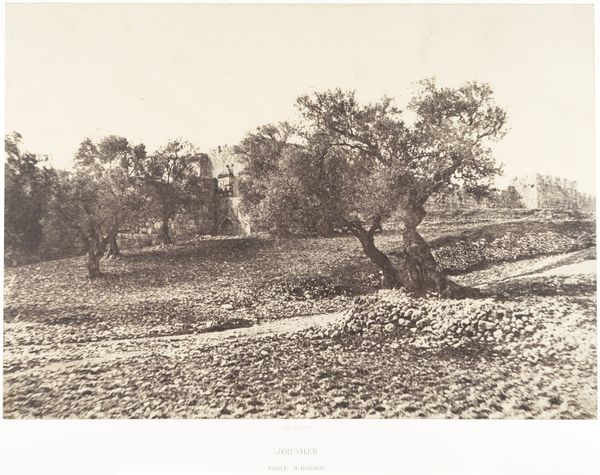
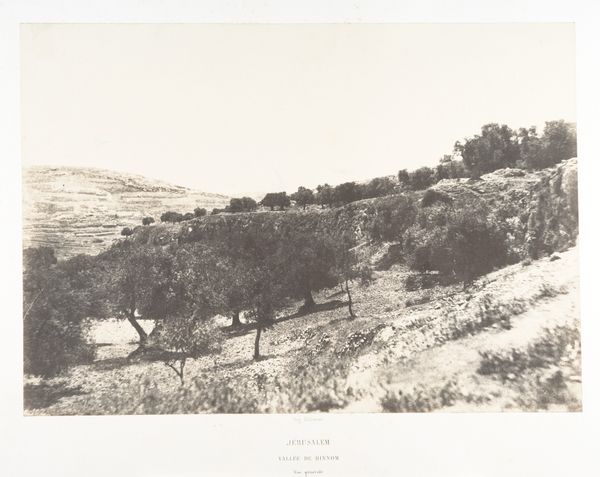
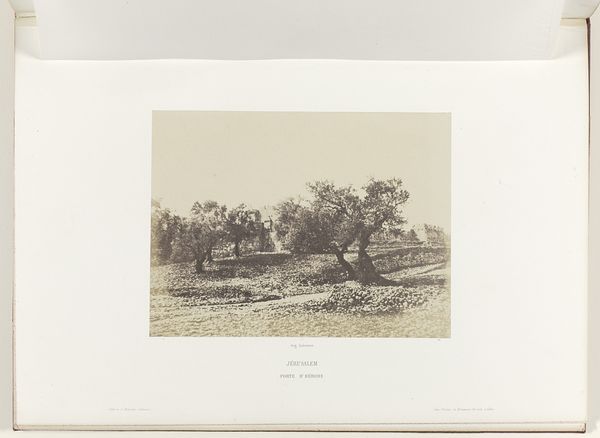
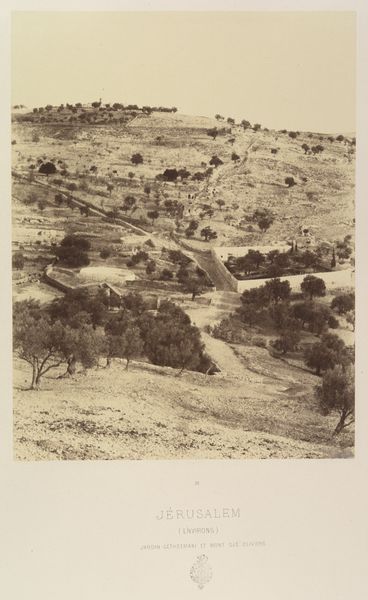
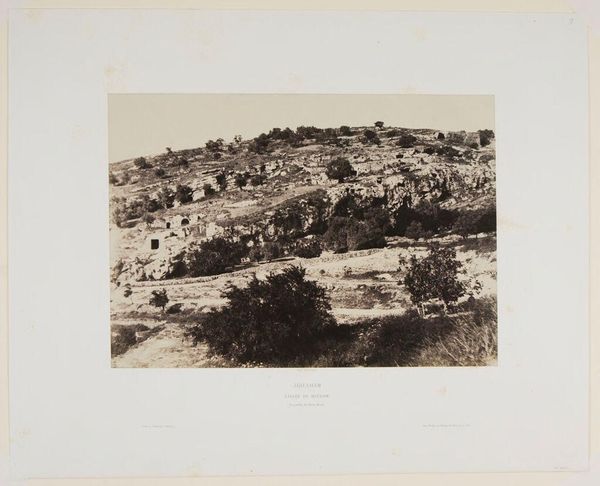
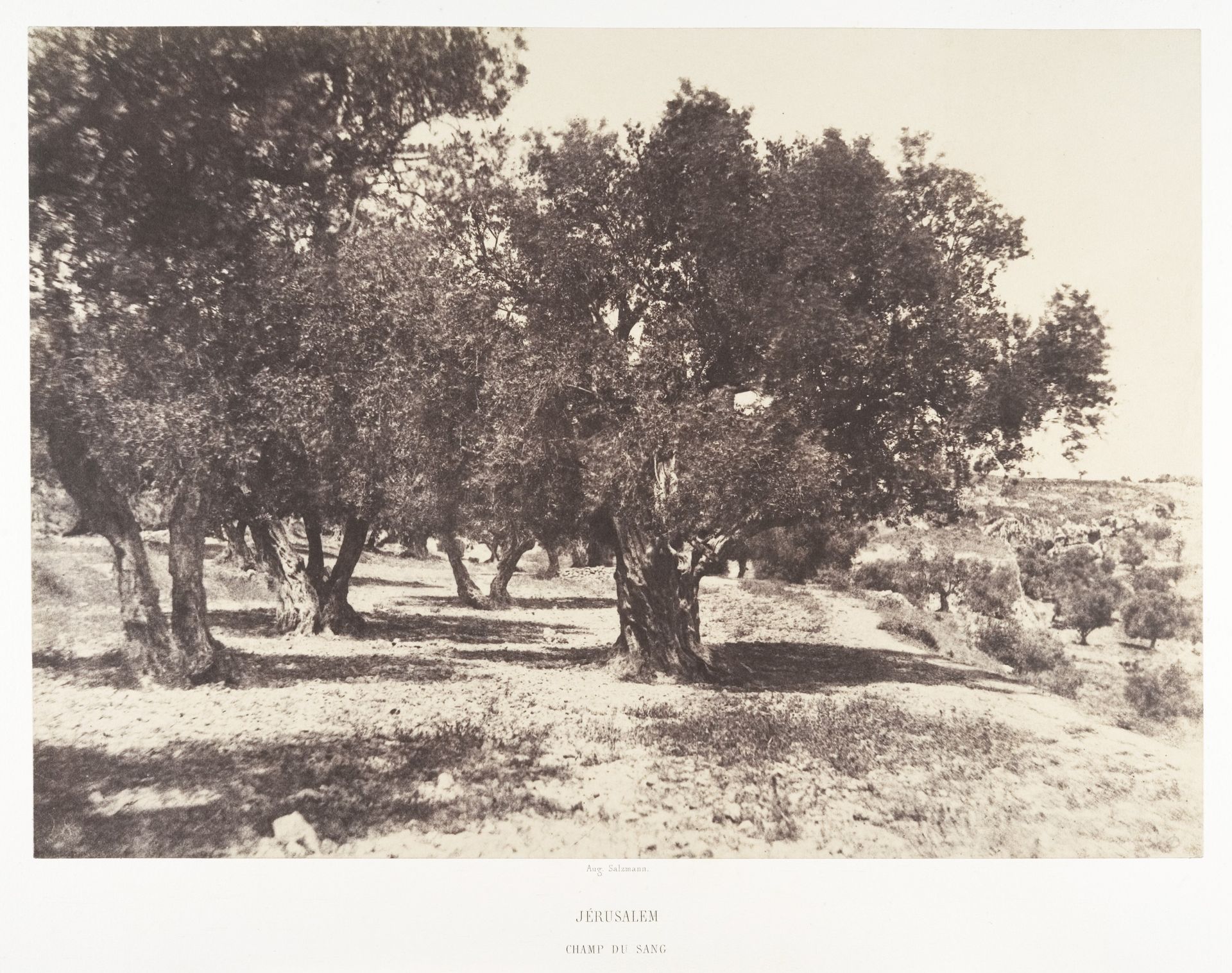
Auguste Salzmann made this photograph, Jérusalem, Champ du sang, with an early photographic process known as the waxed paper negative. Look at the composition of the image, with the stark contrast between the dark, dense trees in the foreground and the bright, open landscape in the background. The tonal range is narrow, dominated by shades of brown, beige and cream. Salzmann’s formal approach invites us to consider the symbolic weight of the scene and the way it’s framed. The low angle and the placement of the trees create a sense of enclosure, almost as if they are guarding a sacred space. This visual treatment resonates with structuralist ideas about binary oppositions—dark versus light, enclosure versus openness—suggesting an underlying tension within the landscape itself. The photograph invites contemplation on themes of history, memory, and the passage of time. The way Salzmann uses light and shadow is not just descriptive but deeply interpretive, transforming a physical place into a site of profound cultural and spiritual meaning.
Jérusalem, Champ du sang
1854 - 1859


Artwork details
- Dimensions
- Image: 23.4 x 33 cm (9 3/16 x 13 in.) Mount: 44.6 x 59.7 cm (17 9/16 x 23 1/2 in.)
- Location
- Metropolitan Museum of Art, New York, NY
- Copyright
- Public Domain
Comments
Share your thoughts
About this artwork
Auguste Salzmann made this photograph, Jérusalem, Champ du sang, with an early photographic process known as the waxed paper negative. Look at the composition of the image, with the stark contrast between the dark, dense trees in the foreground and the bright, open landscape in the background. The tonal range is narrow, dominated by shades of brown, beige and cream. Salzmann’s formal approach invites us to consider the symbolic weight of the scene and the way it’s framed. The low angle and the placement of the trees create a sense of enclosure, almost as if they are guarding a sacred space. This visual treatment resonates with structuralist ideas about binary oppositions—dark versus light, enclosure versus openness—suggesting an underlying tension within the landscape itself. The photograph invites contemplation on themes of history, memory, and the passage of time. The way Salzmann uses light and shadow is not just descriptive but deeply interpretive, transforming a physical place into a site of profound cultural and spiritual meaning.
Comments
Share your thoughts