About this artwork
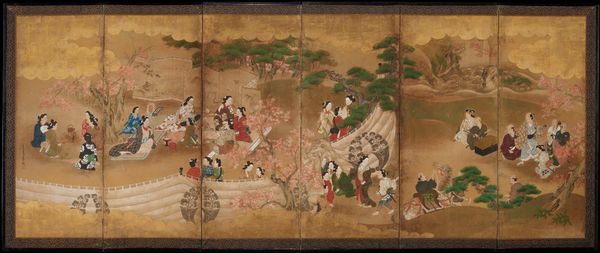
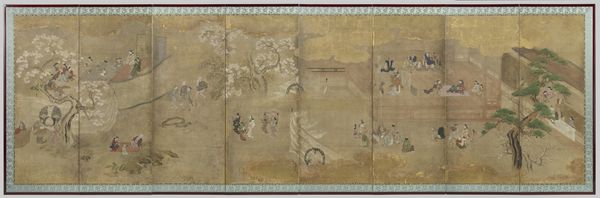
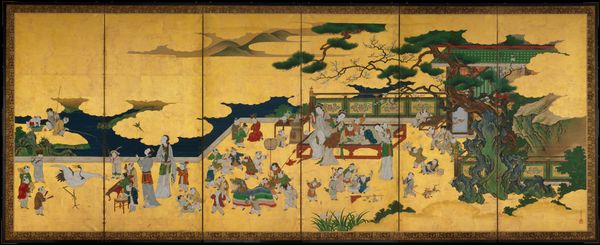
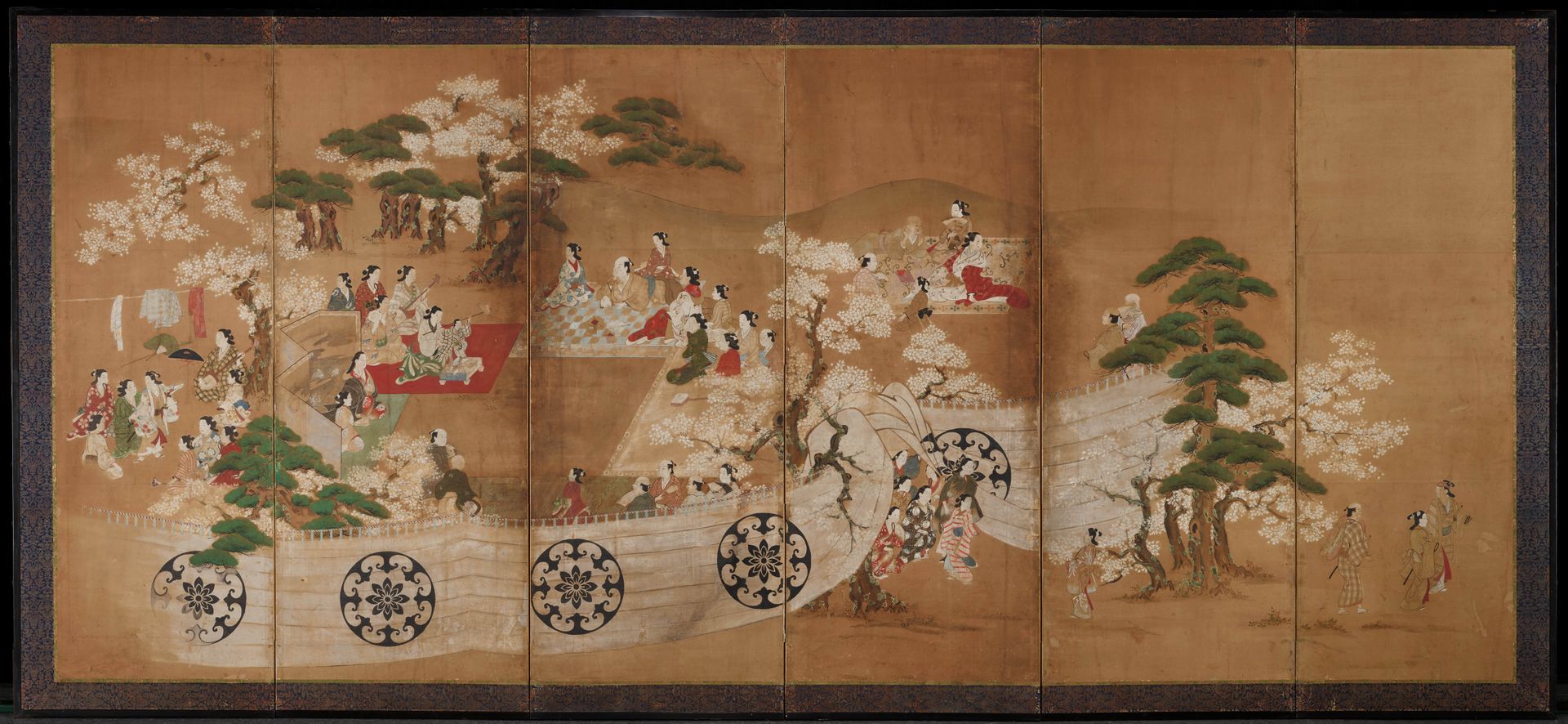
Miyagawa Chōshun painted this vibrant screen, ‘Cherry Viewing Party’, in Japan during the Edo period. Cherry blossoms, or ‘sakura’, dominate the scene, symbolizing the fleeting nature of life, beauty, and renewal. These fragile blooms burst forth briefly each spring, reminding us of life's transience. The motif of the cherry blossom extends beyond Japan. We find resonances of it in ancient Greek art, where ephemeral floral arrangements were featured in funerary rites, symbolizing the cyclical concept of life, death, and rebirth. Such symbols echo humanity’s subconscious grappling with mortality, resurfacing across cultures and centuries. The human psyche, confronted with life’s impermanence, latches onto images of rebirth and beauty. Like these earlier symbols, the cyclical progression of cherry blossoms continues to resurface in the modern context. In contemporary art, this motif is re-evaluated with an altered understanding to symbolize the increasing environmental concern and the ever present impact of human activity on natural cycles.
Cherry Viewing Party c. 18th century


Artwork details
- Medium
- painting, paper, ink
- Dimensions
- 59 5/8 x 136 in. (151.45 x 345.44 cm) (painting)
- Location
- Minneapolis Institute of Art
- Copyright
- Public Domain
Tags
water colours
painting
asian-art
landscape
ukiyo-e
paper
ink
genre-painting
miniature
Comments

This colorful screen illustrates a favorite Japanese seasonal pastime, the viewing of cherry blossoms. Within a curtained enclosure, sumptuously dressed men and women are shown enjoying a puppet play to the accompaniment of music played on the longnecked shamisen. Some members of the party sit before an elegant painted folding screen, thus demonstrating how these objects were used by the Japanese out-of-doors for privacy and protection against the wind. Although unsigned, this work reflects the delicate style of Miyagawa Choshun (1683-1753), an ukiyo-e artist who specialized in painting rather than woodblock prints. Choshun was particularly skillful at depicting groups of figures who seem to interact in a natural and convincing manner.
About this artwork
Miyagawa Chōshun painted this vibrant screen, ‘Cherry Viewing Party’, in Japan during the Edo period. Cherry blossoms, or ‘sakura’, dominate the scene, symbolizing the fleeting nature of life, beauty, and renewal. These fragile blooms burst forth briefly each spring, reminding us of life's transience. The motif of the cherry blossom extends beyond Japan. We find resonances of it in ancient Greek art, where ephemeral floral arrangements were featured in funerary rites, symbolizing the cyclical concept of life, death, and rebirth. Such symbols echo humanity’s subconscious grappling with mortality, resurfacing across cultures and centuries. The human psyche, confronted with life’s impermanence, latches onto images of rebirth and beauty. Like these earlier symbols, the cyclical progression of cherry blossoms continues to resurface in the modern context. In contemporary art, this motif is re-evaluated with an altered understanding to symbolize the increasing environmental concern and the ever present impact of human activity on natural cycles.
Comments
This colorful screen illustrates a favorite Japanese seasonal pastime, the viewing of cherry blossoms. Within a curtained enclosure, sumptuously dressed men and women are shown enjoying a puppet play to the accompaniment of music played on the longnecked shamisen. Some members of the party sit before an elegant painted folding screen, thus demonstrating how these objects were used by the Japanese out-of-doors for privacy and protection against the wind. Although unsigned, this work reflects the delicate style of Miyagawa Choshun (1683-1753), an ukiyo-e artist who specialized in painting rather than woodblock prints. Choshun was particularly skillful at depicting groups of figures who seem to interact in a natural and convincing manner.