About this artwork
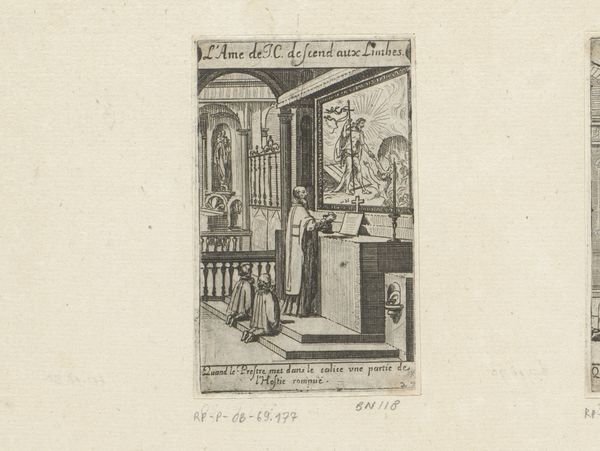
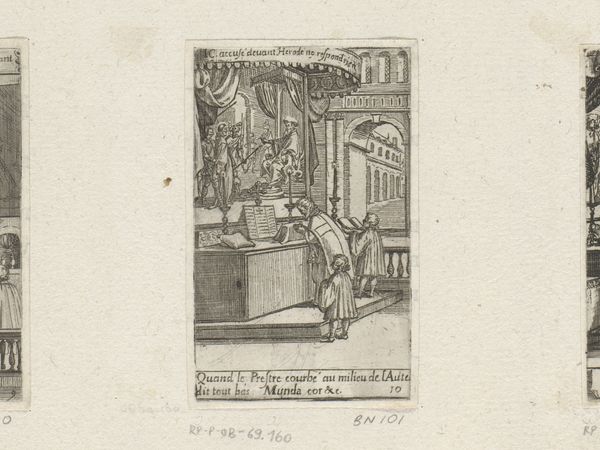
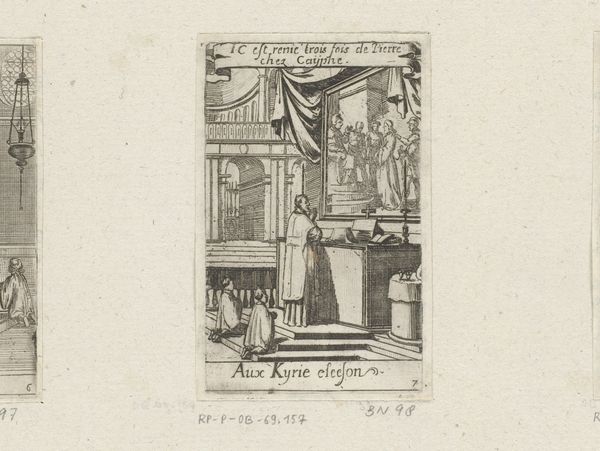
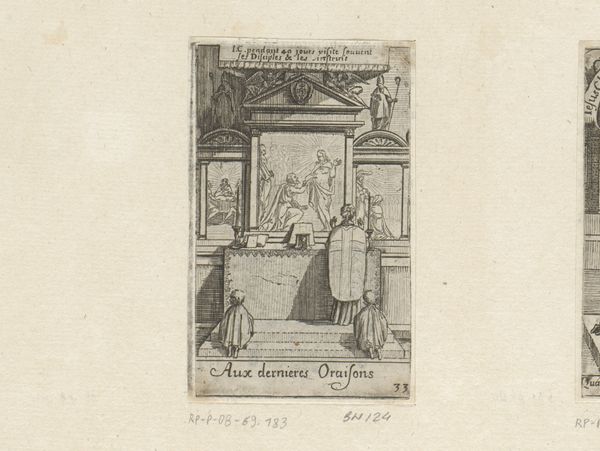
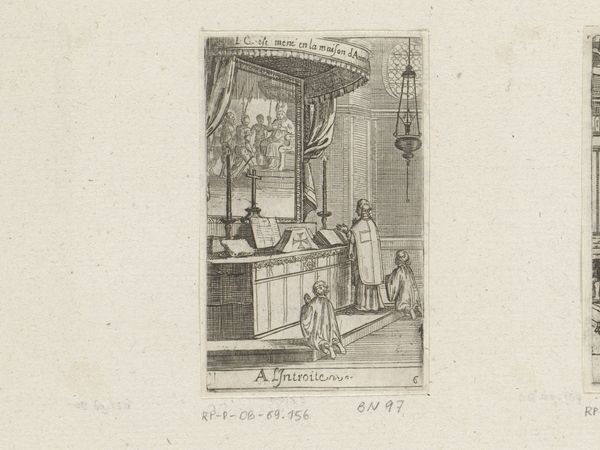
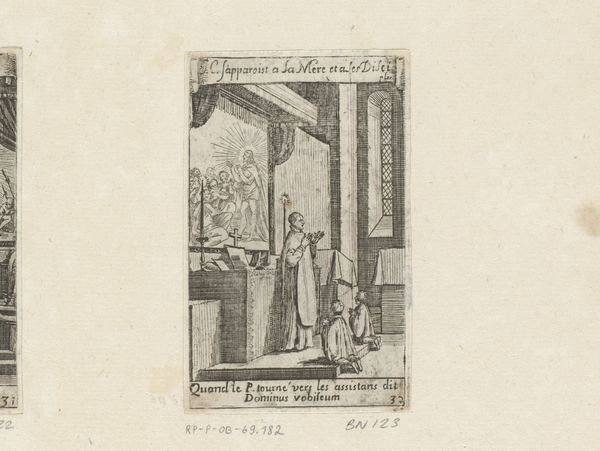
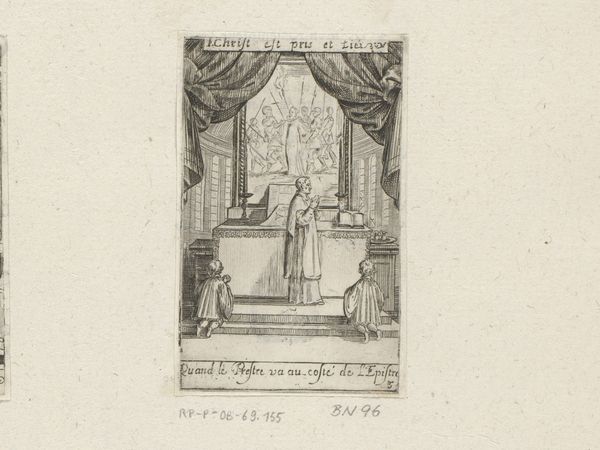
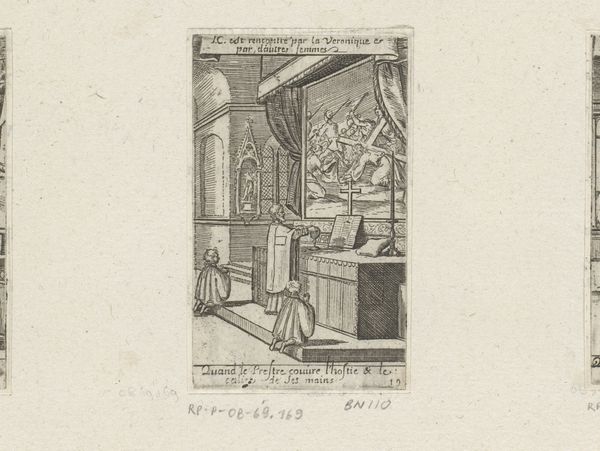
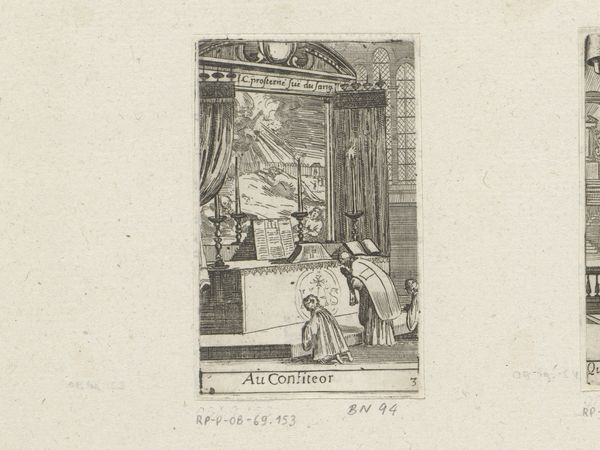
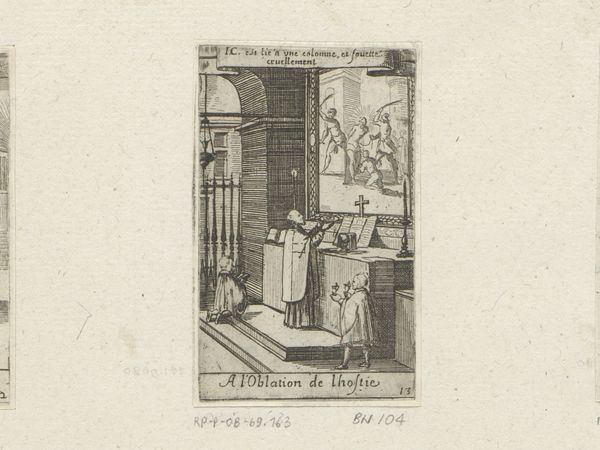
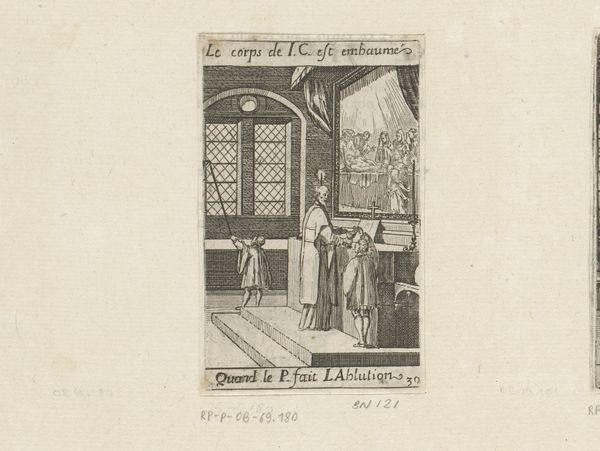
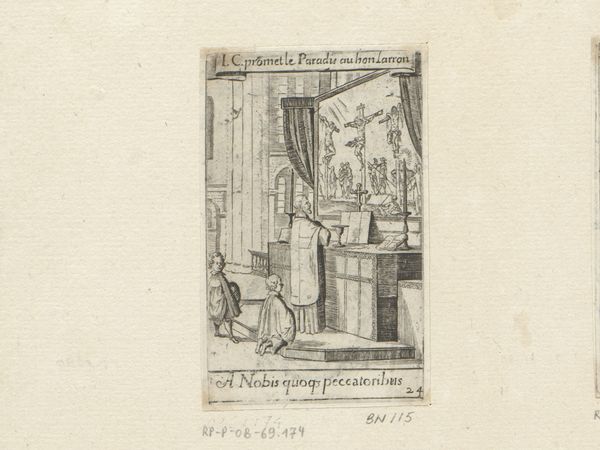
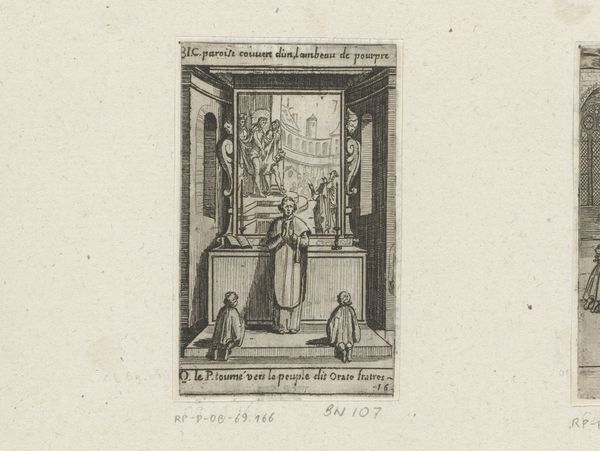
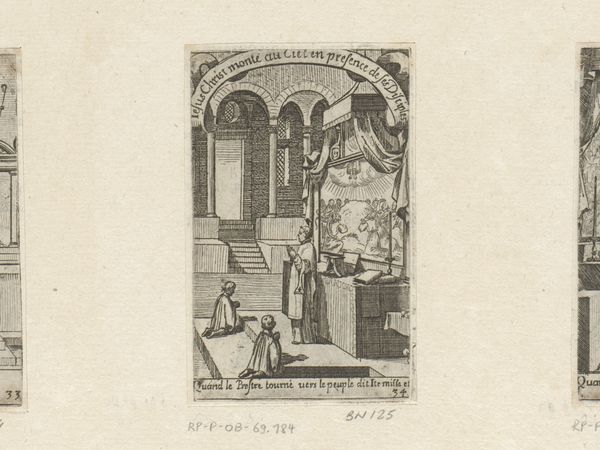
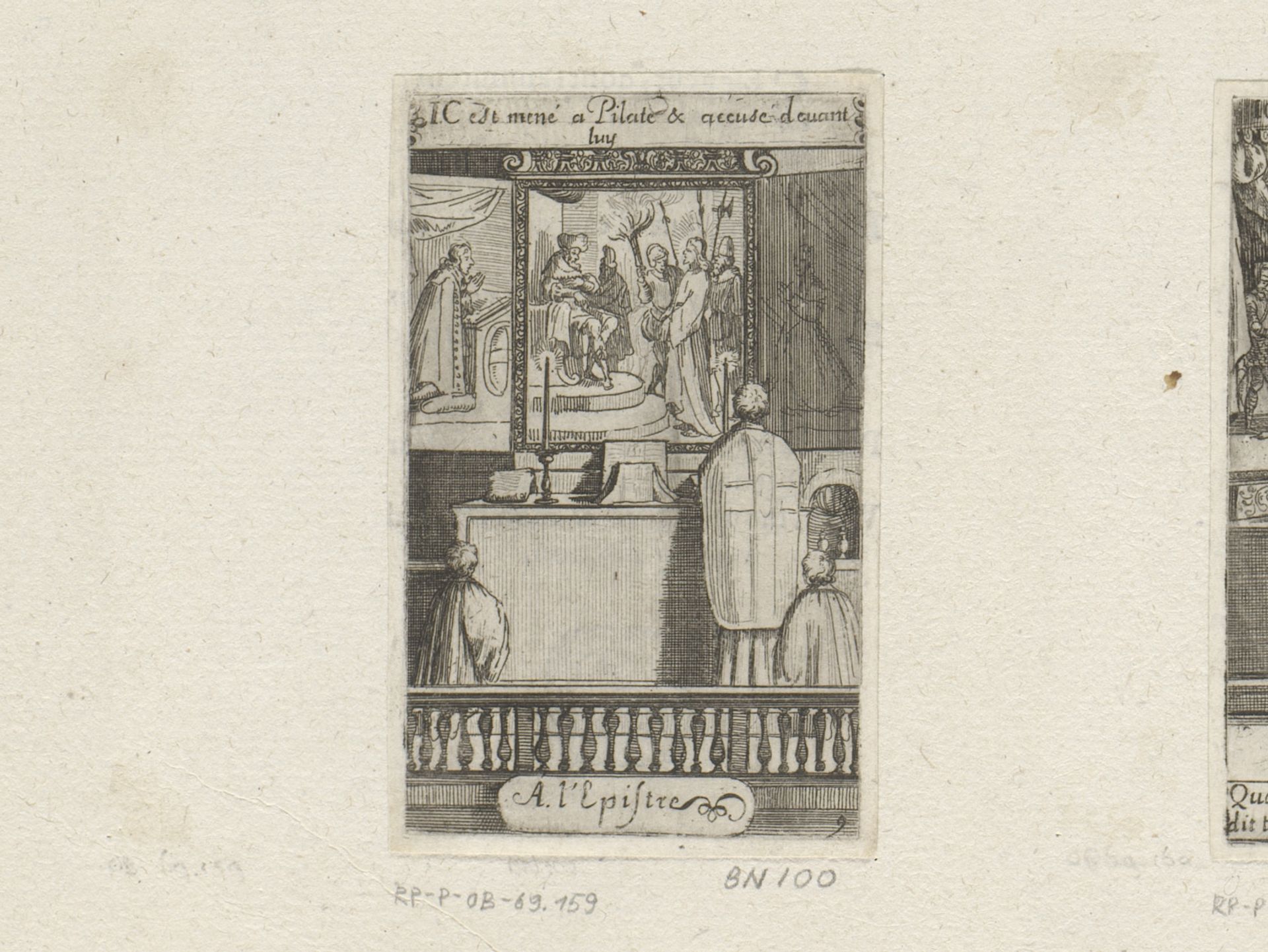
Editor: Here we have Sèbastien Leclerc I’s “Priest with Two Altar Servers before an Altar,” created in 1661. It’s an engraving, and it strikes me as quite a formal depiction of religious practice. What stands out to you about this piece? Curator: It's fascinating how Leclerc presents religious authority within the context of 17th-century societal structures. Consider the setting: we're viewing a priest officiating, likely during mass. Now, think about the power dynamics inherent in that image. Leclerc is not just showing a religious scene; he’s depicting the Church's role within a hierarchical society. Note how the image itself contains an image: what purpose do you think these visual layers serve? Editor: I suppose it’s adding another layer of authority… the images behind the priest are of biblical scenes. Curator: Precisely! It reinforces the continuity of religious law and tradition, reminding viewers of the weight of history behind these rituals. How do you think this kind of imagery would function politically? Editor: Perhaps by visually legitimizing the power structures of the time? Church and state were very much intertwined. Curator: Exactly. Prints like these played a role in shaping public perception, not just of religious practices, but of the very order of society. They acted as a form of visual propaganda. These images tell us as much about the artists, the commissioners, and intended audiences, as the subjects depicted within the frame. Editor: I never considered it in those terms, but I see your point. It's more than just a religious scene; it's a statement about power. Curator: Indeed. Reflecting on it now, this piece reveals how art becomes instrumental in shaping social narratives and reinforcing existing power structures, doesn’t it?
Priester met twee misdienaars voor een altaar
1661

Sébastien Leclerc I
1637 - 1714Location
RijksmuseumArtwork details
- Medium
- print, engraving
- Dimensions
- height 84 mm, width 51 mm
- Location
- Rijksmuseum
- Copyright
- Rijks Museum: Open Domain
Tags
Comments
Share your thoughts
About this artwork
Editor: Here we have Sèbastien Leclerc I’s “Priest with Two Altar Servers before an Altar,” created in 1661. It’s an engraving, and it strikes me as quite a formal depiction of religious practice. What stands out to you about this piece? Curator: It's fascinating how Leclerc presents religious authority within the context of 17th-century societal structures. Consider the setting: we're viewing a priest officiating, likely during mass. Now, think about the power dynamics inherent in that image. Leclerc is not just showing a religious scene; he’s depicting the Church's role within a hierarchical society. Note how the image itself contains an image: what purpose do you think these visual layers serve? Editor: I suppose it’s adding another layer of authority… the images behind the priest are of biblical scenes. Curator: Precisely! It reinforces the continuity of religious law and tradition, reminding viewers of the weight of history behind these rituals. How do you think this kind of imagery would function politically? Editor: Perhaps by visually legitimizing the power structures of the time? Church and state were very much intertwined. Curator: Exactly. Prints like these played a role in shaping public perception, not just of religious practices, but of the very order of society. They acted as a form of visual propaganda. These images tell us as much about the artists, the commissioners, and intended audiences, as the subjects depicted within the frame. Editor: I never considered it in those terms, but I see your point. It's more than just a religious scene; it's a statement about power. Curator: Indeed. Reflecting on it now, this piece reveals how art becomes instrumental in shaping social narratives and reinforcing existing power structures, doesn’t it?
Comments
Share your thoughts