About this artwork
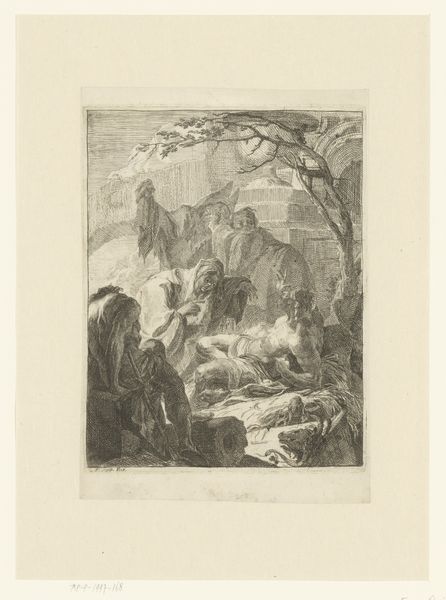
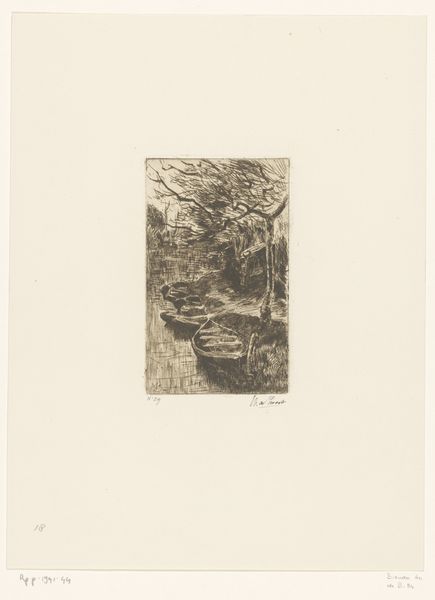
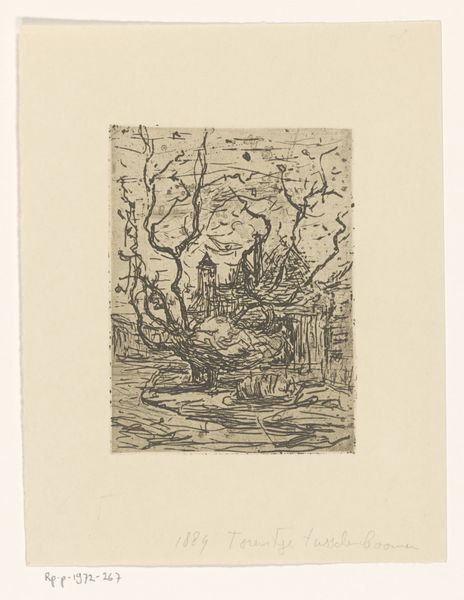
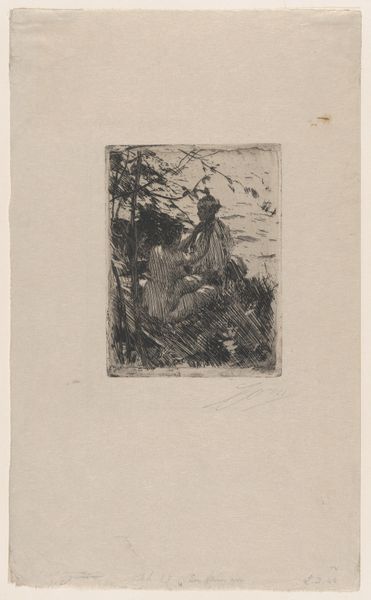
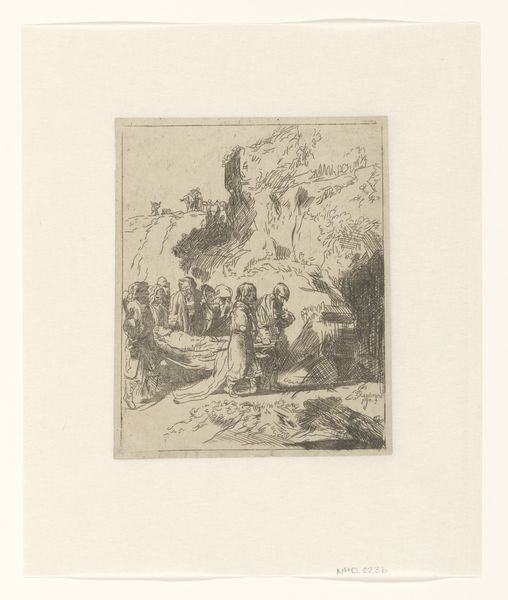
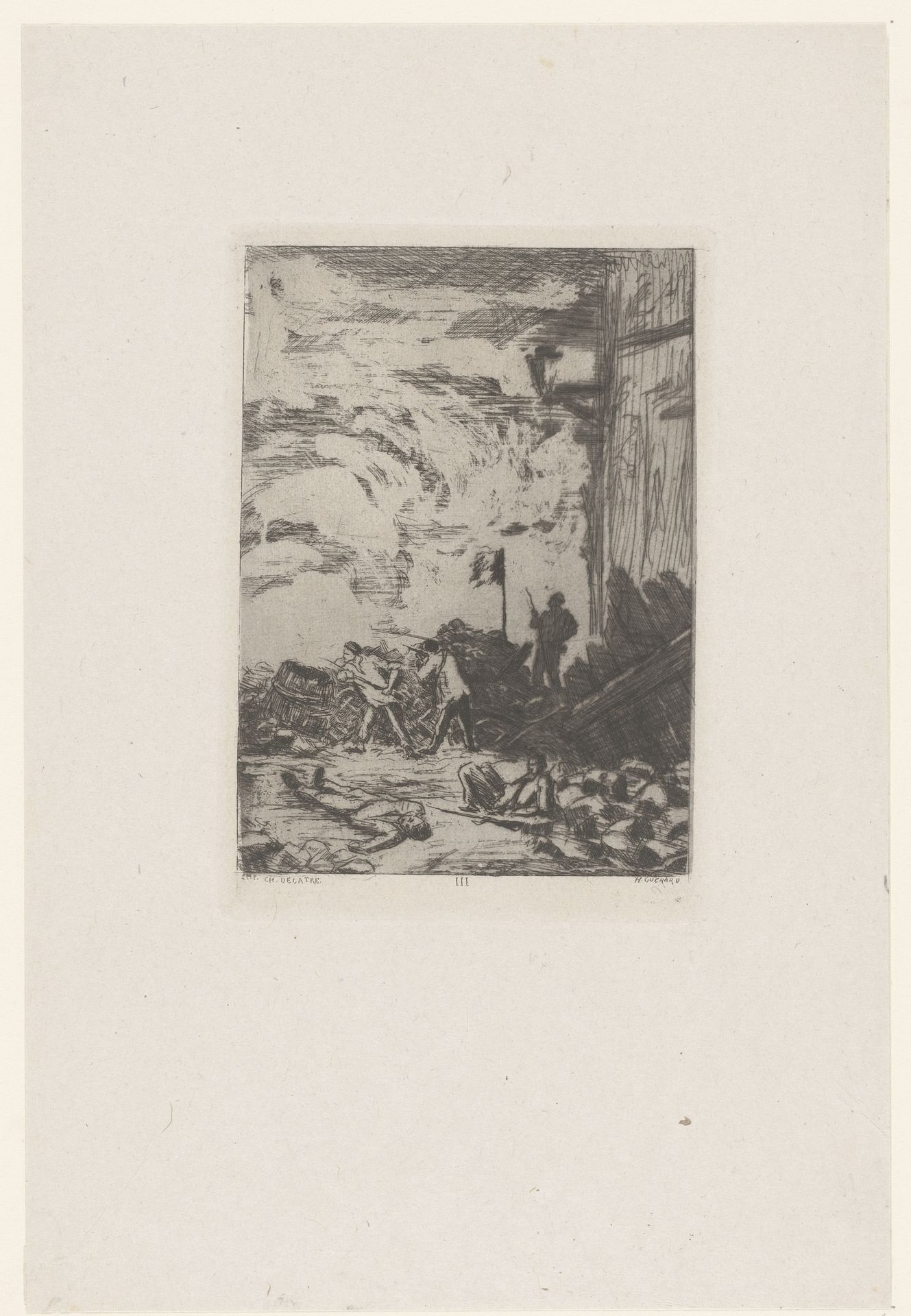
Henri-Charles Guérard made this print, ‘Revolt with men at a barricade’, using etching. It depicts a scene of violent uprising, likely situated in France. Guérard's choice of subject and style evoke the political turmoil of 19th-century France. This includes the Revolutions of 1830 and 1848, and the Franco-Prussian War. The print’s dark and chaotic composition reflects the instability of a nation struggling with questions of governance and social order. The barricade itself symbolizes the division and conflict within French society, as citizens took up arms against the established order. Artists of this time were often deeply engaged with the political issues of the day, using their work to express support for or opposition to the ruling powers. Institutions such as the press and independent galleries played a crucial role in disseminating these politically charged images to a wider audience. To truly understand this work, it is important to research the historical context in which it was created. Scrutinizing newspapers, political pamphlets, and records of artistic exhibitions from the time helps to shed light on the complex relationship between art, politics, and society.
Opstand met mannen bij een barricade 1856 - 1897

Henri-Charles Guérard
1846 - 1897Location
RijksmuseumArtwork details
- Medium
- drawing, print, etching
- Dimensions
- height 146 mm, width 103 mm
- Location
- Rijksmuseum
- Copyright
- Rijks Museum: Open Domain
Tags
drawing
etching
landscape
history-painting
realism
Comments
No comments
About this artwork
Henri-Charles Guérard made this print, ‘Revolt with men at a barricade’, using etching. It depicts a scene of violent uprising, likely situated in France. Guérard's choice of subject and style evoke the political turmoil of 19th-century France. This includes the Revolutions of 1830 and 1848, and the Franco-Prussian War. The print’s dark and chaotic composition reflects the instability of a nation struggling with questions of governance and social order. The barricade itself symbolizes the division and conflict within French society, as citizens took up arms against the established order. Artists of this time were often deeply engaged with the political issues of the day, using their work to express support for or opposition to the ruling powers. Institutions such as the press and independent galleries played a crucial role in disseminating these politically charged images to a wider audience. To truly understand this work, it is important to research the historical context in which it was created. Scrutinizing newspapers, political pamphlets, and records of artistic exhibitions from the time helps to shed light on the complex relationship between art, politics, and society.
Comments
No comments