About this artwork
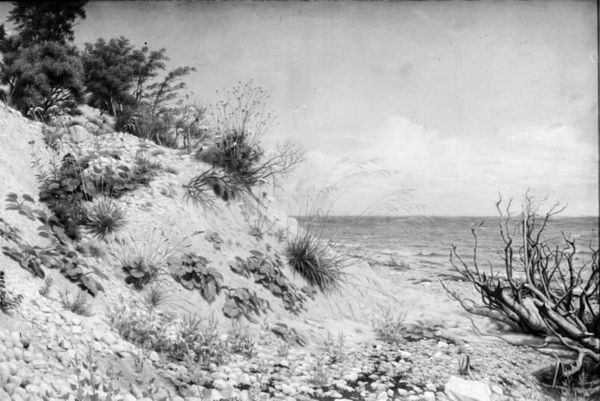
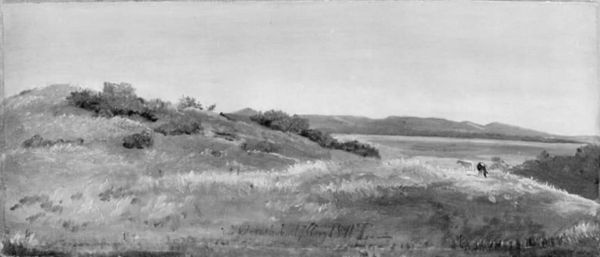
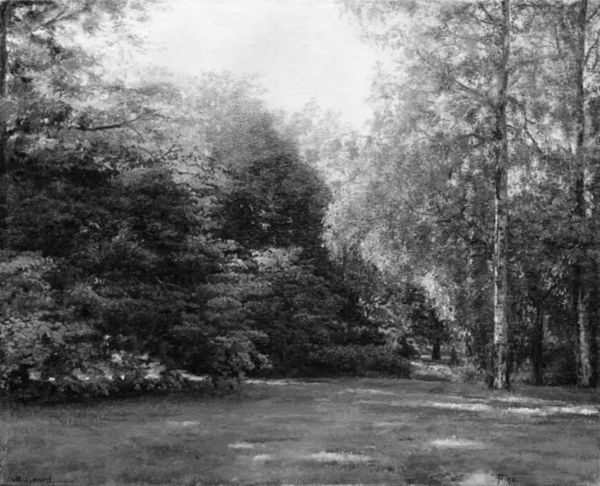
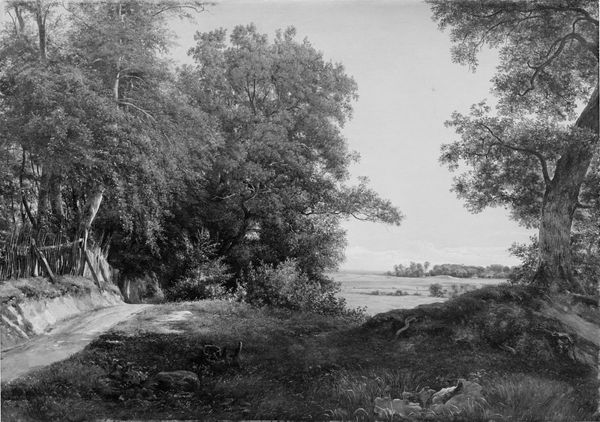
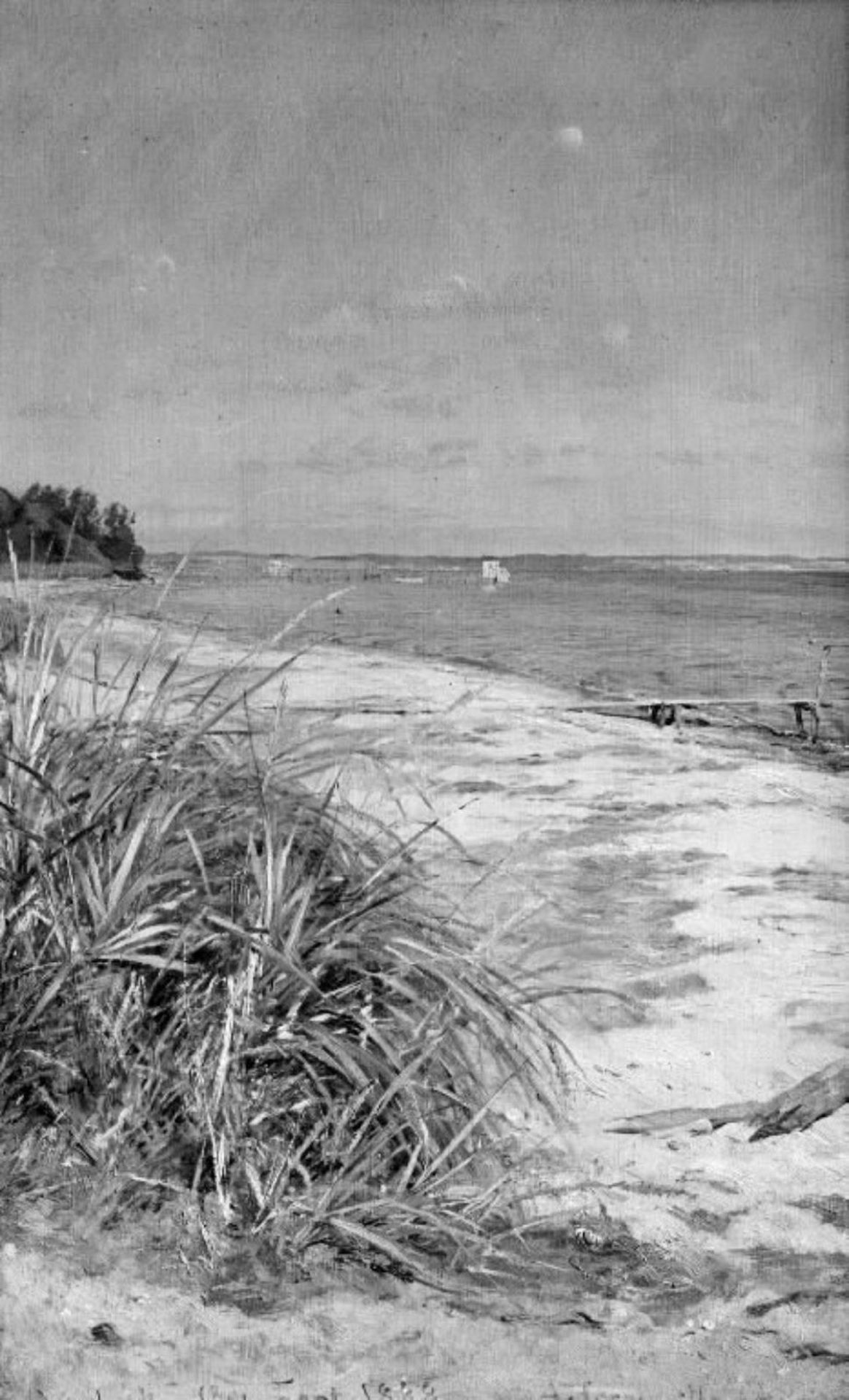
August Jerndorff created this evocative oil painting, *The Coast of Vedbæk, North of Copenhagen*, in 1883. The subdued palette and quiet composition evoke a sense of tranquil contemplation. Our eye is immediately drawn to the interplay between foreground and background. The artist uses a deliberate contrast in texture. We see the rough, tactile quality of the grassy foreground against the smooth, expansive beach and sea, thus creating a unique spatial dynamic. This juxtaposition destabilizes conventional perspective, inviting us to consider our position relative to the scene. Is it as observer or participant? Consider how this formal arrangement challenges traditional landscape painting. Jerndorff seems less interested in capturing a picturesque view and more in exploring how we perceive space and experience the natural world. He invites us to reconsider how art can function not just as representation but as an inquiry into the nature of perception itself.
The Coast of Vedbæk, North of Copenhagen
1888


Artwork details
- Medium
- painting, plein-air, wood
- Dimensions
- 48 cm (height) x 29.5 cm (width) (Netto)
- Location
- SMK - Statens Museum for Kunst
Tags
Comments
Share your thoughts
About this artwork
August Jerndorff created this evocative oil painting, *The Coast of Vedbæk, North of Copenhagen*, in 1883. The subdued palette and quiet composition evoke a sense of tranquil contemplation. Our eye is immediately drawn to the interplay between foreground and background. The artist uses a deliberate contrast in texture. We see the rough, tactile quality of the grassy foreground against the smooth, expansive beach and sea, thus creating a unique spatial dynamic. This juxtaposition destabilizes conventional perspective, inviting us to consider our position relative to the scene. Is it as observer or participant? Consider how this formal arrangement challenges traditional landscape painting. Jerndorff seems less interested in capturing a picturesque view and more in exploring how we perceive space and experience the natural world. He invites us to reconsider how art can function not just as representation but as an inquiry into the nature of perception itself.
Comments
Share your thoughts