About this artwork
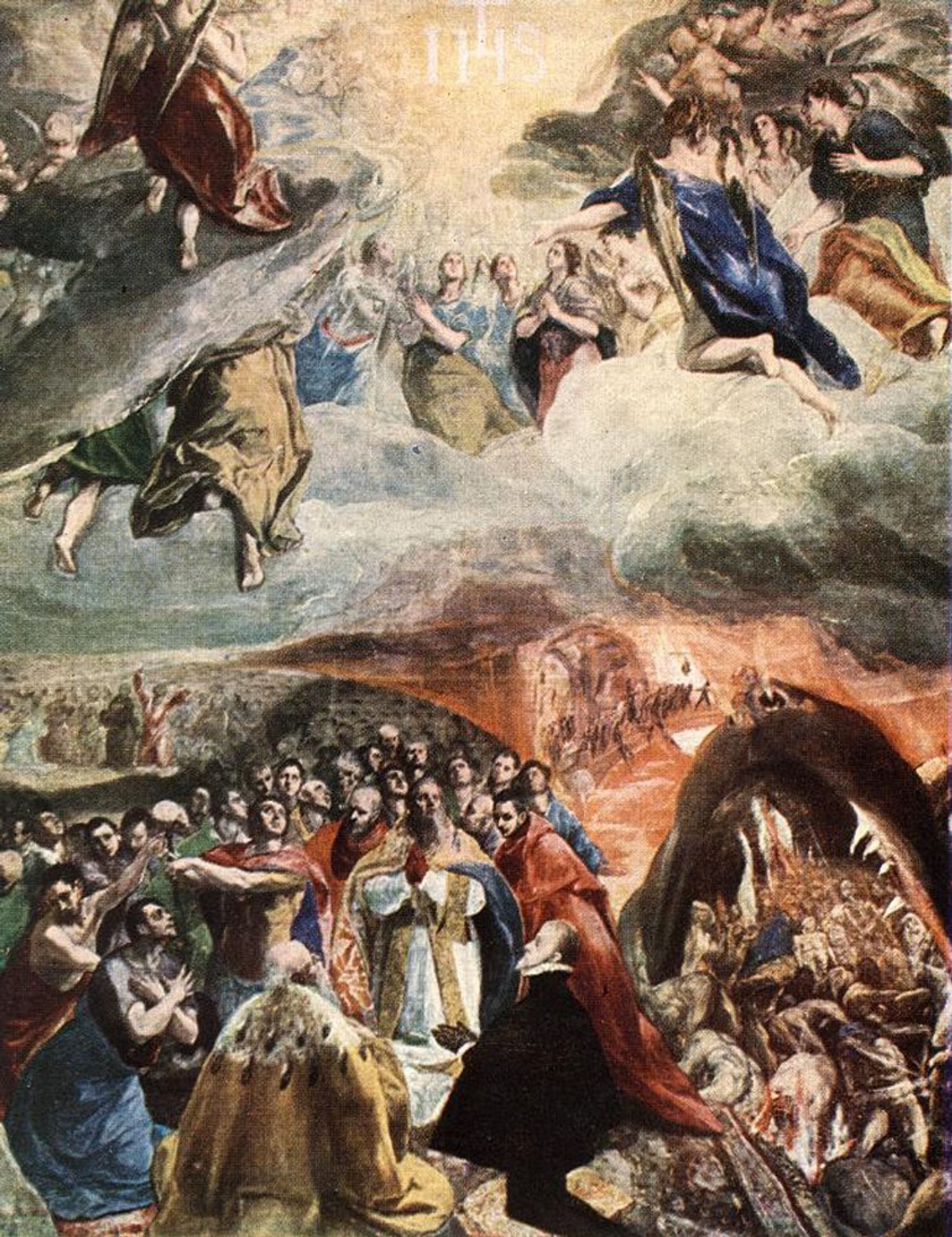
El Greco, or Domenikos Theotokopoulos, painted 'The Adoration of the Name of Jesus' in oil on canvas. It's a complex vision that combines religious ecstasy with a critique of worldly power. Painted in Spain, this work reflects the Counter-Reformation's fervor. Notice how El Greco divides the canvas. Above, ethereal figures adore the holy name, IHS. Below, a stark contrast emerges: earthly authorities and the damned are separated. It's a powerful statement on salvation and damnation, reflecting the religious tensions of the time. The elite of the time are front and centre in the work, with the poor grovelling beneath them. This may be a critique of the art institutions, suggesting that they have the wrong priorities. To understand this, look into the history of the Spanish Inquisition, and the spiritual exercises of Ignatius Loyola. Such sources provide a clearer picture of the social conditions shaping El Greco’s artistic production. By examining these social and institutional contexts, we can better appreciate the enduring meaning of art.
The Adoration of the Name of Jesus
1580

El Greco (Domenikos Theotokopoulos)
1540 - 1614
The National Gallery, London
National Gallery, London, UKArtwork details
- Medium
- painting, oil-paint
- Dimensions
- 140 x 110 cm
- Location
- National Gallery, London, UK
- Copyright
- Public domain
Tags
allegories
allegory
symbol
painting
oil-paint
mannerism
figuration
oil painting
famous-people
history-painting
Comments
Be the first to share your thoughts about this work.
About this artwork
El Greco, or Domenikos Theotokopoulos, painted 'The Adoration of the Name of Jesus' in oil on canvas. It's a complex vision that combines religious ecstasy with a critique of worldly power. Painted in Spain, this work reflects the Counter-Reformation's fervor. Notice how El Greco divides the canvas. Above, ethereal figures adore the holy name, IHS. Below, a stark contrast emerges: earthly authorities and the damned are separated. It's a powerful statement on salvation and damnation, reflecting the religious tensions of the time. The elite of the time are front and centre in the work, with the poor grovelling beneath them. This may be a critique of the art institutions, suggesting that they have the wrong priorities. To understand this, look into the history of the Spanish Inquisition, and the spiritual exercises of Ignatius Loyola. Such sources provide a clearer picture of the social conditions shaping El Greco’s artistic production. By examining these social and institutional contexts, we can better appreciate the enduring meaning of art.
Comments
Be the first to share your thoughts about this work.