About this artwork
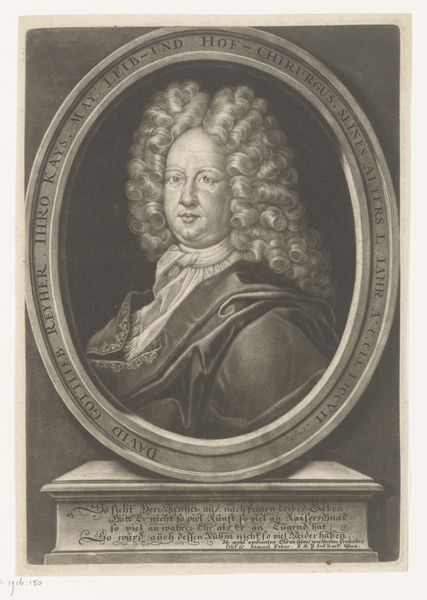
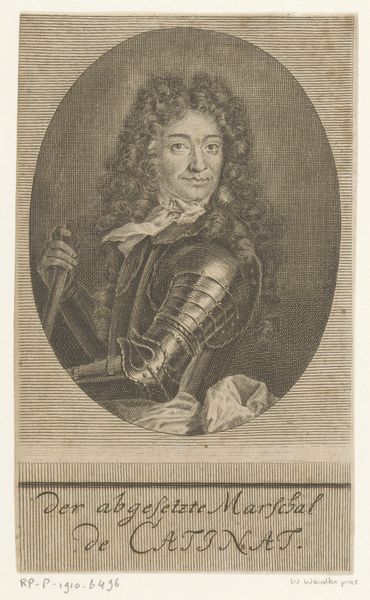
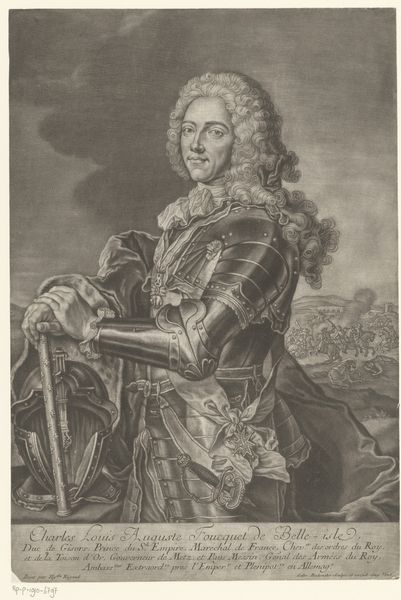
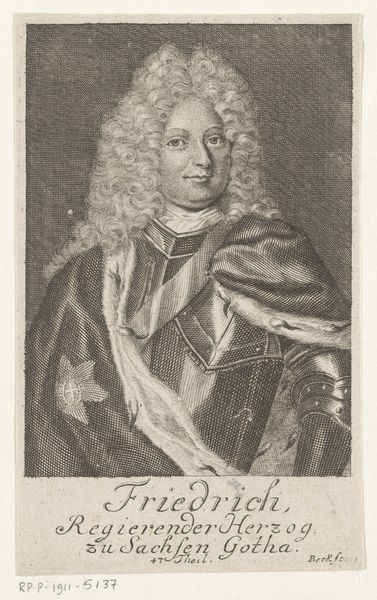
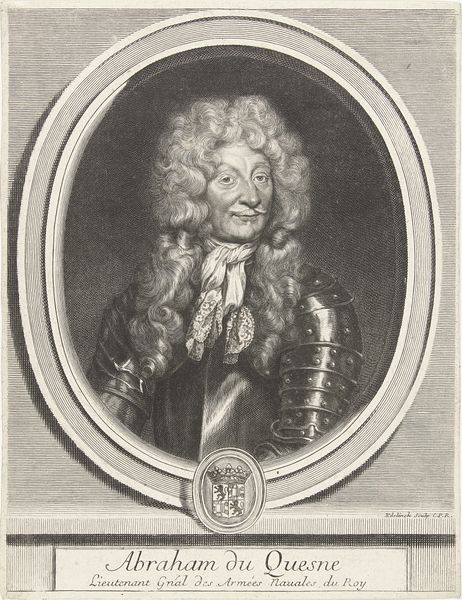
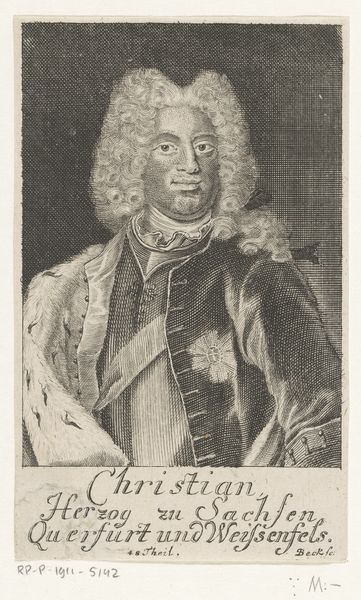
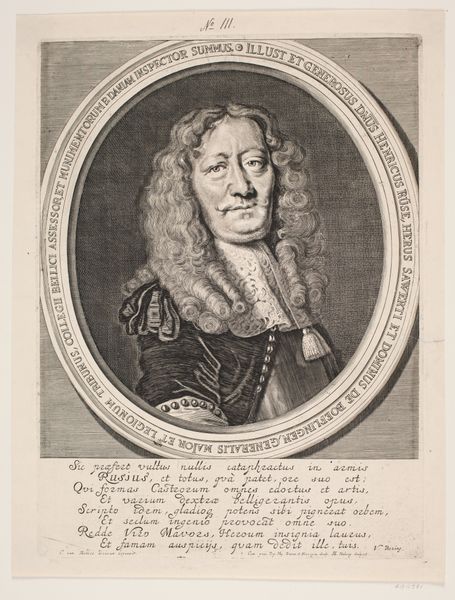
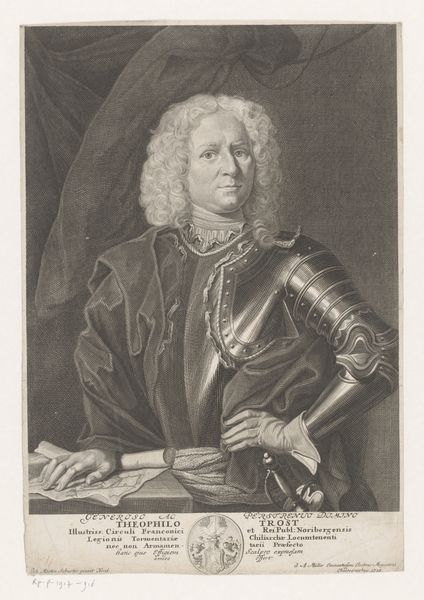
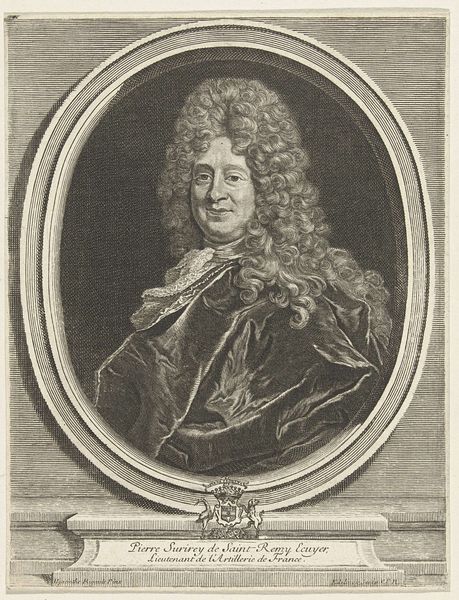
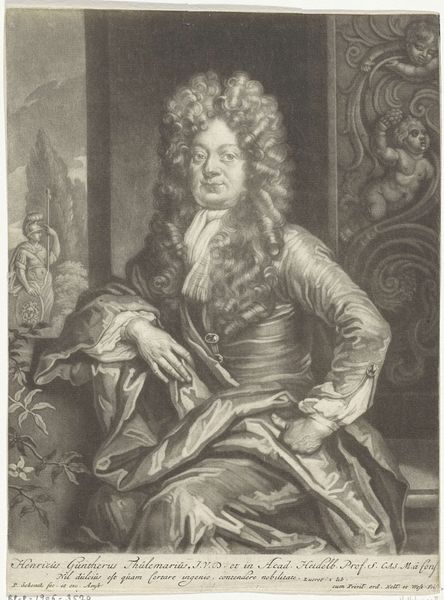
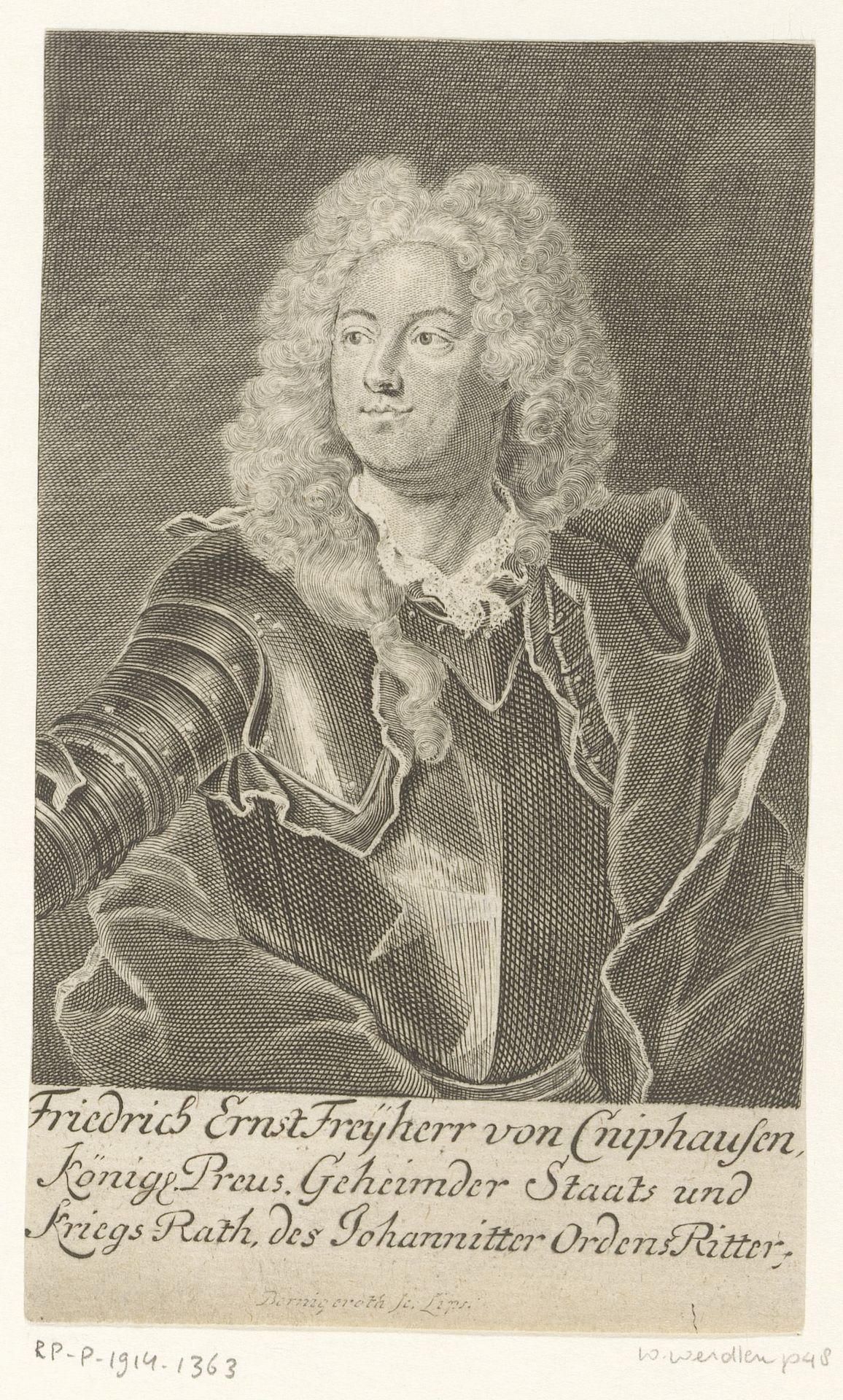
Martin Bernigeroth created this portrait of Friedrich Ernst von Knyphausen, employing engraving techniques that define its visual texture. The composition is dominated by the subject's figure, set against a subtly shaded background, creating depth through tonal variation rather than color. Bernigeroth’s strategic use of line and texture invites a semiotic analysis. The dense, swirling lines of the wig contrast sharply with the smooth, polished armor. The armor suggests power, and the intricate wig symbolizes status, reflecting 17th and 18th-century European aristocratic codes. The inscription below the portrait identifies the sitter's titles, further embedding the work within a structure of social and political signs. Ultimately, the artwork functions as more than a mere likeness; it operates as a carefully constructed representation of identity, using formal elements to convey complex social meanings. The tension between the texture and the constructed image serves as a powerful reminder of how portraiture can simultaneously reflect and shape perceptions of self and status.
Portret van Friedrich Ernst von Knyphausen
1728

Martin Bernigeroth
1670 - 1733Location
RijksmuseumArtwork details
- Medium
- print, engraving
- Dimensions
- height mm, width mm
- Location
- Rijksmuseum
- Copyright
- Rijks Museum: Open Domain
Tags
Comments
Share your thoughts
About this artwork
Martin Bernigeroth created this portrait of Friedrich Ernst von Knyphausen, employing engraving techniques that define its visual texture. The composition is dominated by the subject's figure, set against a subtly shaded background, creating depth through tonal variation rather than color. Bernigeroth’s strategic use of line and texture invites a semiotic analysis. The dense, swirling lines of the wig contrast sharply with the smooth, polished armor. The armor suggests power, and the intricate wig symbolizes status, reflecting 17th and 18th-century European aristocratic codes. The inscription below the portrait identifies the sitter's titles, further embedding the work within a structure of social and political signs. Ultimately, the artwork functions as more than a mere likeness; it operates as a carefully constructed representation of identity, using formal elements to convey complex social meanings. The tension between the texture and the constructed image serves as a powerful reminder of how portraiture can simultaneously reflect and shape perceptions of self and status.
Comments
Share your thoughts