About this artwork
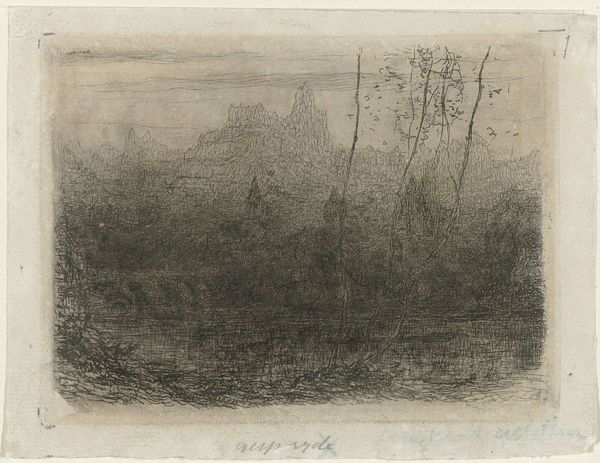
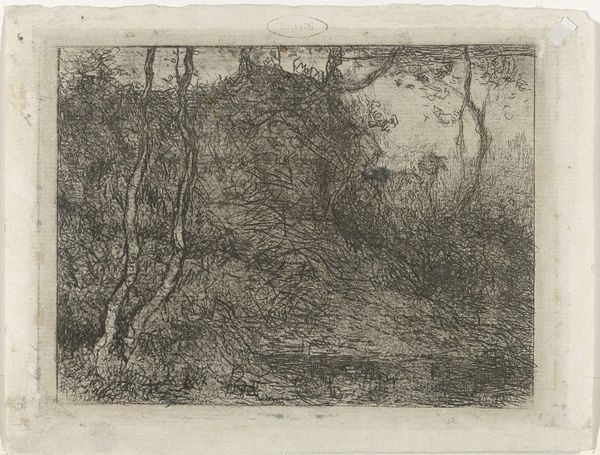
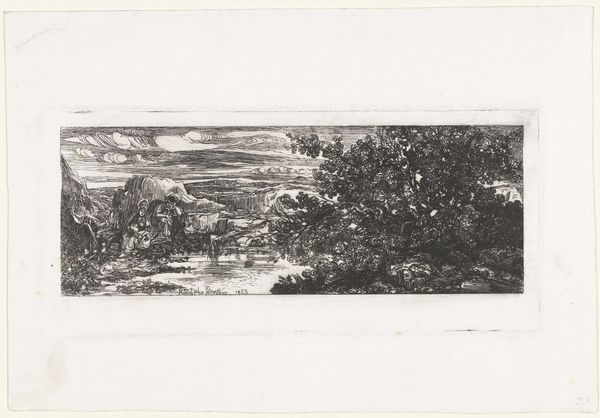
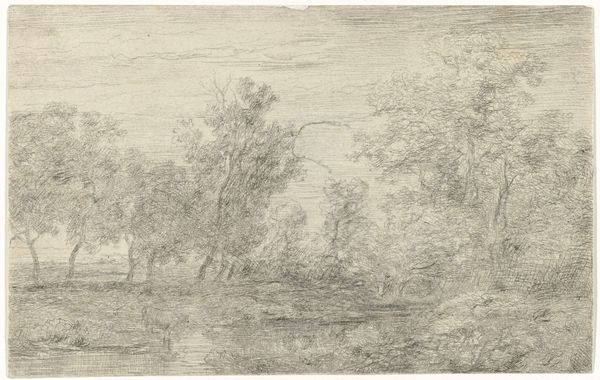
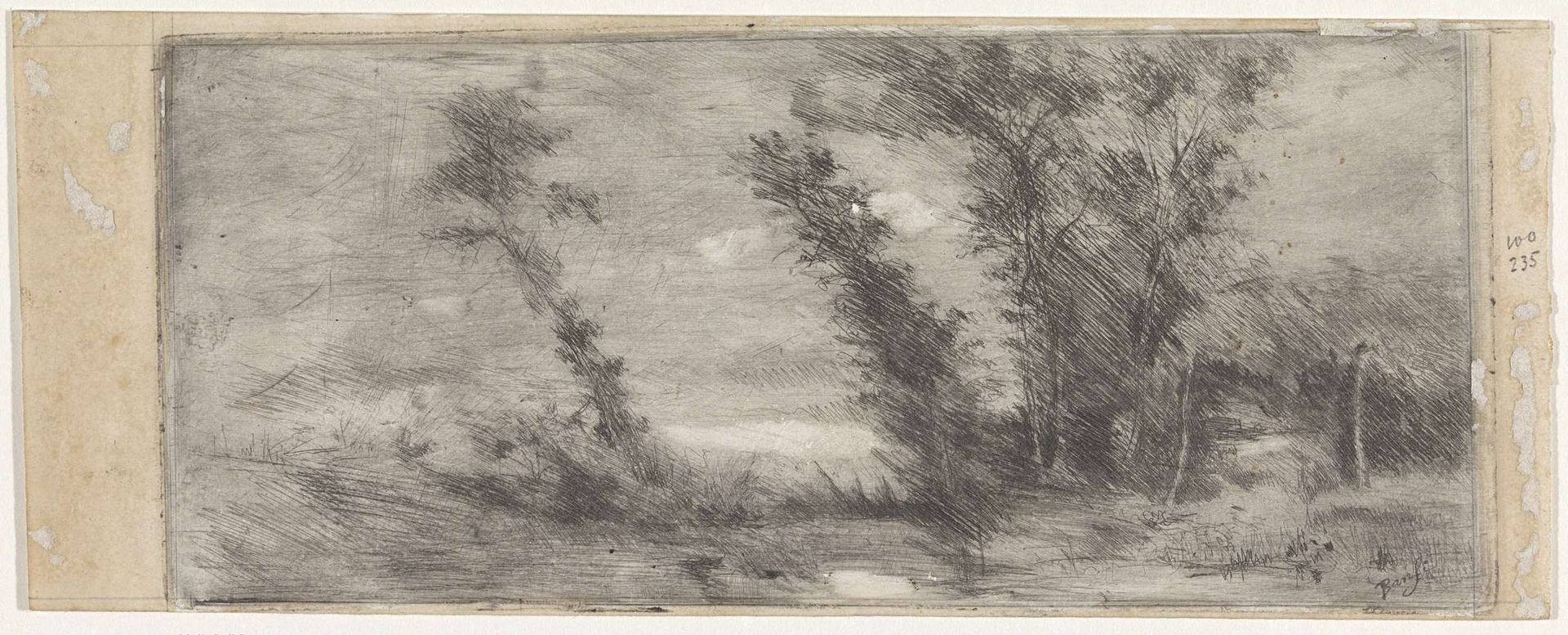
Banfi’s small print, "Landschap met bomen," or "Landscape with Trees," employs etching to create a tranquil scene, seemingly detached from explicit social commentary. Yet, the very choice of landscape as a subject speaks volumes about the cultural values of its time. During the period this was likely created, landscape art often served as a reflection of national identity and pride, particularly in regions experiencing political and social change. The idealized depiction of nature can be seen as a subtle assertion of cultural heritage, a reminder of enduring values amidst rapid modernization and urbanization. The art market and its institutions played a crucial role in elevating landscape art, shaping tastes, and legitimizing certain artistic styles. To fully appreciate this work, one might delve into the art criticism of the period, exploring the writings of figures like John Ruskin. Consider the ways in which institutions promoted certain types of art while marginalizing others. Ultimately, recognizing these factors allows us to understand how art can be both a product and a shaper of society.

Artwork details
- Medium
- drawing, pencil
- Dimensions
- height 100 mm, width 231 mm
- Copyright
- Rijks Museum: Open Domain
Tags
Comments
Share your thoughts
About this artwork
Banfi’s small print, "Landschap met bomen," or "Landscape with Trees," employs etching to create a tranquil scene, seemingly detached from explicit social commentary. Yet, the very choice of landscape as a subject speaks volumes about the cultural values of its time. During the period this was likely created, landscape art often served as a reflection of national identity and pride, particularly in regions experiencing political and social change. The idealized depiction of nature can be seen as a subtle assertion of cultural heritage, a reminder of enduring values amidst rapid modernization and urbanization. The art market and its institutions played a crucial role in elevating landscape art, shaping tastes, and legitimizing certain artistic styles. To fully appreciate this work, one might delve into the art criticism of the period, exploring the writings of figures like John Ruskin. Consider the ways in which institutions promoted certain types of art while marginalizing others. Ultimately, recognizing these factors allows us to understand how art can be both a product and a shaper of society.
Comments
Share your thoughts