About this artwork
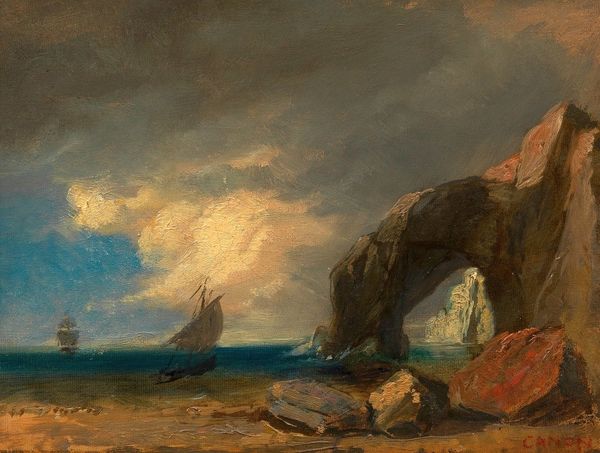
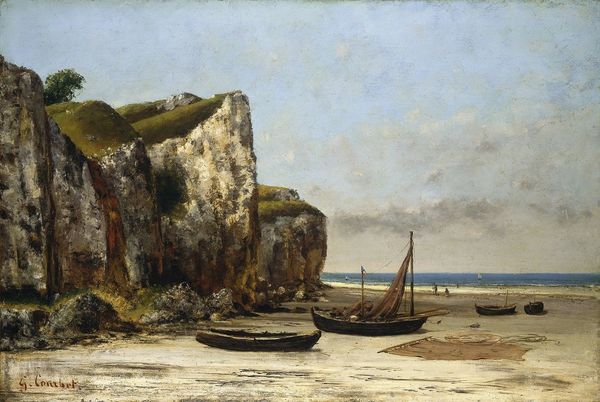
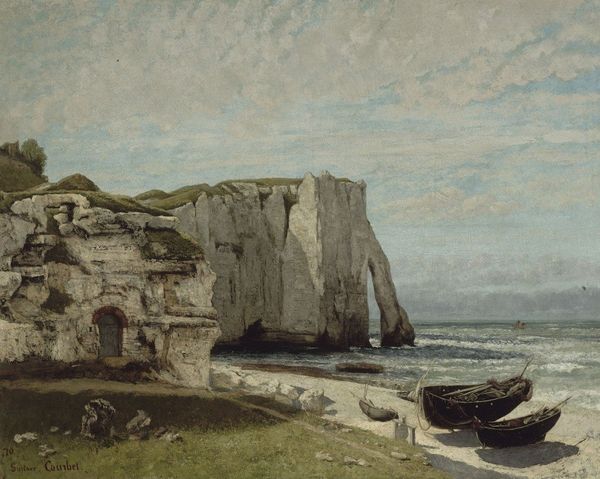
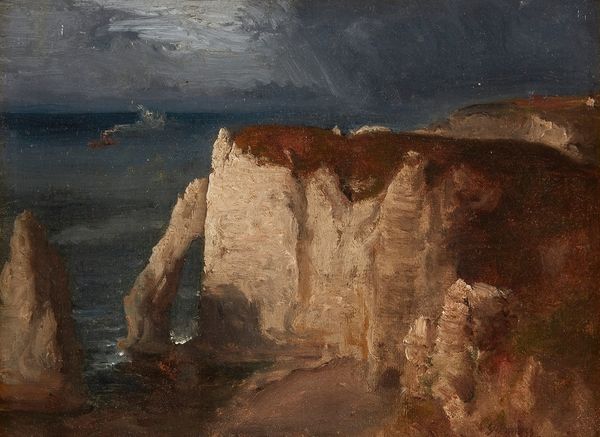
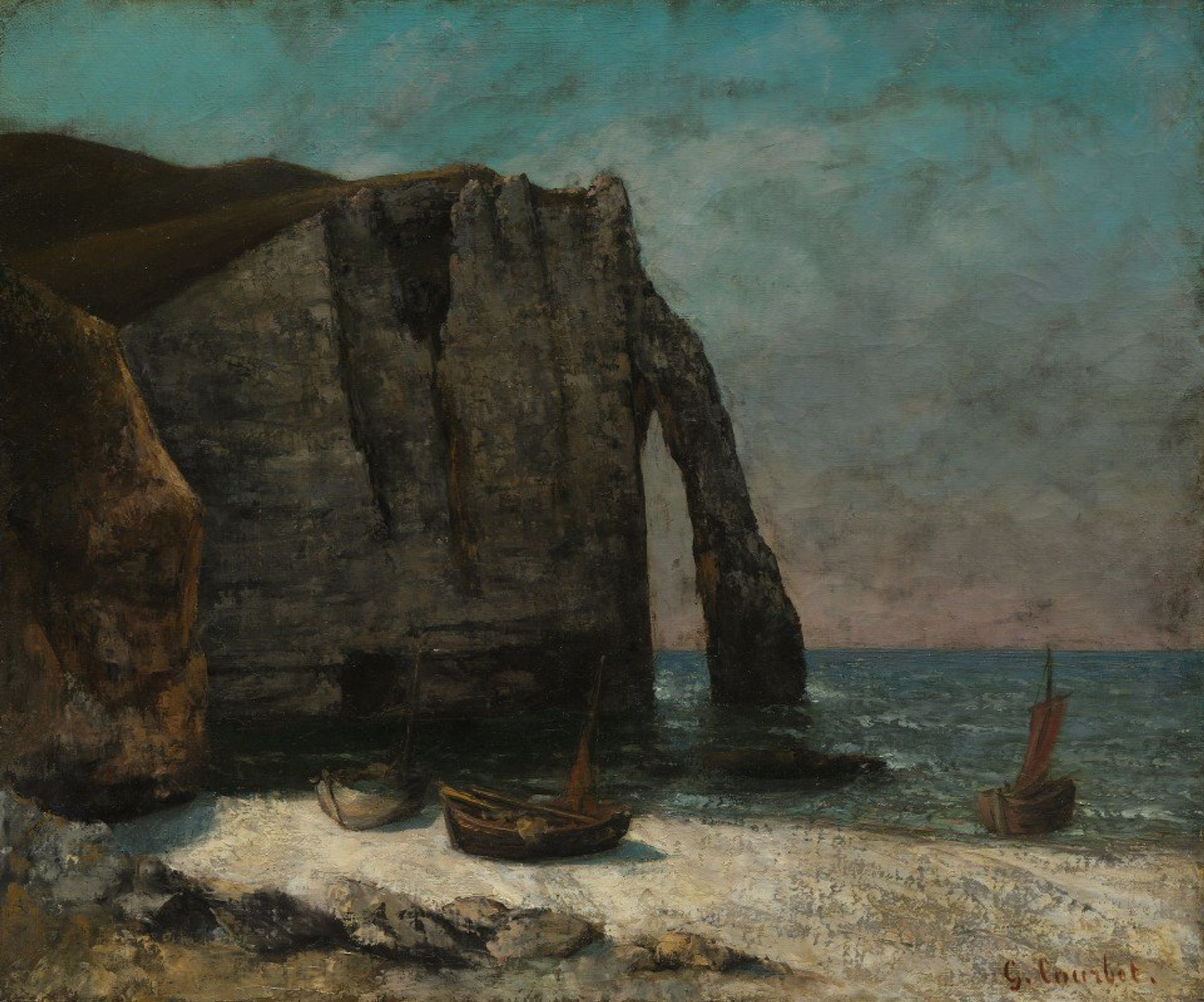
Gustave Courbet captures the Cliff at Étretat with a focus on its imposing natural arch, a form that resonates deeply within our collective visual memory. The arch, a symbol present since antiquity, is reminiscent of Roman triumphal arches, gateways to new beginnings, and passages from one state to another. Here, however, Courbet’s arch is not man-made but a product of nature's own forces, eroded by time and tide. Consider its presence across cultures – from ancient temples to gothic cathedrals – the arch signifies transition and transformation. In viewing this cliff, we might recall similar natural formations depicted throughout art history, each embodying a sense of awe and the sublime. The arch becomes more than just a geological feature; it is a symbol of endurance, a silent witness to the passage of time, evoking feelings of both vulnerability and resilience within us. This powerful engagement leaves a lasting impression, echoing through the corridors of our cultural psyche.

Artwork details
- Copyright
- Public Domain: Artvee
Comments
Share your thoughts
About this artwork
Gustave Courbet captures the Cliff at Étretat with a focus on its imposing natural arch, a form that resonates deeply within our collective visual memory. The arch, a symbol present since antiquity, is reminiscent of Roman triumphal arches, gateways to new beginnings, and passages from one state to another. Here, however, Courbet’s arch is not man-made but a product of nature's own forces, eroded by time and tide. Consider its presence across cultures – from ancient temples to gothic cathedrals – the arch signifies transition and transformation. In viewing this cliff, we might recall similar natural formations depicted throughout art history, each embodying a sense of awe and the sublime. The arch becomes more than just a geological feature; it is a symbol of endurance, a silent witness to the passage of time, evoking feelings of both vulnerability and resilience within us. This powerful engagement leaves a lasting impression, echoing through the corridors of our cultural psyche.
Comments
Share your thoughts