1767 - 1780
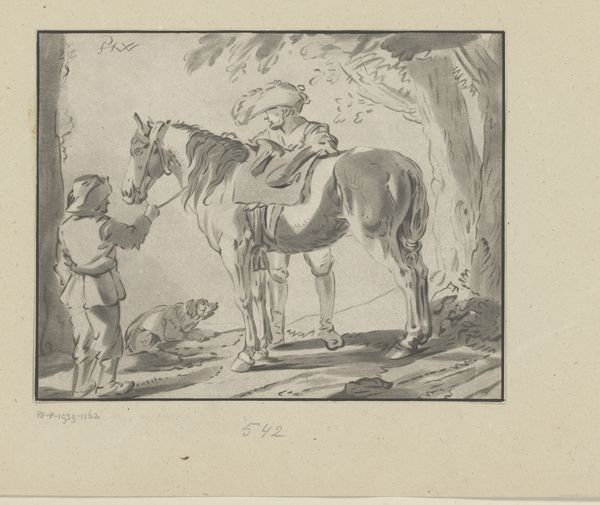
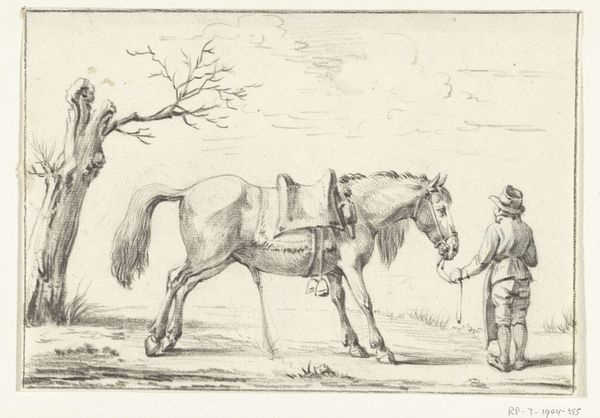
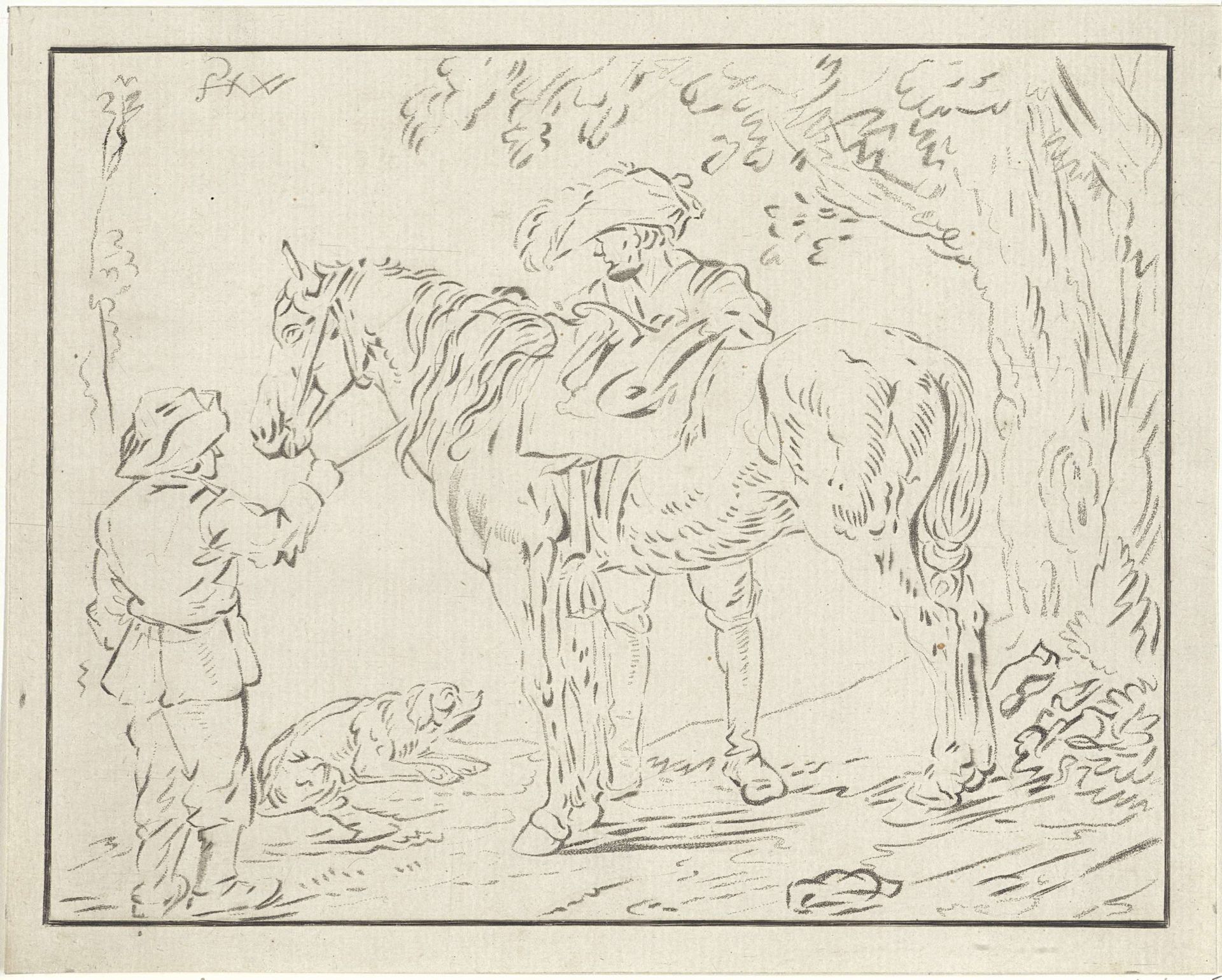
Twee mannen bij een paard

Bernhard Schreuder
1780Location
RijksmuseumListen to curator's interpretation
Curatorial notes
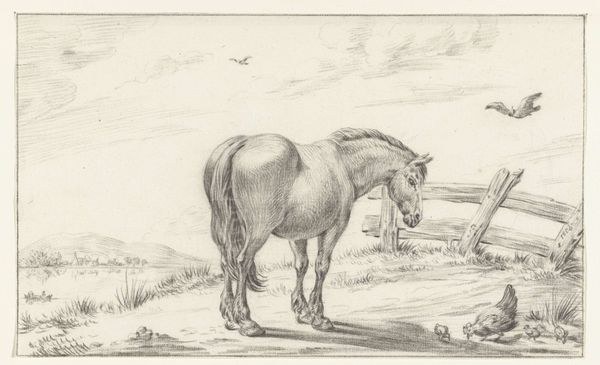
Bernhard Schreuder sketched "Two Men with a Horse," a scene steeped in the symbology of its time. The horse, central to the composition, has long been a potent symbol. Once emblems of power and nobility, by Schreuder's time, horses evoked the ideals of rural life. Consider the many equestrian statues of antiquity, where the rider is an emperor, a ruler, a god. But here, the men on foot suggest a more humble connection with the animal, one that speaks to a simpler, pastoral existence. In classical art, the horse is commonly associated with masculinity and vigor. Schreuder’s quiet, tender interaction contrasts sharply, perhaps reflecting a shift in cultural values. This depiction, in turn, influences how we subconsciously react to the image. It becomes a vessel through which collective memories and shared experiences are unconsciously revived and re-evaluated. The symbol of the horse—from divine emblem to bucolic image—reveals how cultural memory is not linear but a continuous cycle, where symbols are repeated, adapted, and imbued with new meanings.