About this artwork
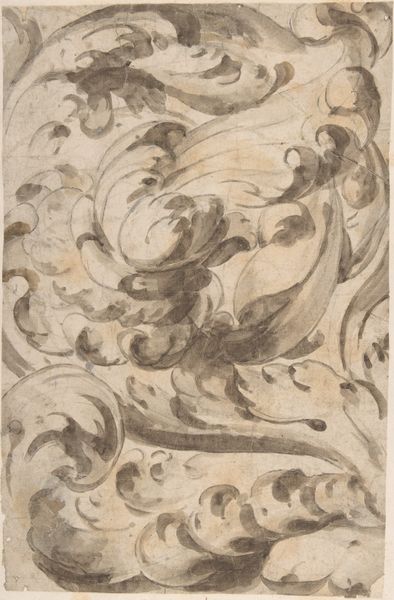
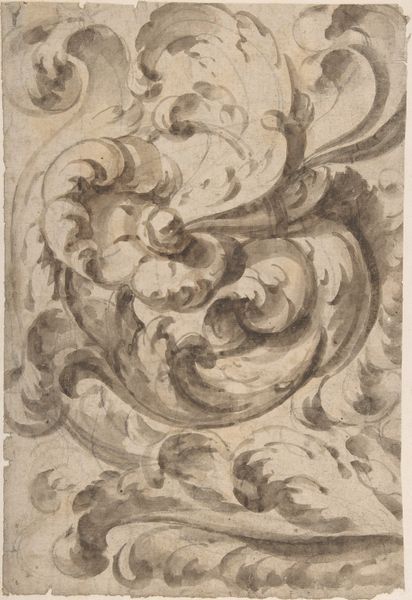
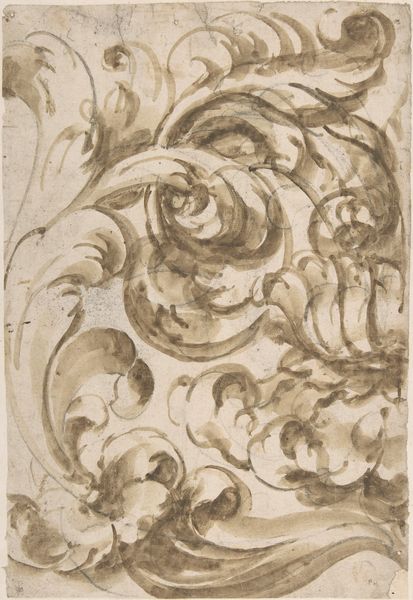
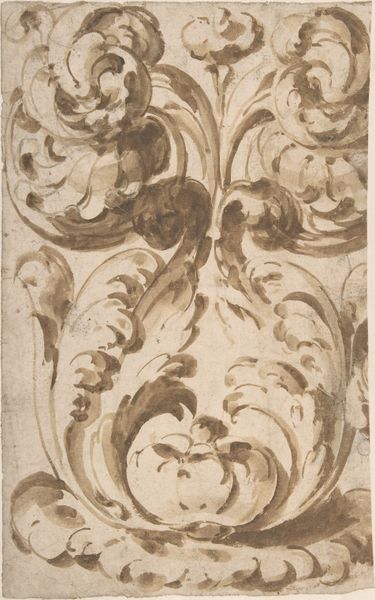
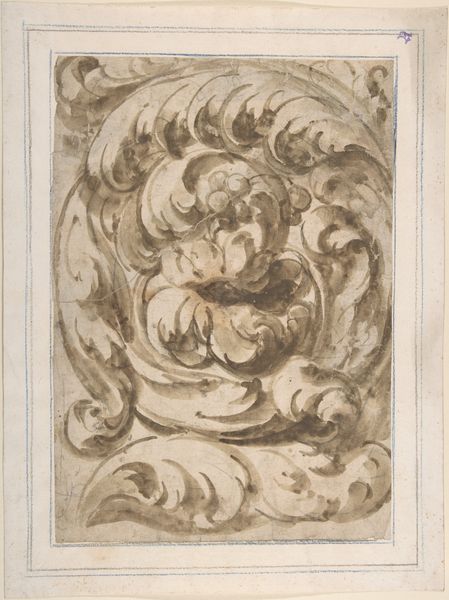
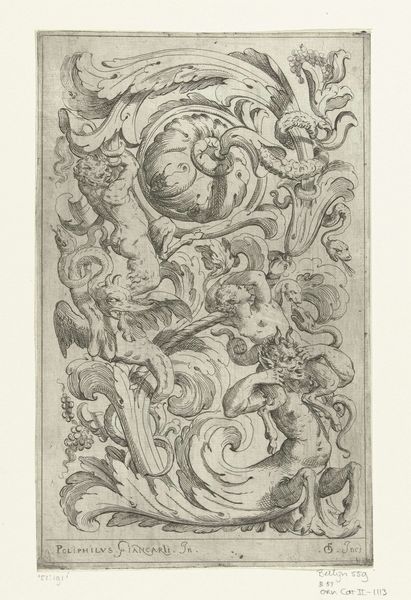
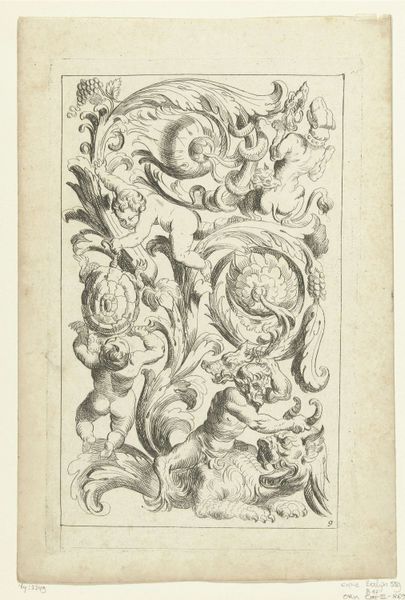
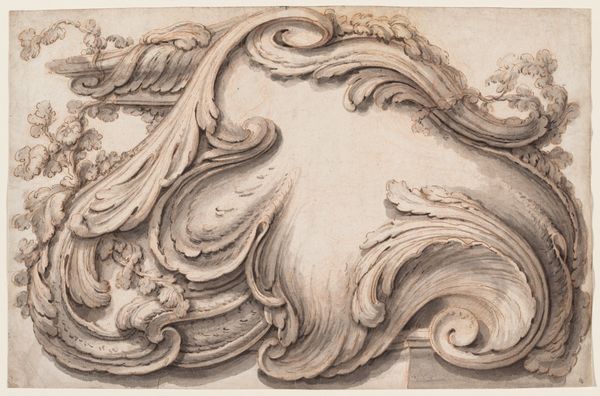
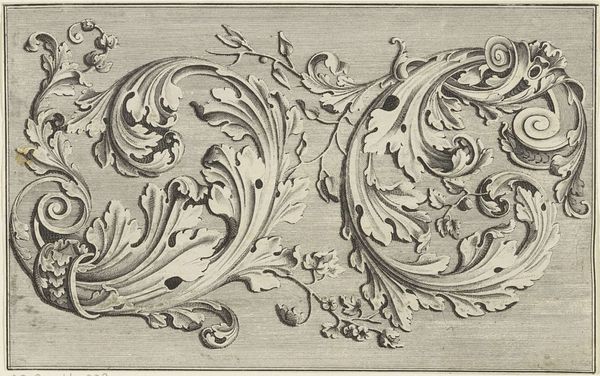
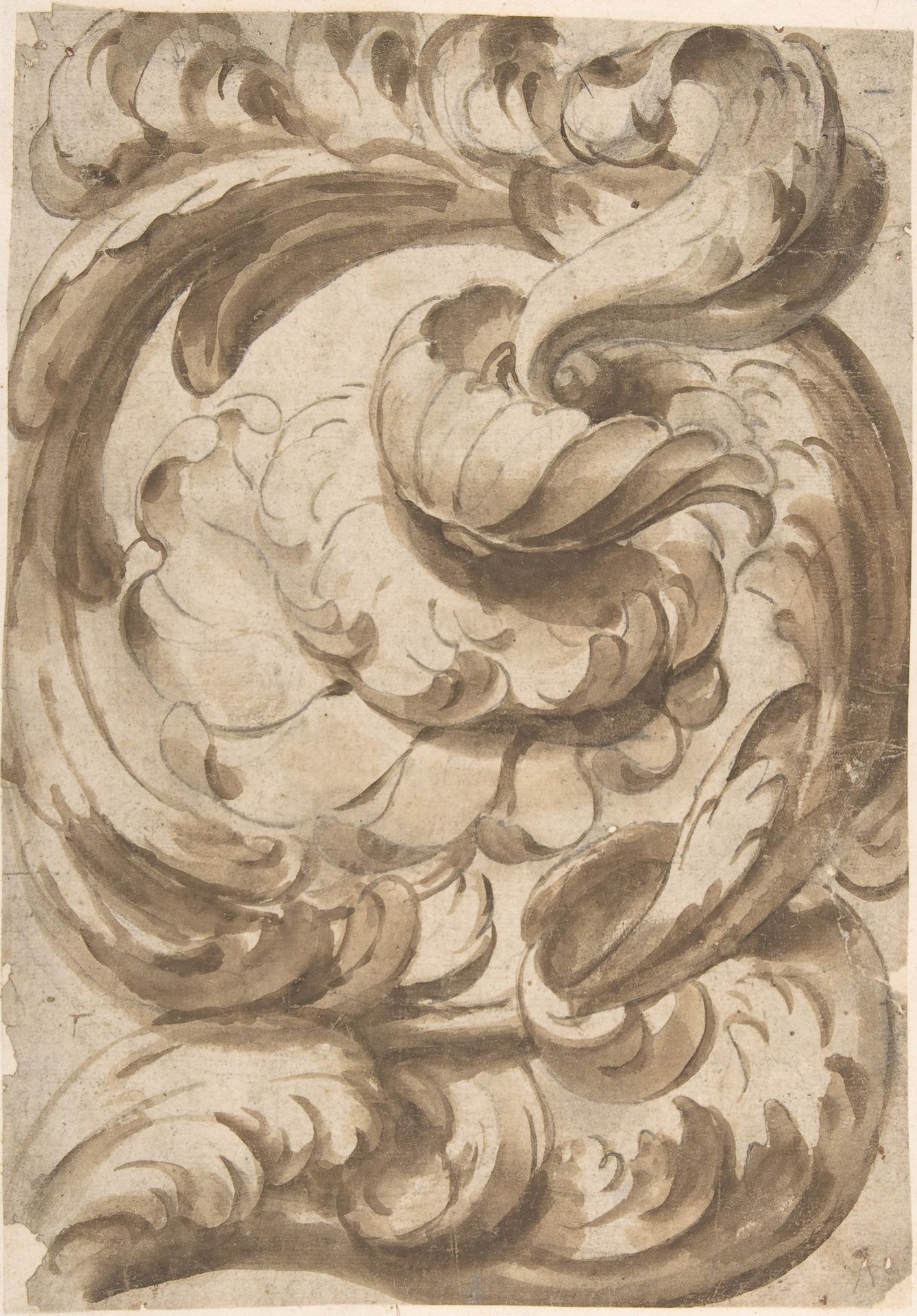
Editor: So this is "Acanthus Scroll with Rosette," a 17th-century ink drawing by an anonymous artist. It’s…well, it’s a drawing of some leaves! What's striking to me is the artist’s meticulous execution using fairly common materials, resulting in such a complex pattern. What's your take? Curator: Absolutely, let’s consider what this drawing *is*. It’s not trying to be ‘high art,’ aiming instead to serve as a template, likely for a craftsman, for application in plasterwork, furniture, or even metalwork. Look at the careful rendering, the clearly delineated forms; it speaks of efficient, perhaps even collaborative, production. It was designed to be easily transferable, wouldn't you agree? Editor: I see what you mean. It's less about individual artistic expression and more about a system of artistic production and dissemination. Do you think the drawing's medium—ink—plays a role in its purpose? Curator: Precisely! Ink allowed for clear reproduction, which in turn dictated standardization of design for broader consumption. The materiality allows the ‘artist’ – or artisan – to scale designs more quickly and for less cost, right? This bridges high art to design; craftwork and utility blur and expand to fill new cultural and economical avenues. Editor: So, appreciating this work requires acknowledging its original intent: as a reproducible design element instead of fine art with just aesthetic value. Curator: Exactly. Thinking about how the materials inform both production and consumption fundamentally alters how we value this “drawing.” By understanding materiality within a context of economic distribution we have expanded on this cultural element of the Baroque period. Editor: This conversation reframed how I see the work! Focusing on materiality and historical context gave me insight into the system behind it.
Acanthus Scroll with Rosette
17th century


Artwork details
- Medium
- drawing, print, ink
- Dimensions
- image: 11 7/8 x 8 1/4 in. (30.2 x 21 cm)
- Location
- Metropolitan Museum of Art, New York, NY
- Copyright
- Public Domain
Tags
Comments
Share your thoughts
About this artwork
Editor: So this is "Acanthus Scroll with Rosette," a 17th-century ink drawing by an anonymous artist. It’s…well, it’s a drawing of some leaves! What's striking to me is the artist’s meticulous execution using fairly common materials, resulting in such a complex pattern. What's your take? Curator: Absolutely, let’s consider what this drawing *is*. It’s not trying to be ‘high art,’ aiming instead to serve as a template, likely for a craftsman, for application in plasterwork, furniture, or even metalwork. Look at the careful rendering, the clearly delineated forms; it speaks of efficient, perhaps even collaborative, production. It was designed to be easily transferable, wouldn't you agree? Editor: I see what you mean. It's less about individual artistic expression and more about a system of artistic production and dissemination. Do you think the drawing's medium—ink—plays a role in its purpose? Curator: Precisely! Ink allowed for clear reproduction, which in turn dictated standardization of design for broader consumption. The materiality allows the ‘artist’ – or artisan – to scale designs more quickly and for less cost, right? This bridges high art to design; craftwork and utility blur and expand to fill new cultural and economical avenues. Editor: So, appreciating this work requires acknowledging its original intent: as a reproducible design element instead of fine art with just aesthetic value. Curator: Exactly. Thinking about how the materials inform both production and consumption fundamentally alters how we value this “drawing.” By understanding materiality within a context of economic distribution we have expanded on this cultural element of the Baroque period. Editor: This conversation reframed how I see the work! Focusing on materiality and historical context gave me insight into the system behind it.
Comments
Share your thoughts