About this artwork
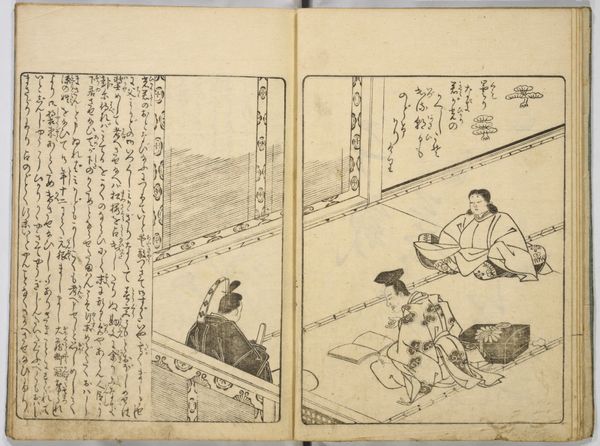
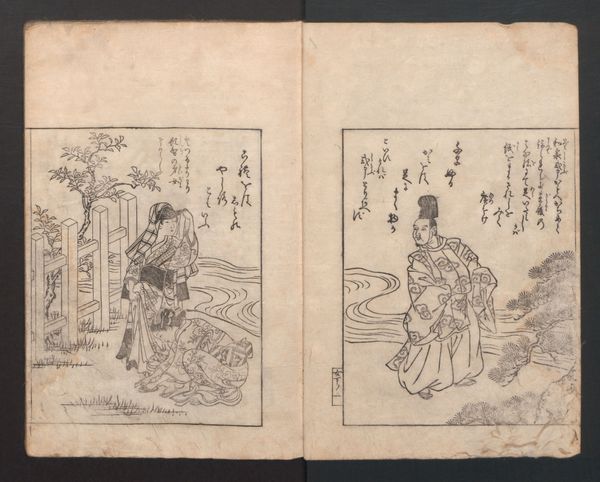
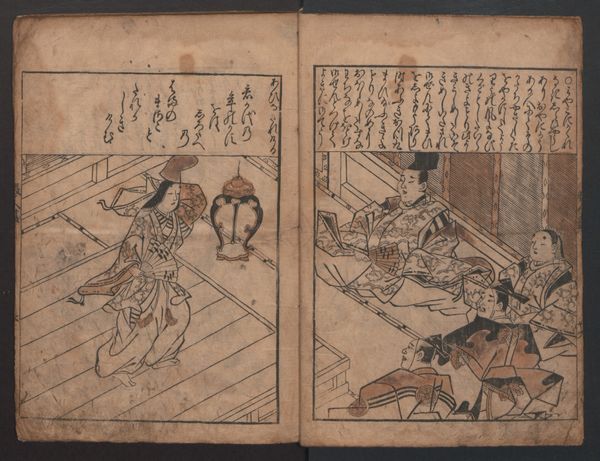
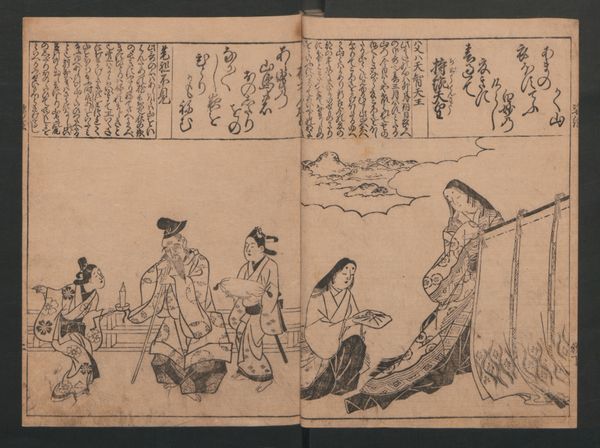
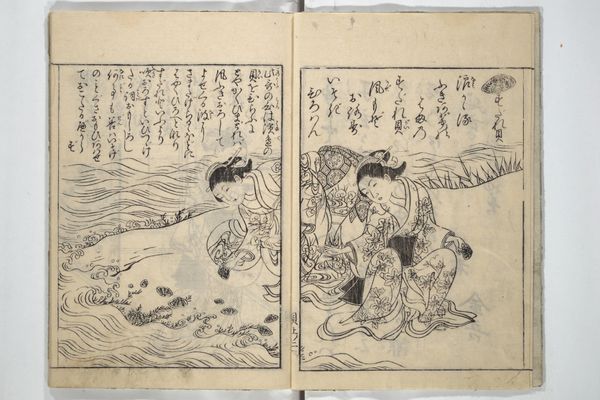
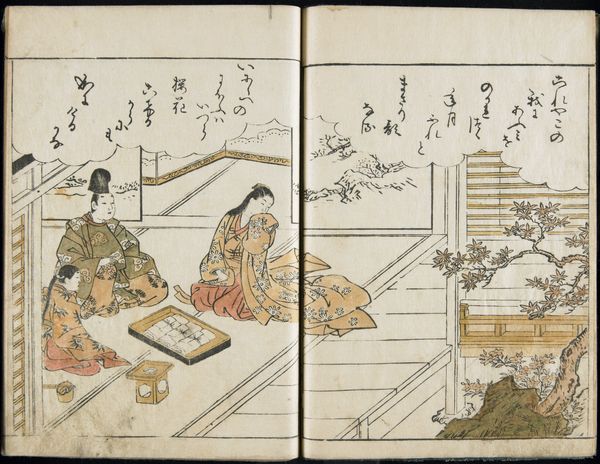
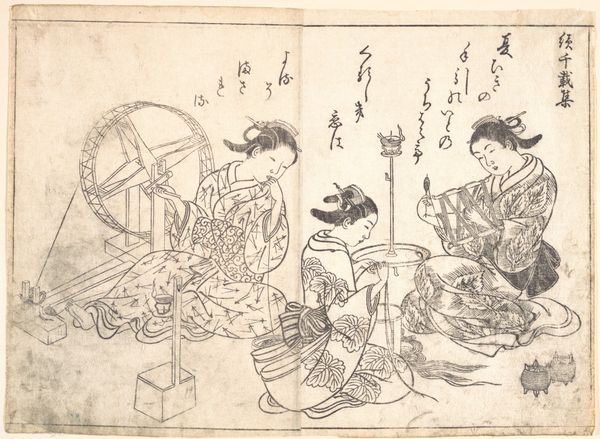
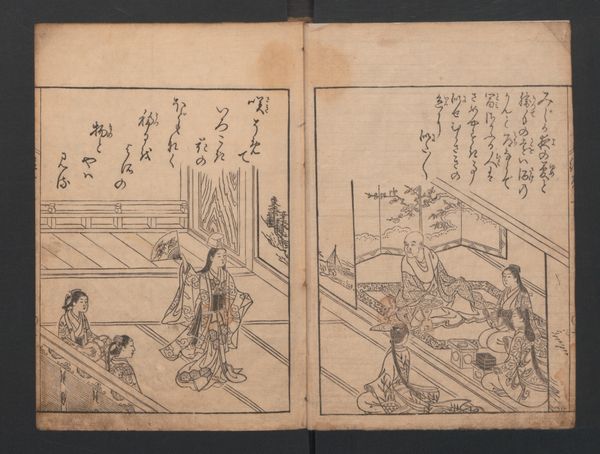
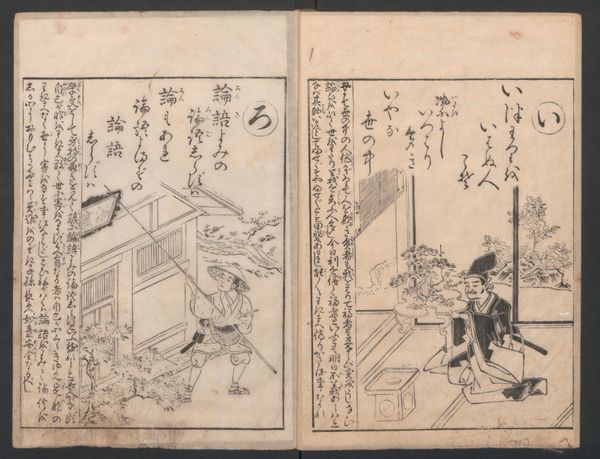
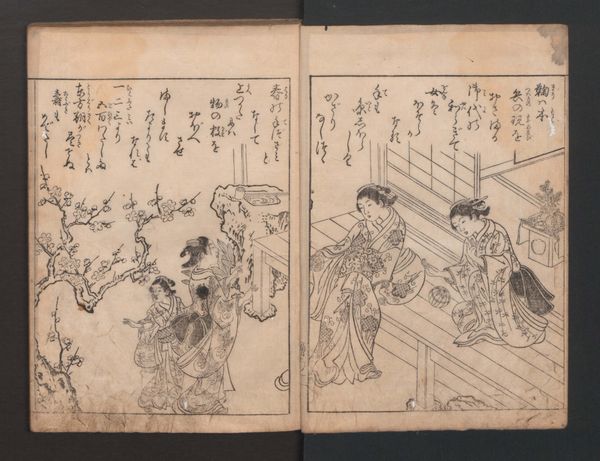
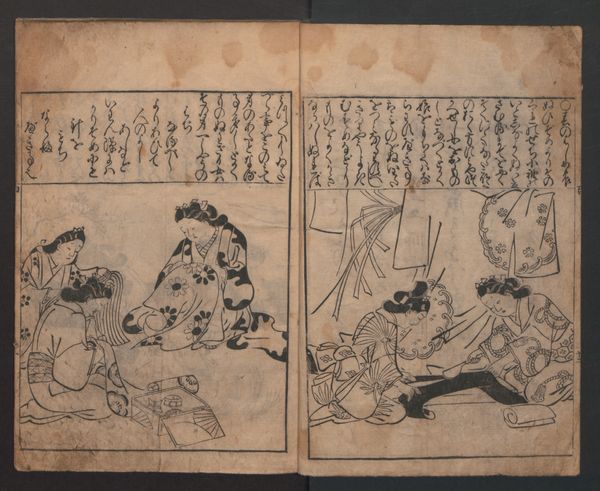
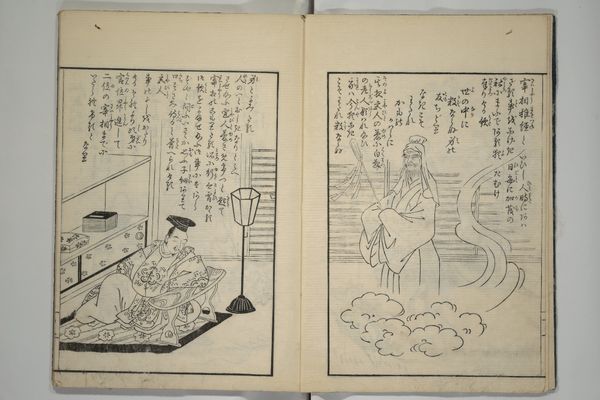
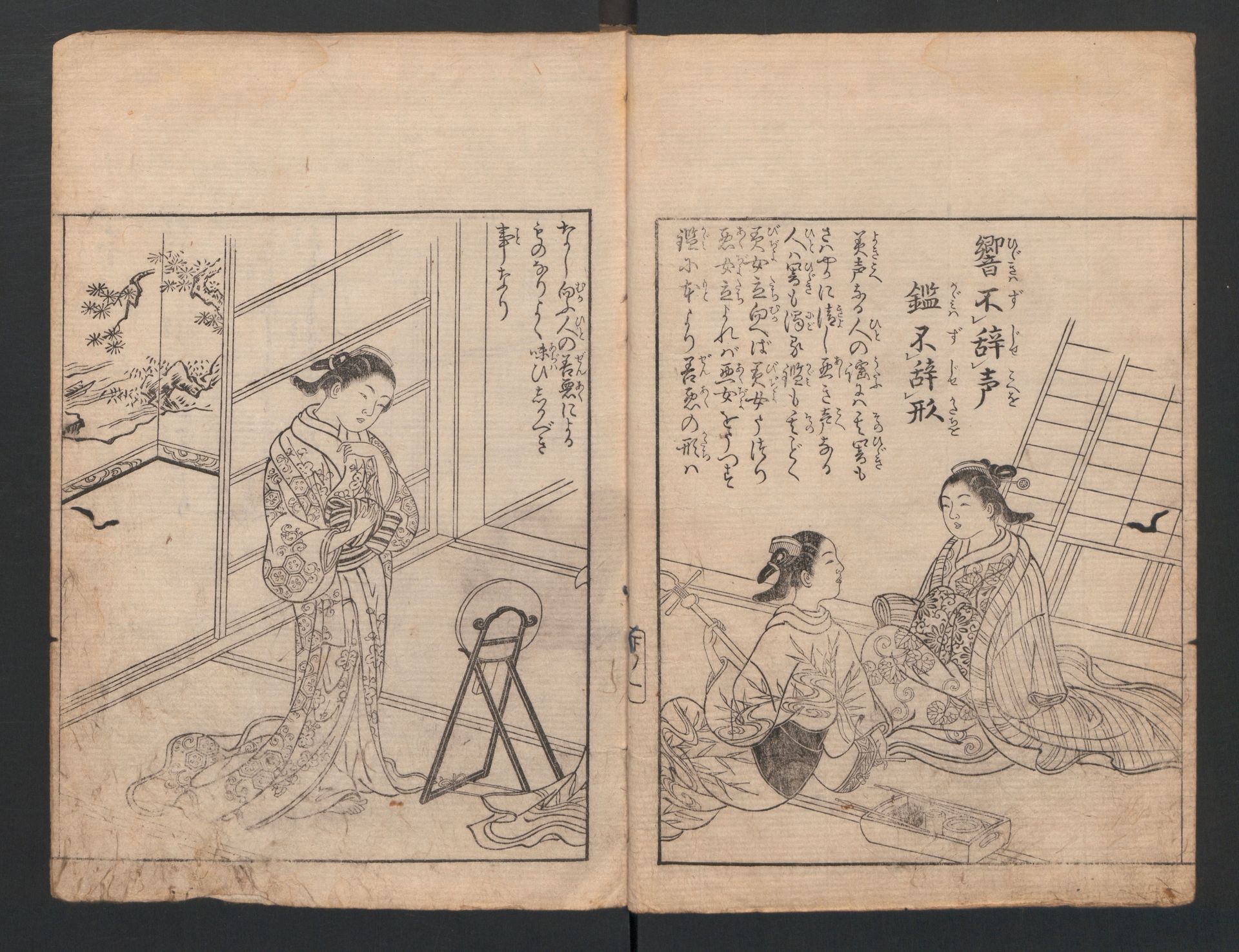
This book illustration, *Illustrated Proverbs*, was made by Nishikawa Sukenobu in the 18th century. The composition, divided into two panels, offers a study in contrasts. On the left, a solitary figure stands in a room defined by straight lines, a mirror before her. The right panel teems with figures, their postures relaxed, engaged in conversation. Sukenobu's use of line is particularly striking. On the left, sharp, angular lines create a sense of order and containment. On the right, the lines are softer, more fluid, reflecting the informality of the scene. This contrast creates a dynamic tension, suggesting a juxtaposition of interiority and social interaction. The composition might be seen through the lens of semiotics, where each element functions as a sign. The mirror on the left panel is not just a reflection of one's appearance but also a representation of self-awareness, while the gathering on the right signifies community. Together, these panels explore the interplay between individual reflection and social engagement.
Illustrated Proverbs 1741

Nishikawa Sukenobu 西川祐信
1671 - 1750
The Metropolitan Museum of Art
Metropolitan Museum of Art, New York, NYArtwork details
- Medium
- drawing, print, ink
- Dimensions
- Overall: 10 3/4 x 7 1/2in. (27.3 x 19.1cm)
- Location
- Metropolitan Museum of Art, New York, NY
- Copyright
- Public Domain
Tags
portrait
drawing
pen sketch
book
asian-art
sketch book
ukiyo-e
ink
genre-painting
Comments
No comments
About this artwork
This book illustration, *Illustrated Proverbs*, was made by Nishikawa Sukenobu in the 18th century. The composition, divided into two panels, offers a study in contrasts. On the left, a solitary figure stands in a room defined by straight lines, a mirror before her. The right panel teems with figures, their postures relaxed, engaged in conversation. Sukenobu's use of line is particularly striking. On the left, sharp, angular lines create a sense of order and containment. On the right, the lines are softer, more fluid, reflecting the informality of the scene. This contrast creates a dynamic tension, suggesting a juxtaposition of interiority and social interaction. The composition might be seen through the lens of semiotics, where each element functions as a sign. The mirror on the left panel is not just a reflection of one's appearance but also a representation of self-awareness, while the gathering on the right signifies community. Together, these panels explore the interplay between individual reflection and social engagement.
Comments
No comments