About this artwork
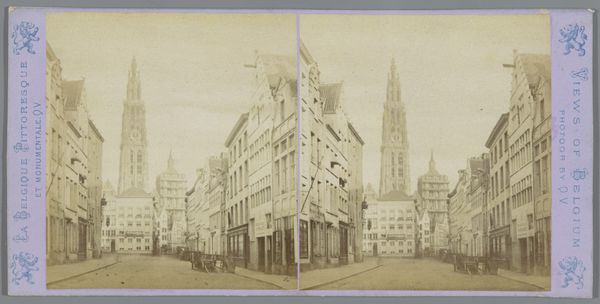
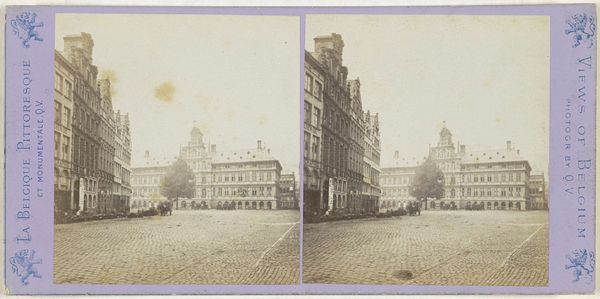
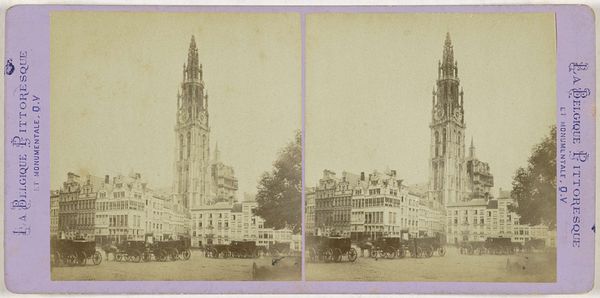
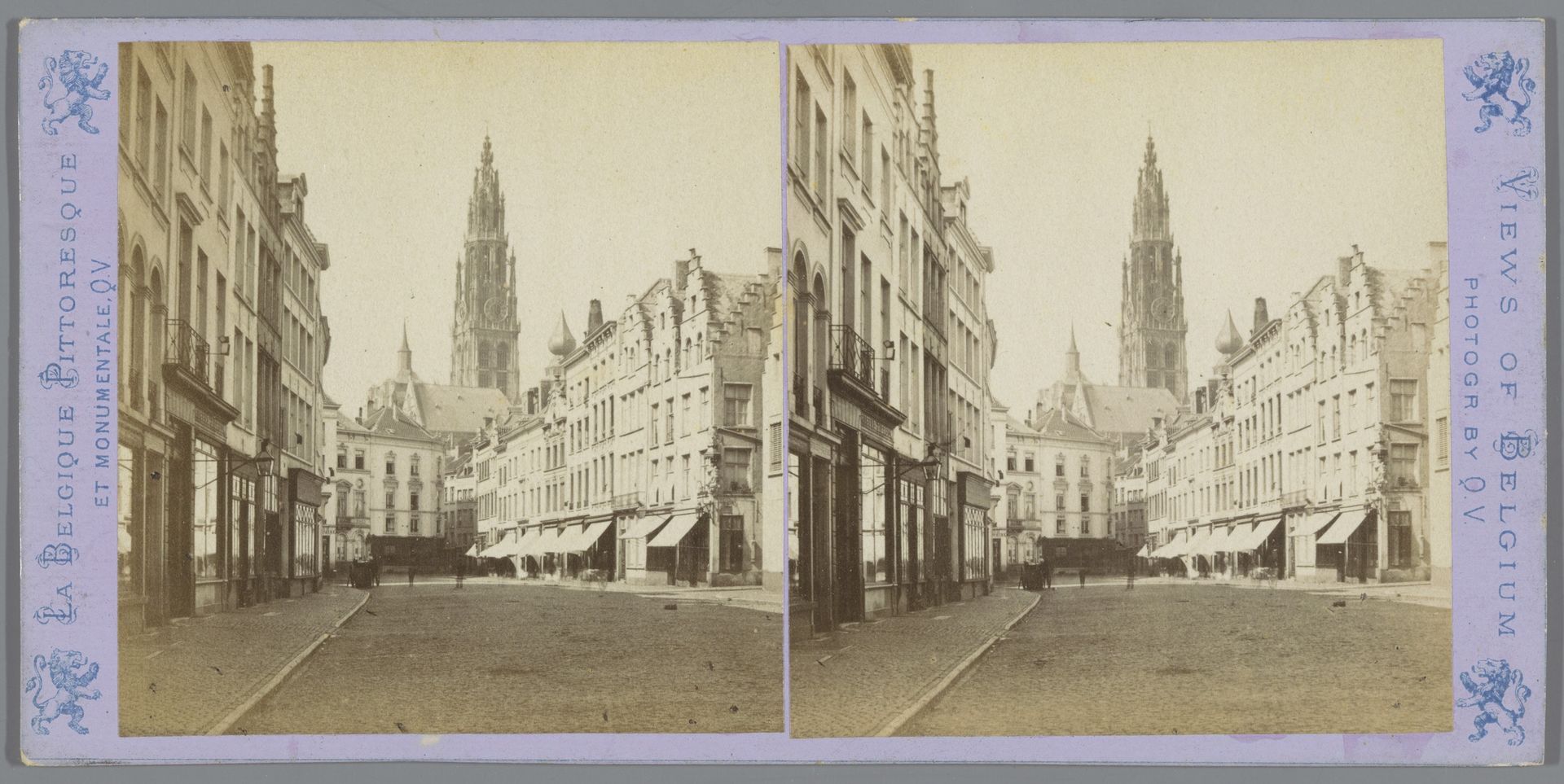
This stereoscopic photograph showing the tower of the Cathedral of Our Lady, as seen from the Grasmarkt street in Antwerp, was made by Jules Hippolyte Quéval. Quéval's image captures not just a street, but a social space, complete with commercial buildings and public institutions. The cathedral looms large, a reminder of the enduring power of the church in 19th-century Belgium. Belgium's history as a site of contestation between Catholic and Protestant powers informs the prominence of this religious structure. But what about the commercial buildings that line the street? How do they reflect the economic structures of the time? What does it tell us that the street is nearly empty? The lack of people is likely due to long exposure times of early photography. By exploring archives, newspapers, and other visual materials we can understand how Quéval's photograph participates in the visual culture of its time.
Gezicht op de toren van de Onze-Lieve-Vrouwekathedraal, gezien vanaf de Grasmarkt Straat in Antwerpen
1866 - 1870

Jules Hippolyte Quéval
1824Location
RijksmuseumArtwork details
- Medium
- print, photography
- Dimensions
- height 86 mm, width 176 mm
- Location
- Rijksmuseum
- Copyright
- Rijks Museum: Open Domain
Tags
Comments
Share your thoughts
About this artwork
This stereoscopic photograph showing the tower of the Cathedral of Our Lady, as seen from the Grasmarkt street in Antwerp, was made by Jules Hippolyte Quéval. Quéval's image captures not just a street, but a social space, complete with commercial buildings and public institutions. The cathedral looms large, a reminder of the enduring power of the church in 19th-century Belgium. Belgium's history as a site of contestation between Catholic and Protestant powers informs the prominence of this religious structure. But what about the commercial buildings that line the street? How do they reflect the economic structures of the time? What does it tell us that the street is nearly empty? The lack of people is likely due to long exposure times of early photography. By exploring archives, newspapers, and other visual materials we can understand how Quéval's photograph participates in the visual culture of its time.
Comments
Share your thoughts