About this artwork
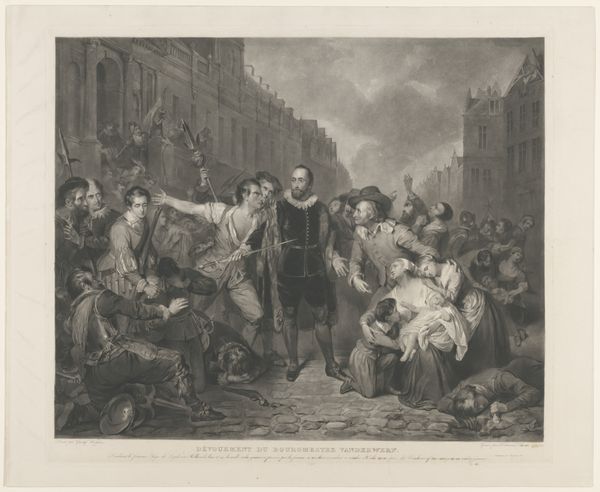
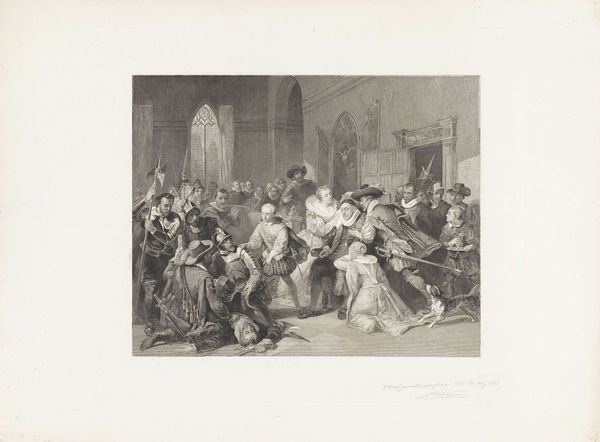
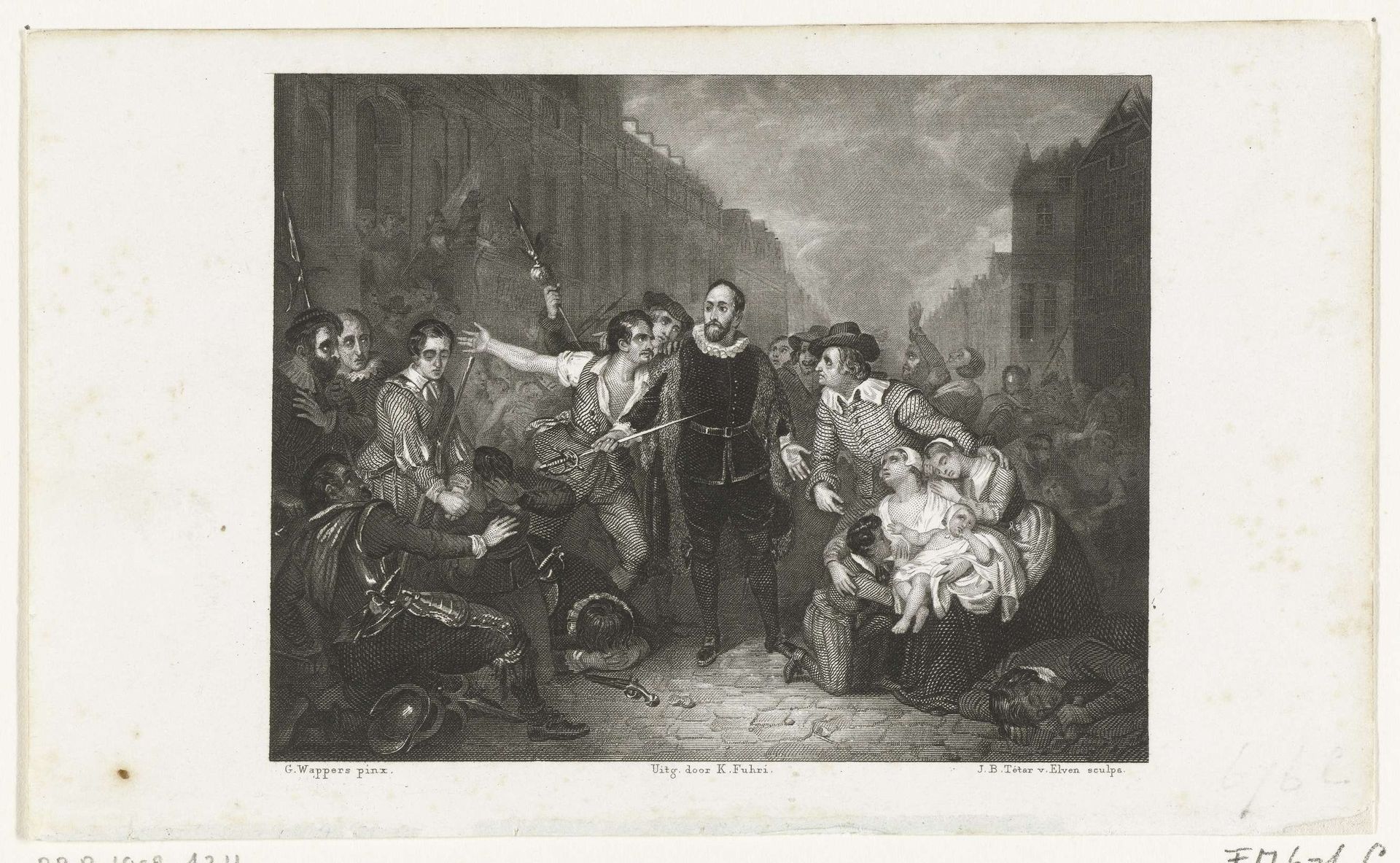
Jan Baptist Tetar van Elven created this print, titled "The Self-Sacrifice of Mayor Pieter van der Werff, 1574," sometime in the 19th century. The print depicts a dramatic moment during the Siege of Leiden, part of the Eighty Years' War. Here, the mayor offers himself as food to his starving citizens, illustrating a theme of self-sacrifice central to Dutch identity. Van Elven lived in an era of nation-building, and his art often reflected national pride and historical narratives. The portrayal of women and children huddled together evokes a sense of vulnerability, while the proud stance of the mayor embodies masculine heroism. This artwork operates within a framework of gendered expectations, emphasizing the roles and sacrifices expected of men and women in times of conflict. Consider how the story of Leiden, as depicted here, may have been deployed to shape ideas about Dutch resilience and national character.
De zelfopoffering van burgemeester Pieter van der Werff, 1574
1815 - 1889

Jan Baptist Tetar van Elven
1805 - 1889Location
RijksmuseumArtwork details
- Dimensions
- height 95 mm, width 158 mm
- Location
- Rijksmuseum
- Copyright
- Rijks Museum: Open Domain
Comments
Share your thoughts
About this artwork
Jan Baptist Tetar van Elven created this print, titled "The Self-Sacrifice of Mayor Pieter van der Werff, 1574," sometime in the 19th century. The print depicts a dramatic moment during the Siege of Leiden, part of the Eighty Years' War. Here, the mayor offers himself as food to his starving citizens, illustrating a theme of self-sacrifice central to Dutch identity. Van Elven lived in an era of nation-building, and his art often reflected national pride and historical narratives. The portrayal of women and children huddled together evokes a sense of vulnerability, while the proud stance of the mayor embodies masculine heroism. This artwork operates within a framework of gendered expectations, emphasizing the roles and sacrifices expected of men and women in times of conflict. Consider how the story of Leiden, as depicted here, may have been deployed to shape ideas about Dutch resilience and national character.
Comments
Share your thoughts