About this artwork
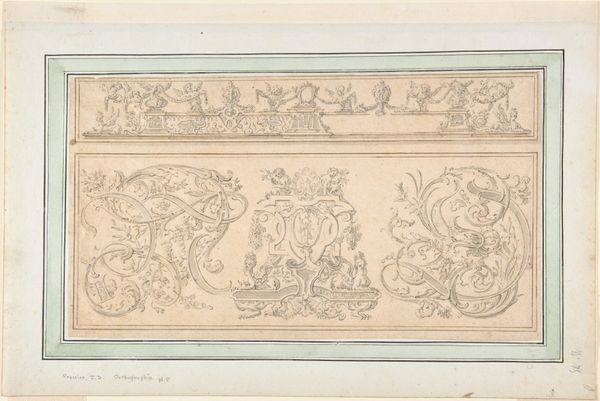
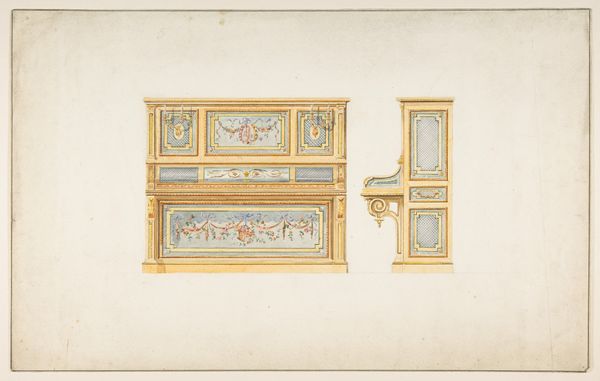
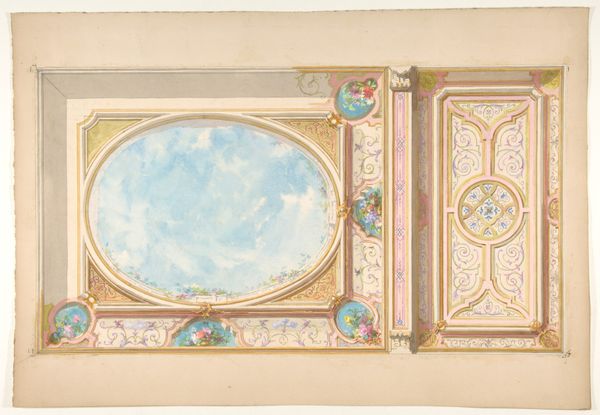
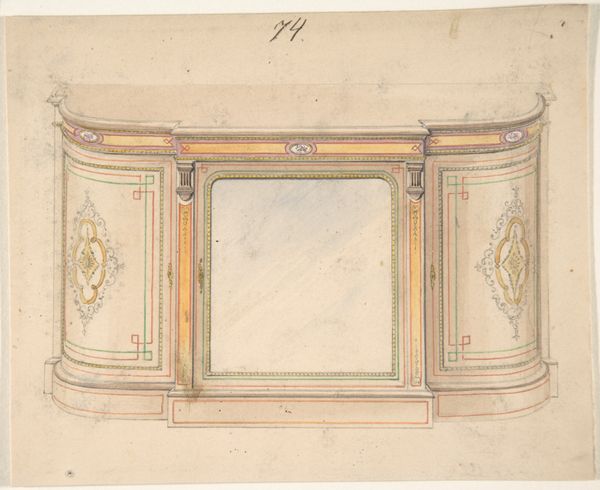
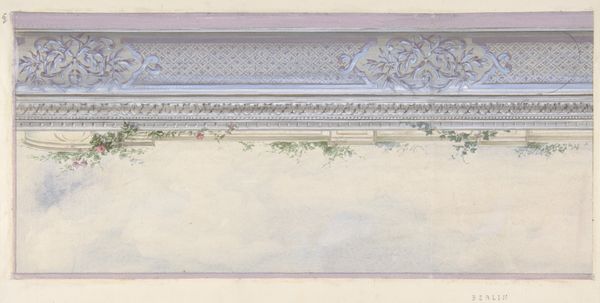
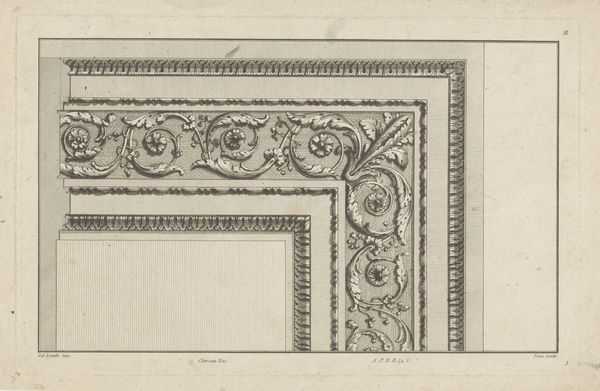
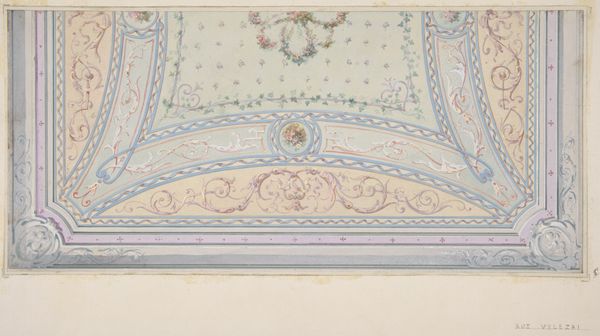
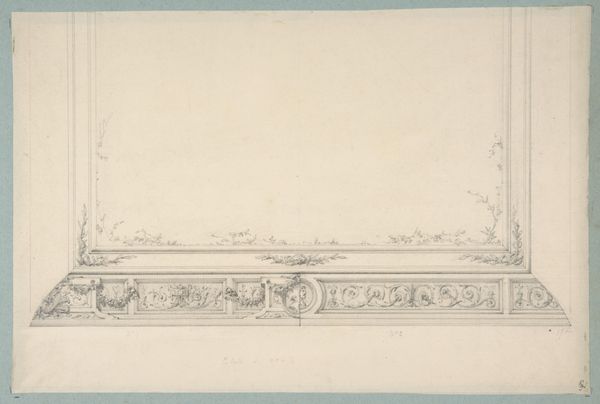
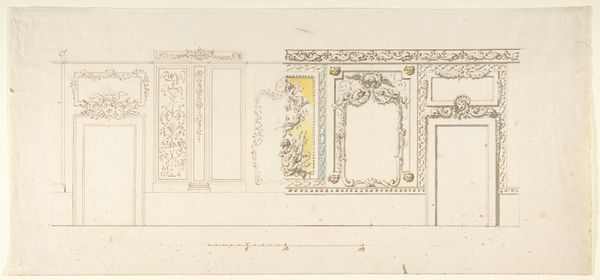
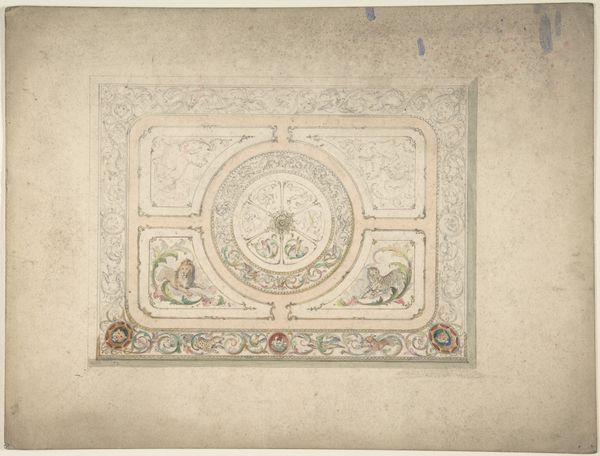
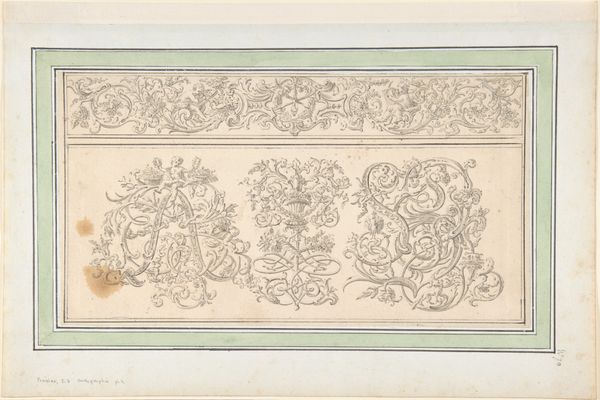
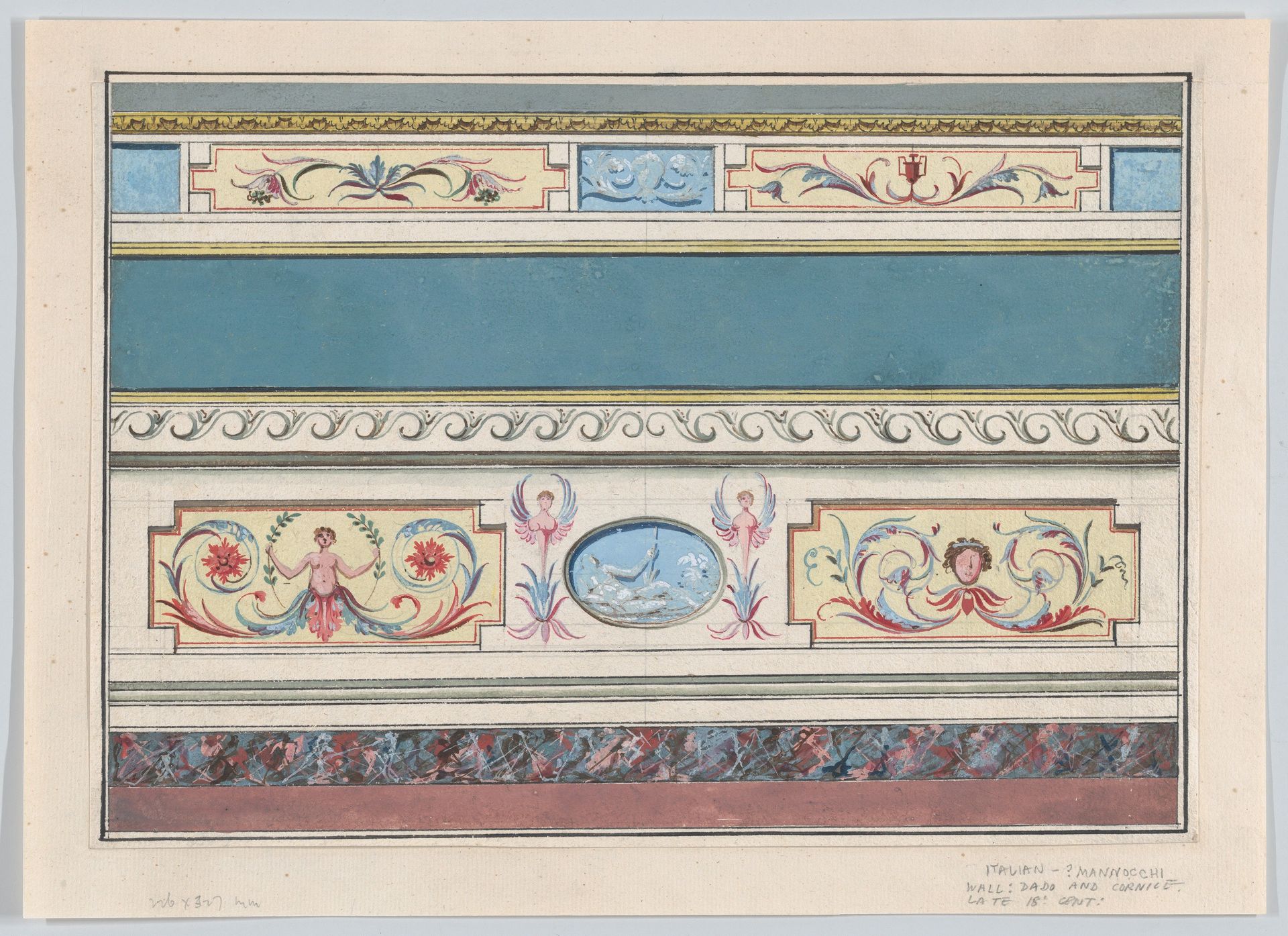
Giuseppe Mannocchi made this design for neoclassical interior decoration with pen and watercolor on paper sometime in the late 1700s. It’s important to understand that this wasn't just fine art, but a pattern to be applied by skilled laborers: painters and plasterers, all working to realize a unified, Neoclassical interior. If we look closely, we can see how the artist has played with materiality through the trompe-l'oeil effect, mimicking marble with washes of color. The geometry speaks to a period infatuated with classical forms, which became fashionable in elite society. This aesthetic then trickled down through pattern books and engravings like this one, influencing domestic interiors of various classes. Consider the sheer amount of human labor required to realize just one of these designs at full scale. That’s why, in the end, this drawing isn't just a pretty picture; it’s a document of social relations made visible through aesthetics and labor.
Design for the Decoration of a Cornice and Dado with Neoclassical Motifs
1755 - 1765


Artwork details
- Medium
- drawing, ornament, print, watercolor
- Dimensions
- Sheet: 8 1/4 × 12 13/16 in. (21 × 32.5 cm); various
- Location
- Metropolitan Museum of Art, New York, NY
- Copyright
- Public Domain
Tags
drawing
neoclacissism
ornament
water colours
form
traditional architecture
watercolor
line
decorative-art
Comments
Be the first to share your thoughts about this work.
About this artwork
Giuseppe Mannocchi made this design for neoclassical interior decoration with pen and watercolor on paper sometime in the late 1700s. It’s important to understand that this wasn't just fine art, but a pattern to be applied by skilled laborers: painters and plasterers, all working to realize a unified, Neoclassical interior. If we look closely, we can see how the artist has played with materiality through the trompe-l'oeil effect, mimicking marble with washes of color. The geometry speaks to a period infatuated with classical forms, which became fashionable in elite society. This aesthetic then trickled down through pattern books and engravings like this one, influencing domestic interiors of various classes. Consider the sheer amount of human labor required to realize just one of these designs at full scale. That’s why, in the end, this drawing isn't just a pretty picture; it’s a document of social relations made visible through aesthetics and labor.
Comments
Be the first to share your thoughts about this work.