
Curatorial notes
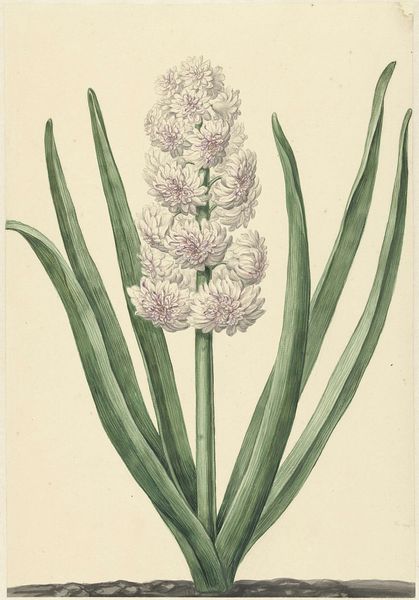
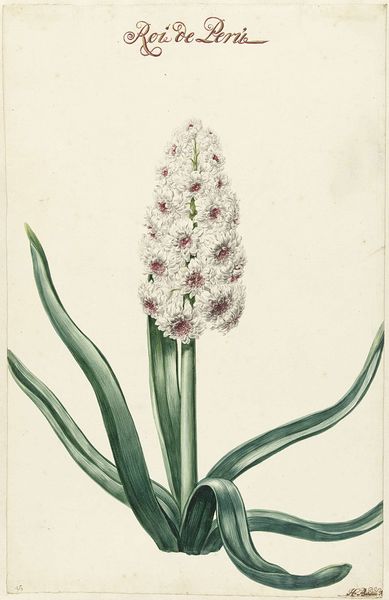
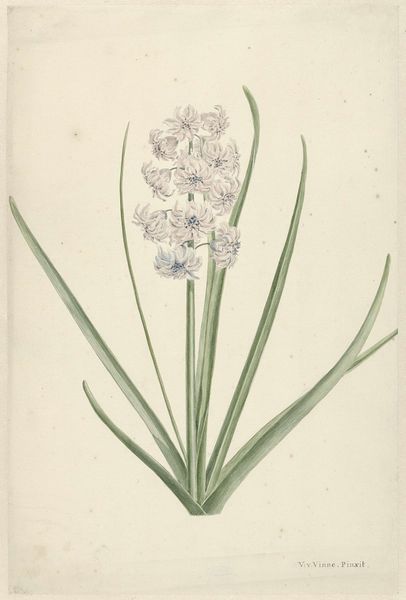
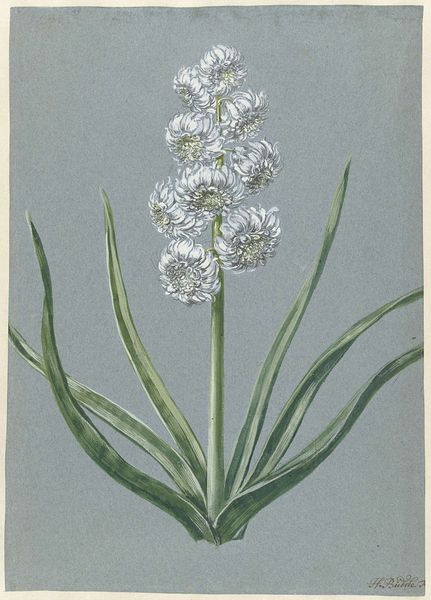
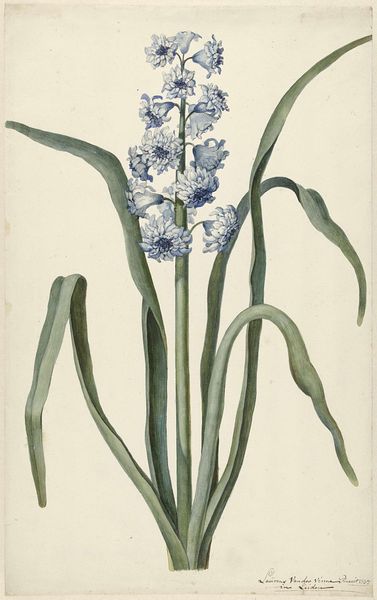
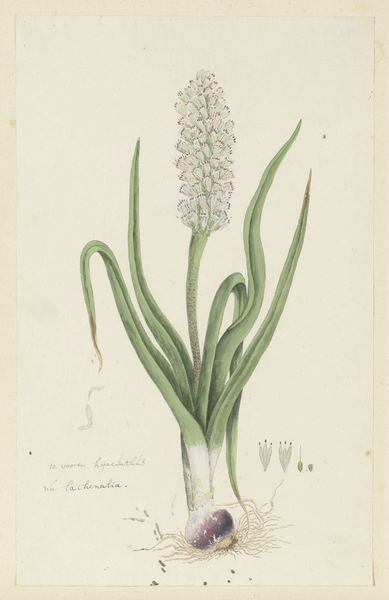
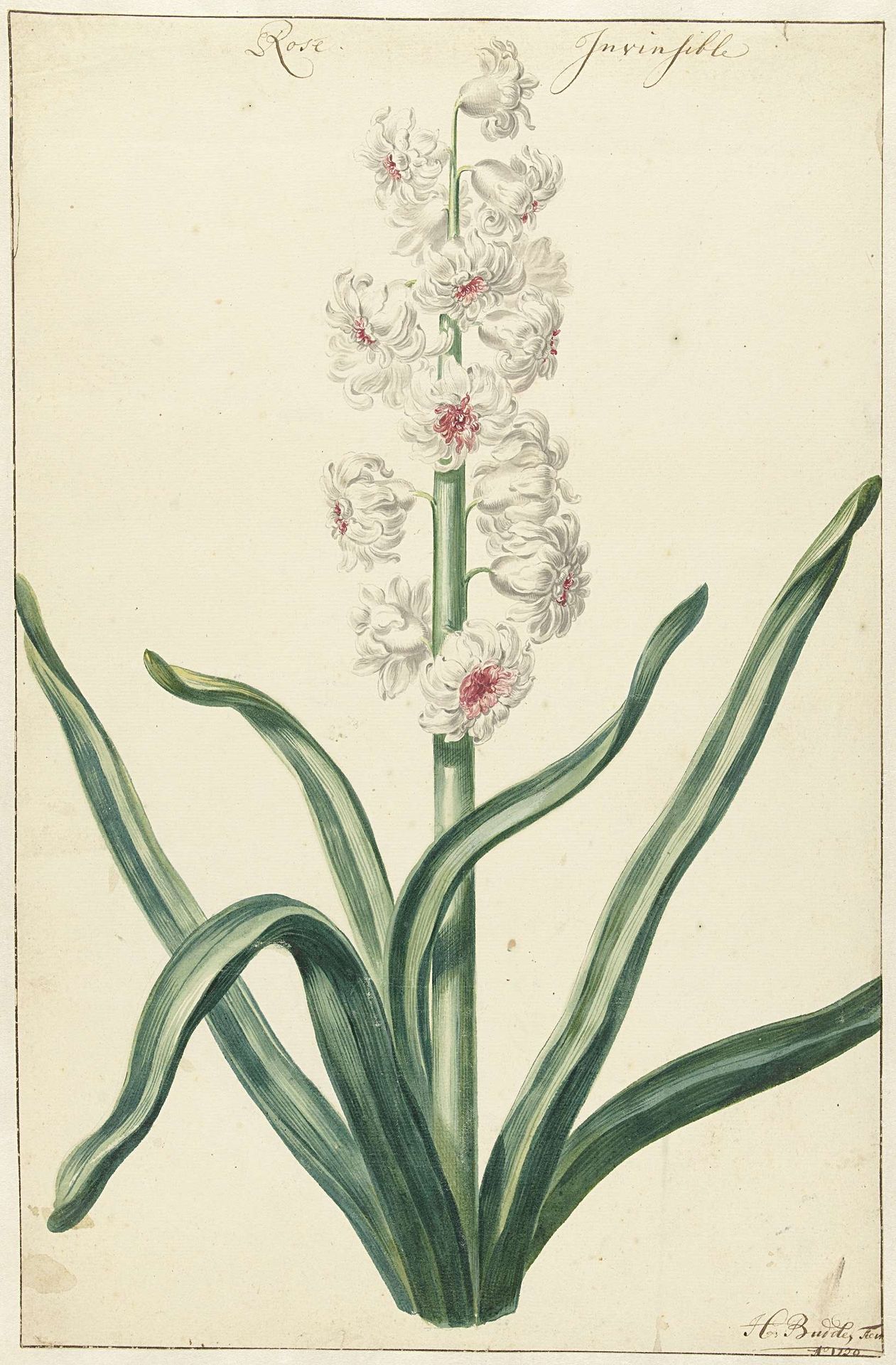
Curator: Here we have Hendrik Budde's "Witte hyacint," a lovely watercolor drawing, likely from the 1720s. Editor: Oh, it's utterly charming! Such a delicate, airy feel to it. Like catching a whisper of springtime in the 18th century. Curator: Precisely. Budde's skill lies in capturing the botanical accuracy alongside the ornamental qualities appreciated in Baroque art. Notice the careful rendering of light and shadow on each petal and leaf. Editor: The way the green fades into those pale whites – it's like the plant itself is breathing on the paper. Did they use these as studies for gardens, perhaps? Or just pure aesthetic pleasure? Curator: A bit of both, I suspect. Botanical art served both scientific and artistic purposes. These drawings were often commissioned by wealthy patrons to document their exotic collections of plants, a display of knowledge and taste. The inscriptions at the top certainly suggest a formal purpose beyond mere aesthetics. Editor: "Knowledge and taste," you say, and yet, it’s whispering a secret to me. That flower is less a specimen, more a fleeting moment of sheer, unadulterated beauty. I feel it's almost fragile, you know? Curator: Fragility certainly becomes a visual effect here. Budde achieves that through the translucence of watercolor and the detail given to rendering surface texture. Editor: It also reminds me that even the most scientifically documented beauty eventually fades. I wonder, did Budde consider that impermanence as he mixed his paints? Curator: It's a worthwhile reflection, considering this artwork is made of organic materials as well. The pigment on paper itself also degrades through time... Editor: So even the picture will wither, eventually, like its muse! Alright, alright… Let's enjoy that impermanence, shall we? This hyacinth's gentle power reminds me to breathe deeply today.