c. 1645
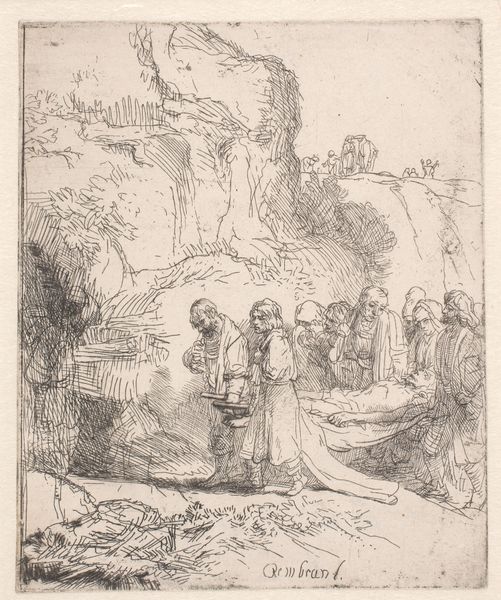
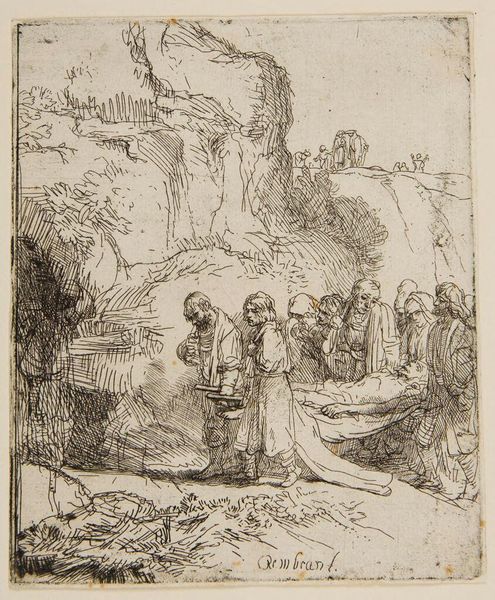
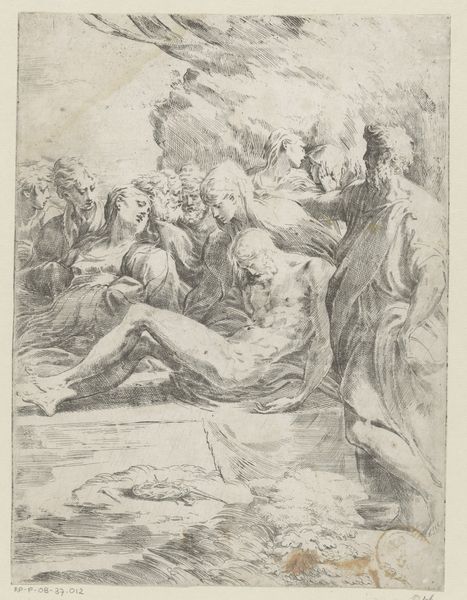
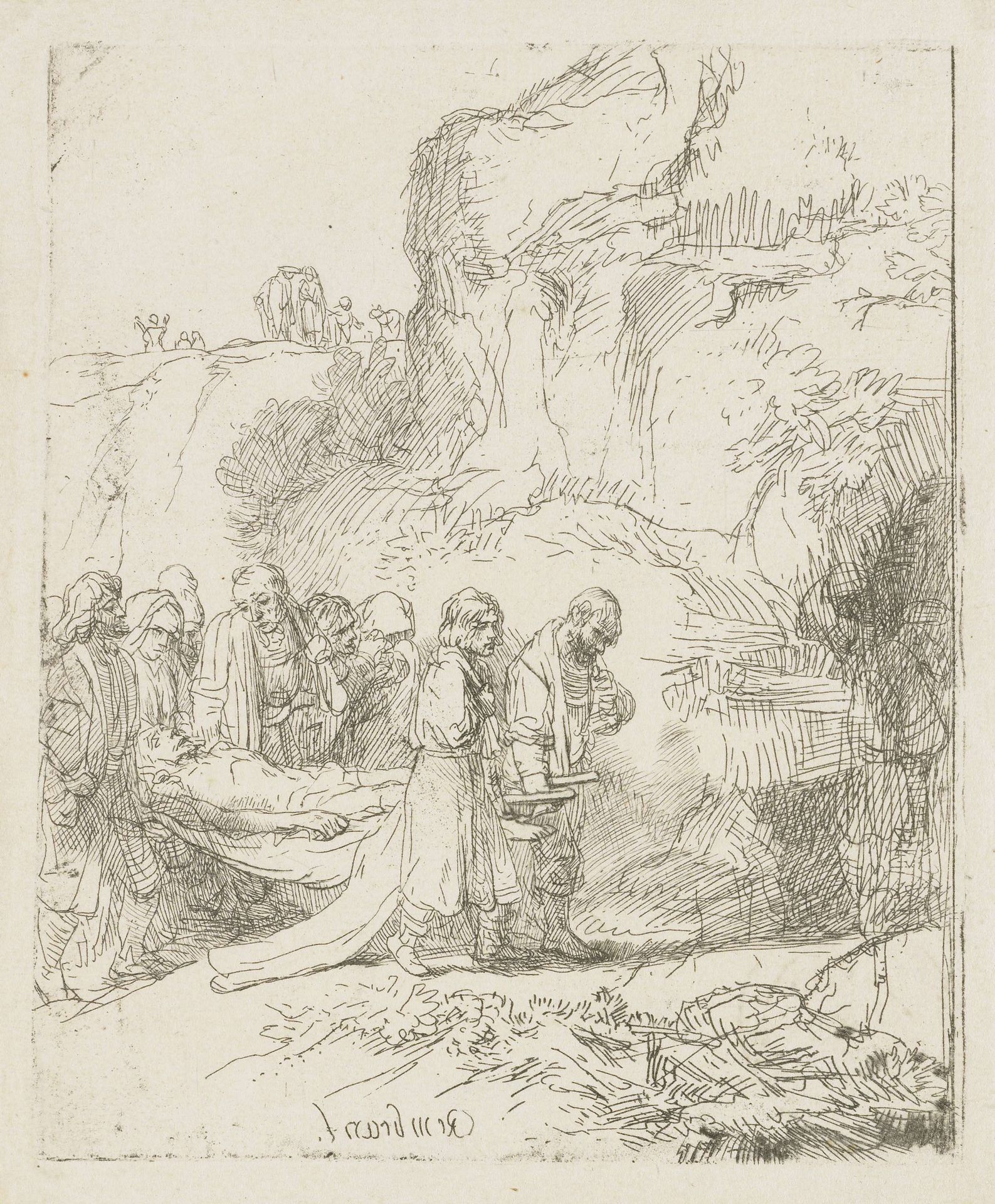
Christ carried to the tomb

Rembrandt van Rijn
1606 - 1669Location
RijksmuseumListen to curator's interpretation
Curatorial notes
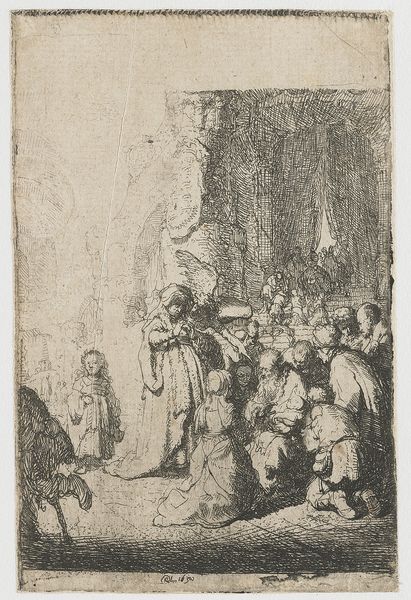
Rembrandt van Rijn made this print, 'Christ carried to the tomb' using etching, a printmaking technique that relies on the corrosive power of acid. The process begins with a metal plate covered in a waxy, protective ground. The artist then draws through this ground with a sharp needle, exposing the metal. When the plate is immersed in acid, the exposed lines are ‘bitten’ or etched into the surface. Ink is then applied, filling the etched lines, and the plate is pressed onto paper, transferring the image. The resulting print is characterized by its fine, precise lines and subtle tonal variations. This labour-intensive method allowed Rembrandt to create multiple impressions of the same image, making it more accessible to a wider audience, and building his reputation as one of the most influential printmakers in history. The way in which the etched lines come together, creates a deeply moving scene. This reminds us that materials, making, and social context, are crucial to understanding the full meaning of any artwork.