About this artwork
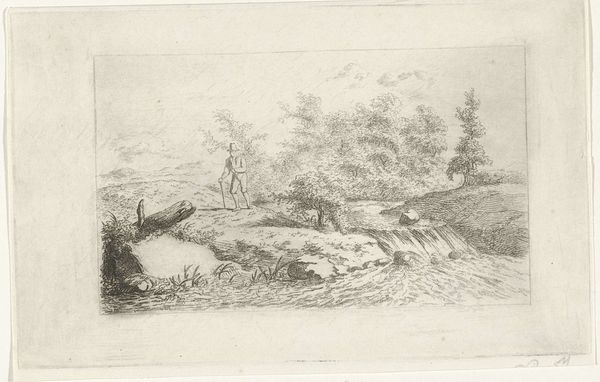
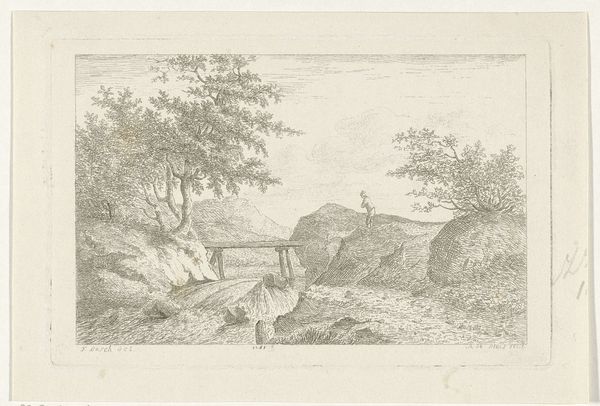
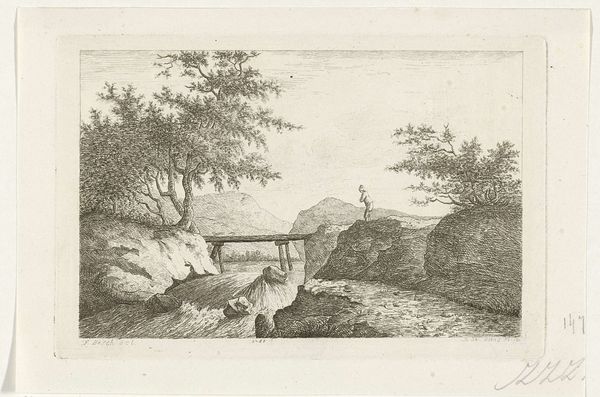
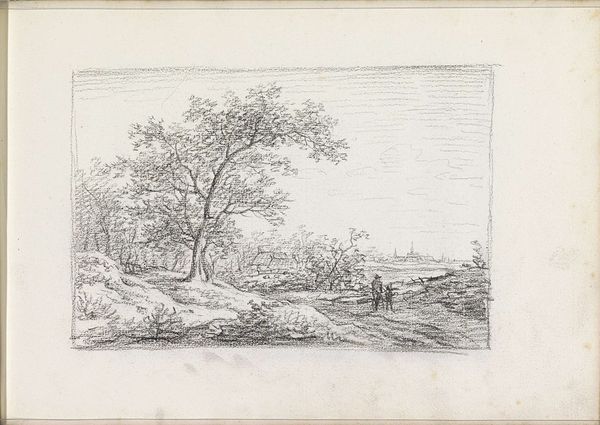
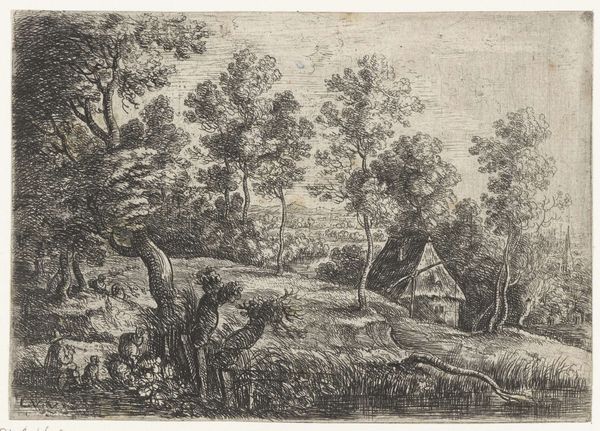
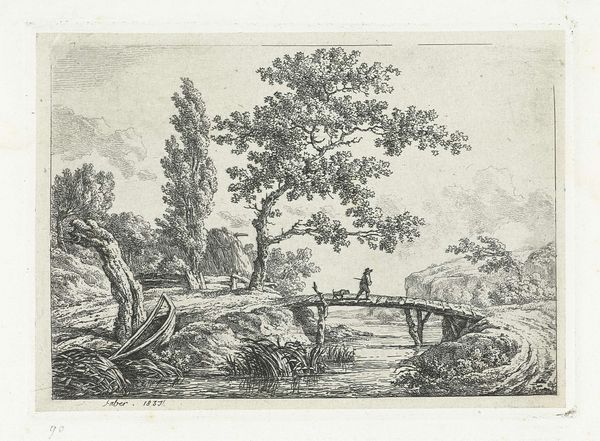
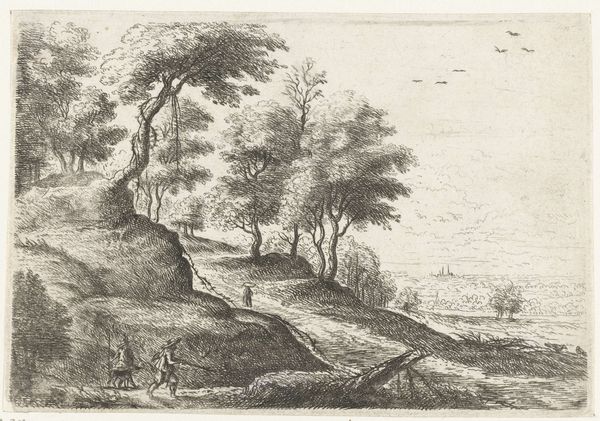
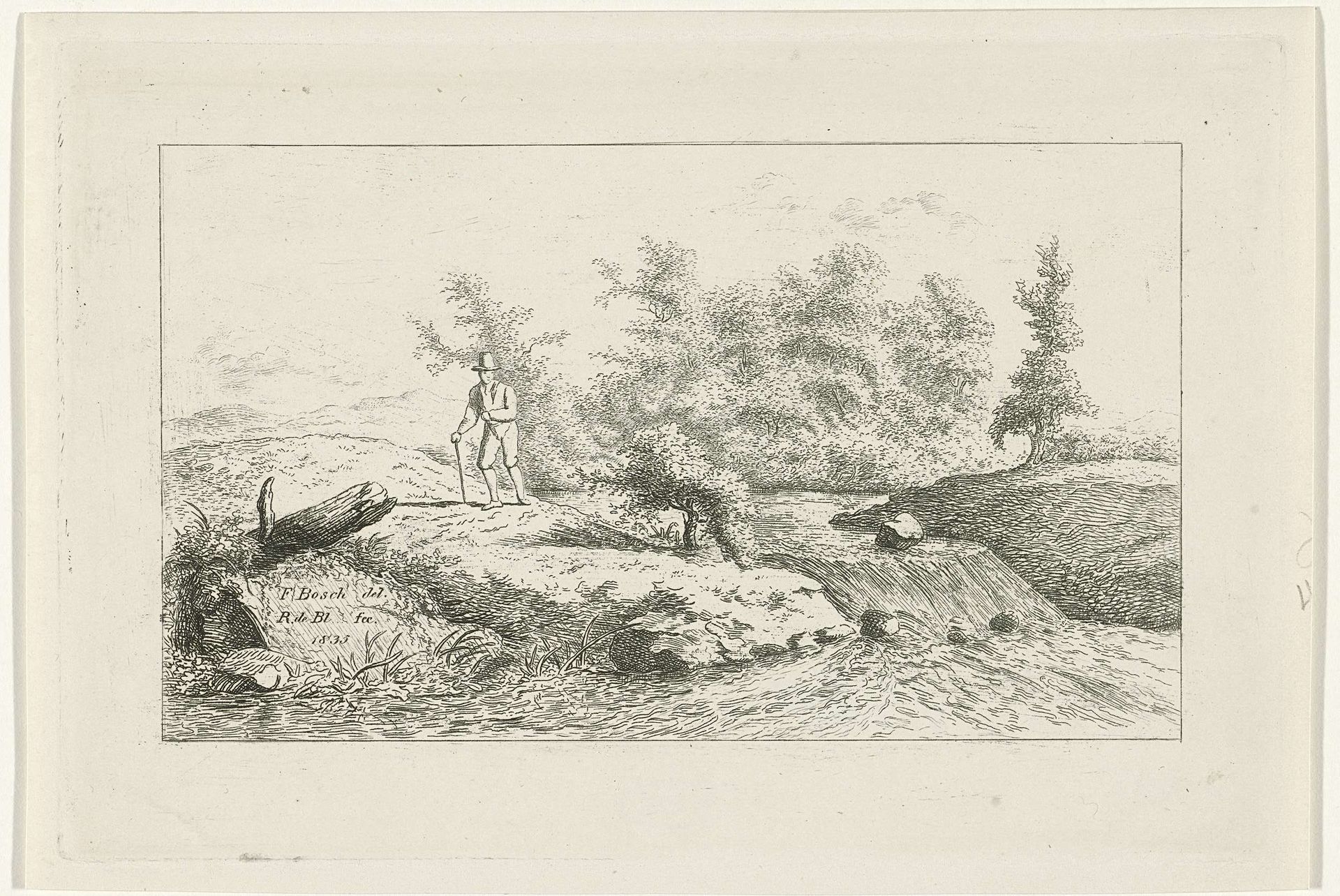
Reinierus Albertus Ludovicus, Baron van Isendoorn à Blois, made this print of a man by a waterfall using etching techniques sometime in the early 19th century. Etching is an intaglio printmaking process, meaning the image is incised into a metal plate, usually copper or zinc. The plate is covered with a waxy, acid-resistant ground, and the artist scratches the design into the ground with a needle, exposing the metal. The plate is then immersed in acid, which bites into the exposed lines, creating recessed lines. The etcher’s labor is a testament to patience. The image is built up line by line, demanding careful planning and a steady hand. In this particular image, the baron’s lines create tonal variation and simulate the textures of the natural world. You can see how the etched line, with its capacity for detail, is perfectly suited to capture the minute details of the trees, rocks, and flowing water, creating a scene both picturesque and meticulous. This work elevates the status of printmaking, highlighting the skill and artistry involved, rather than just its reproductive function.

Artwork details
- Medium
- drawing, etching, ink, pen
- Dimensions
- height 133 mm, width 197 mm
- Copyright
- Rijks Museum: Open Domain
Tags
Comments
Share your thoughts
About this artwork
Reinierus Albertus Ludovicus, Baron van Isendoorn à Blois, made this print of a man by a waterfall using etching techniques sometime in the early 19th century. Etching is an intaglio printmaking process, meaning the image is incised into a metal plate, usually copper or zinc. The plate is covered with a waxy, acid-resistant ground, and the artist scratches the design into the ground with a needle, exposing the metal. The plate is then immersed in acid, which bites into the exposed lines, creating recessed lines. The etcher’s labor is a testament to patience. The image is built up line by line, demanding careful planning and a steady hand. In this particular image, the baron’s lines create tonal variation and simulate the textures of the natural world. You can see how the etched line, with its capacity for detail, is perfectly suited to capture the minute details of the trees, rocks, and flowing water, creating a scene both picturesque and meticulous. This work elevates the status of printmaking, highlighting the skill and artistry involved, rather than just its reproductive function.
Comments
Share your thoughts