About this artwork
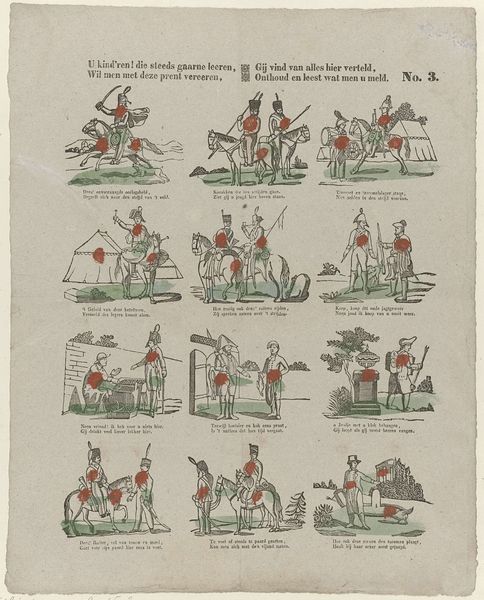
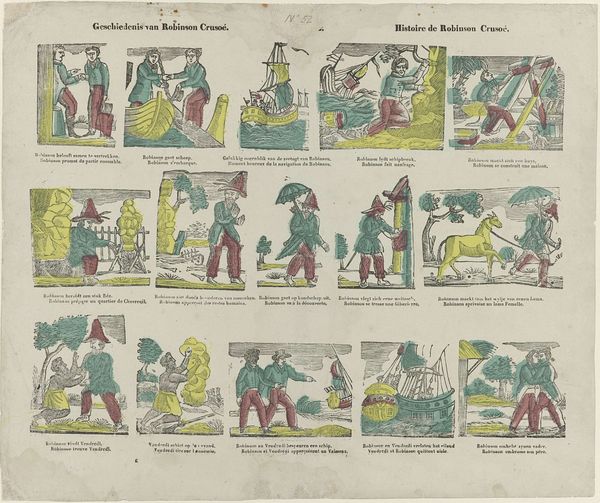
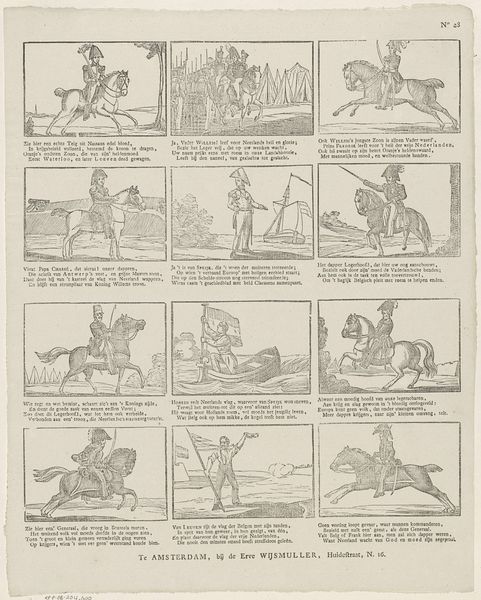
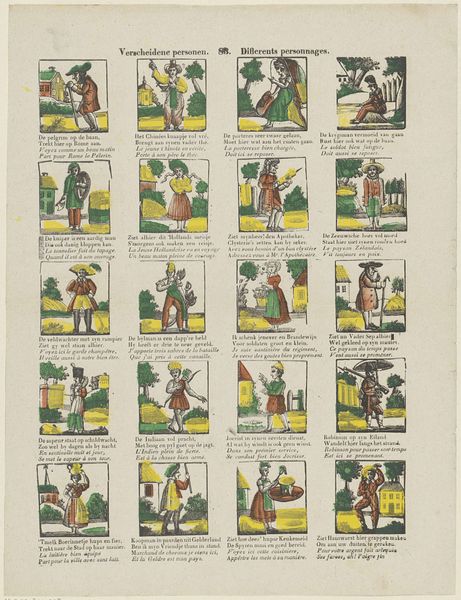
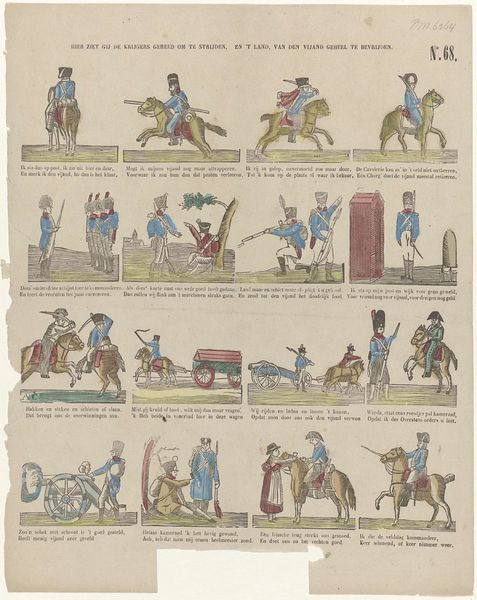
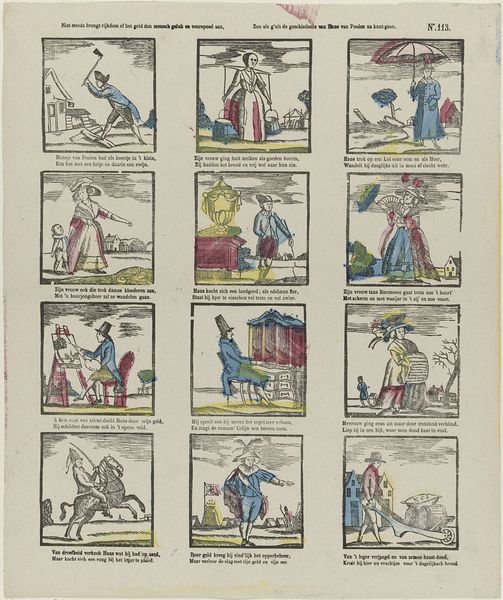
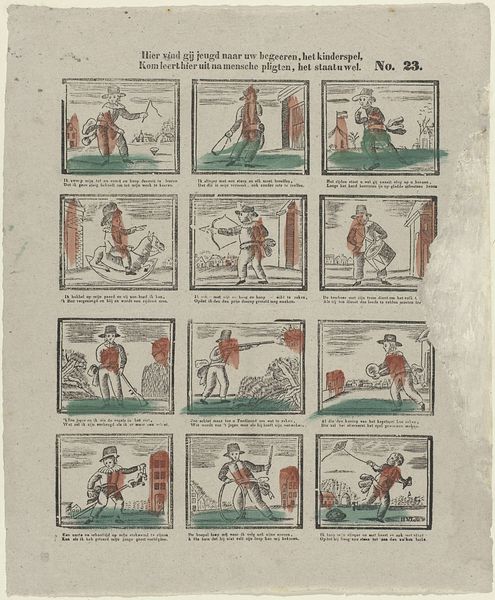
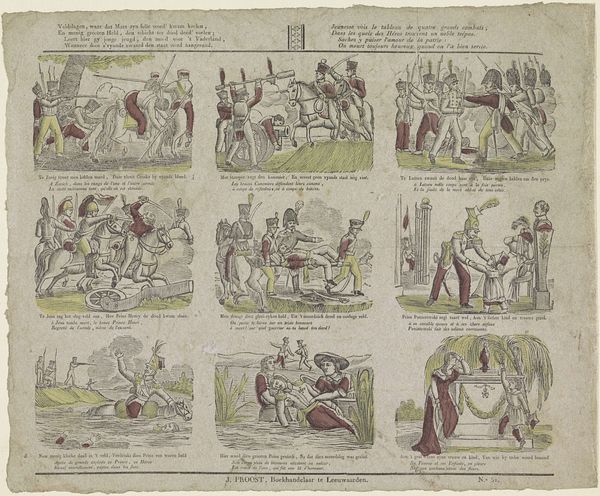
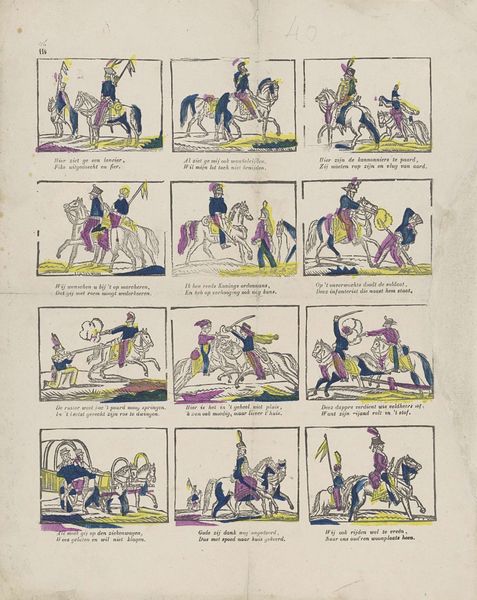
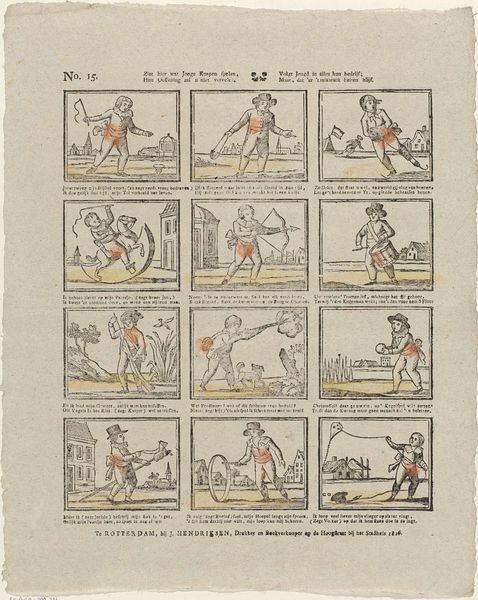
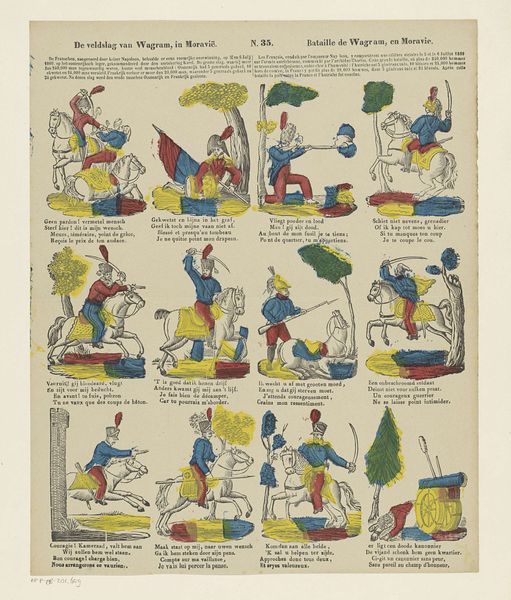
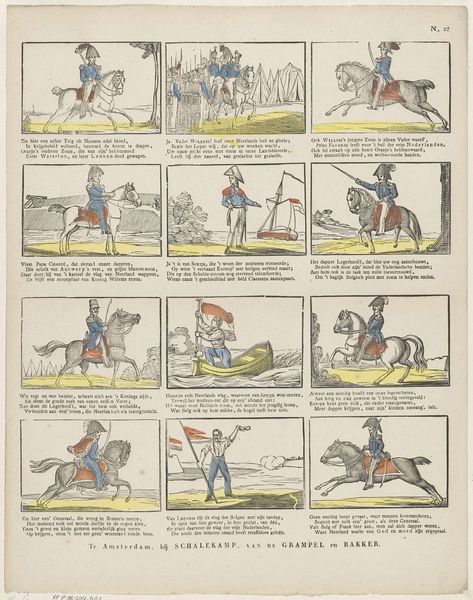
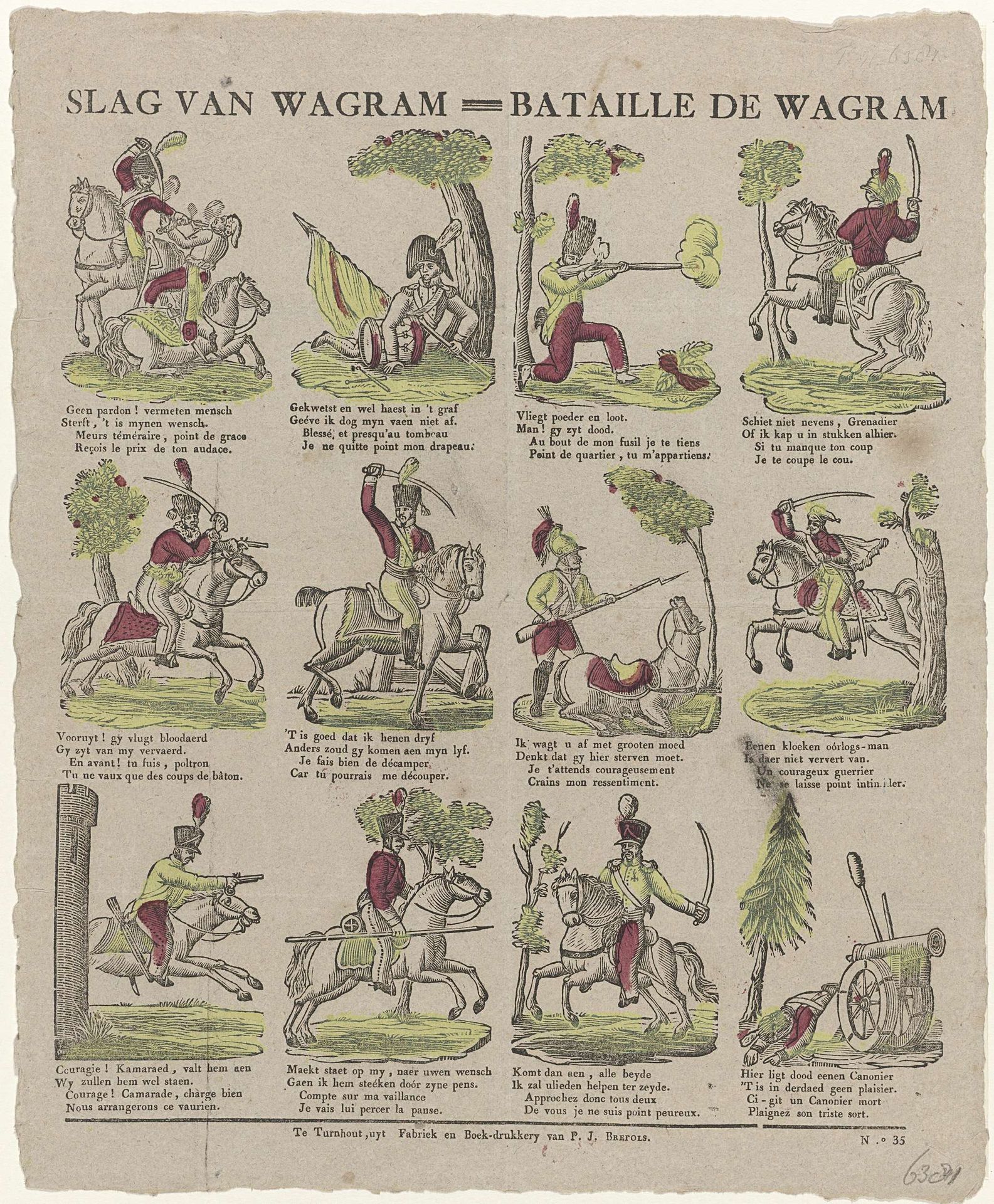
Curator: Here we have "Slag van Wagram / Bataille de Wagram," a print created circa 1809-1810 by Philippus Jacobus Brepols, currently residing in the Rijksmuseum collection. The artwork, rendered in engraving, illustrates scenes from the Battle of Wagram. Editor: Wow, it's like a political cartoon strip! The expressions are exaggerated, and the limited color palette really drives home a kind of folksy, almost mocking tone. It’s not what I expect from a war scene at all; there’s something very playful, dare I say, unserious about it. Curator: Exactly! The "comic" tag it was assigned here does make a lot of sense. Brepols uses this seemingly lighthearted style to subtly critique the absurdity of warfare and power dynamics, fitting within the broader context of narrative art produced during the Napoleonic era. The piece circulated widely, engaging a public audience familiar with both political caricature and the dramatic battles reshaping Europe. Editor: The soldiers look more like stage actors in ill-fitting costumes, really. It's strange to see something that could easily be about great courage depicted with such a lack of respect or awe. The little poems underneath each vignette—they only enhance that comic impression. Curator: These poetic captions in both Dutch and French further highlight the popular appeal of such prints, which functioned both as entertainment and political commentary. By presenting the Battle of Wagram in this almost childish, segmented way, Brepols simplifies and democratizes a complex historical event, making it digestible (and debatable) for a wide audience. Editor: It almost humanizes the chaos, albeit through satire. We are laughing *at* them and their struggles to make peace with death! Even if it makes me squirm a little, I think it helps me understand this period from a different angle, like ordinary folk might have seen the events—far away but unavoidably affected. Curator: Precisely! Art such as this one provides a necessary reminder of the complexities inherent in popular representations of war and history. It's both of and against the moment. Editor: So, yeah, it is a bit silly, perhaps insensitive, but there’s definitely some sharp insight hidden in all that quaint engraving.
Slag van Wagram / Bataille de Wagram
1809 - 1810

Philippus Jacobus Brepols
1778 - 1845Location
RijksmuseumArtwork details
- Medium
- print, engraving
- Dimensions
- height 400 mm, width 325 mm
- Location
- Rijksmuseum
- Copyright
- Rijks Museum: Open Domain
Tags
Comments
Share your thoughts
About this artwork
Curator: Here we have "Slag van Wagram / Bataille de Wagram," a print created circa 1809-1810 by Philippus Jacobus Brepols, currently residing in the Rijksmuseum collection. The artwork, rendered in engraving, illustrates scenes from the Battle of Wagram. Editor: Wow, it's like a political cartoon strip! The expressions are exaggerated, and the limited color palette really drives home a kind of folksy, almost mocking tone. It’s not what I expect from a war scene at all; there’s something very playful, dare I say, unserious about it. Curator: Exactly! The "comic" tag it was assigned here does make a lot of sense. Brepols uses this seemingly lighthearted style to subtly critique the absurdity of warfare and power dynamics, fitting within the broader context of narrative art produced during the Napoleonic era. The piece circulated widely, engaging a public audience familiar with both political caricature and the dramatic battles reshaping Europe. Editor: The soldiers look more like stage actors in ill-fitting costumes, really. It's strange to see something that could easily be about great courage depicted with such a lack of respect or awe. The little poems underneath each vignette—they only enhance that comic impression. Curator: These poetic captions in both Dutch and French further highlight the popular appeal of such prints, which functioned both as entertainment and political commentary. By presenting the Battle of Wagram in this almost childish, segmented way, Brepols simplifies and democratizes a complex historical event, making it digestible (and debatable) for a wide audience. Editor: It almost humanizes the chaos, albeit through satire. We are laughing *at* them and their struggles to make peace with death! Even if it makes me squirm a little, I think it helps me understand this period from a different angle, like ordinary folk might have seen the events—far away but unavoidably affected. Curator: Precisely! Art such as this one provides a necessary reminder of the complexities inherent in popular representations of war and history. It's both of and against the moment. Editor: So, yeah, it is a bit silly, perhaps insensitive, but there’s definitely some sharp insight hidden in all that quaint engraving.
Comments
Share your thoughts