About this artwork
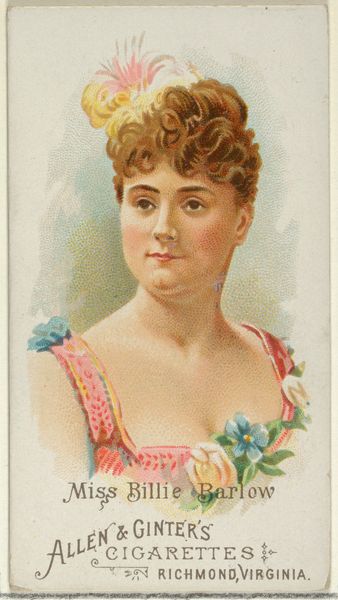
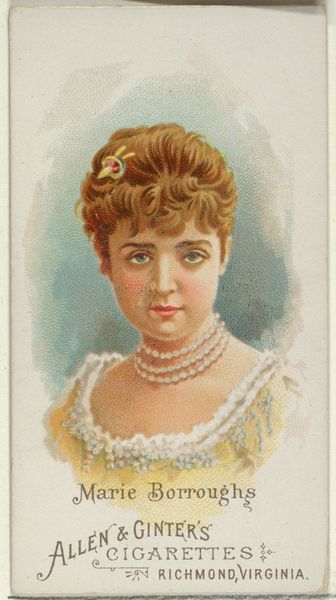
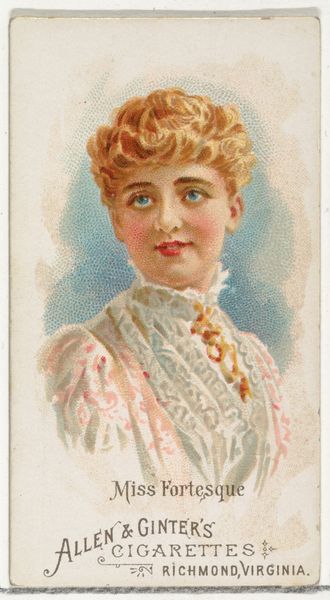
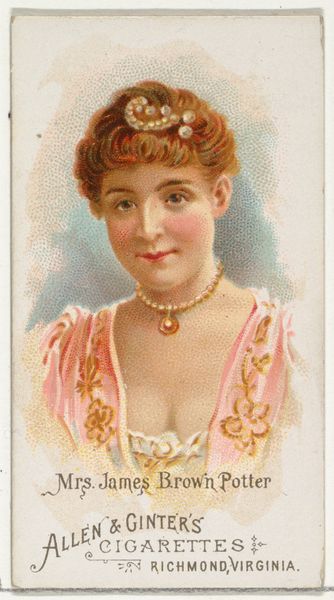
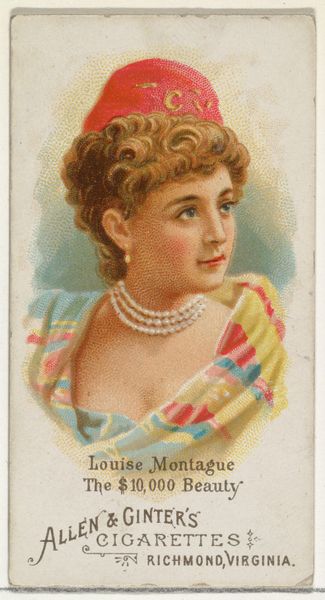
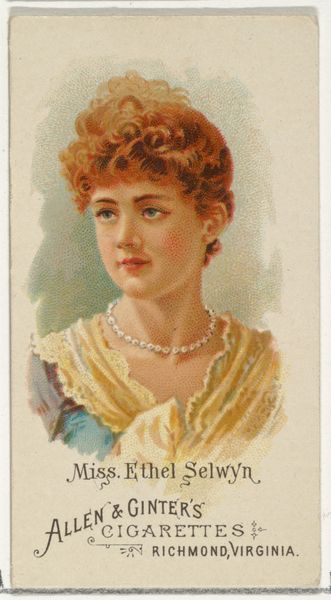
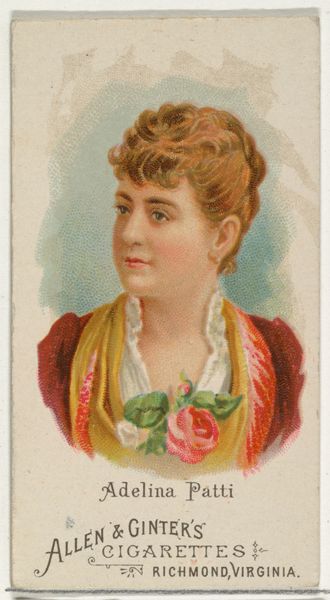
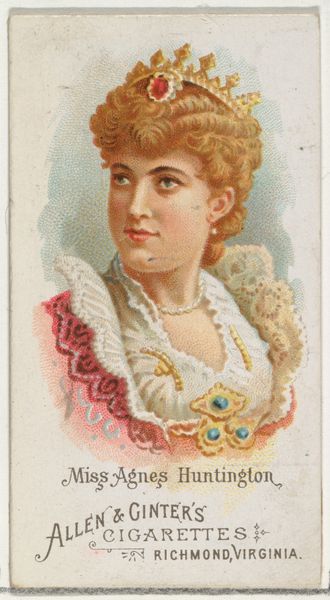
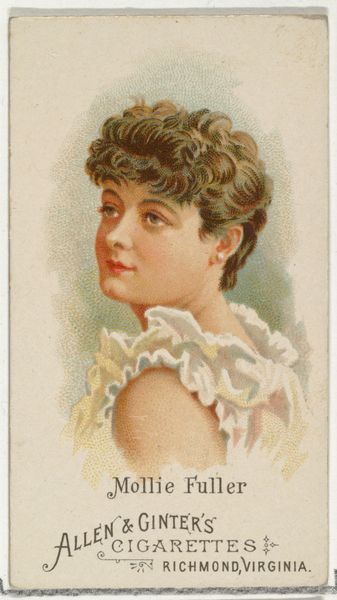
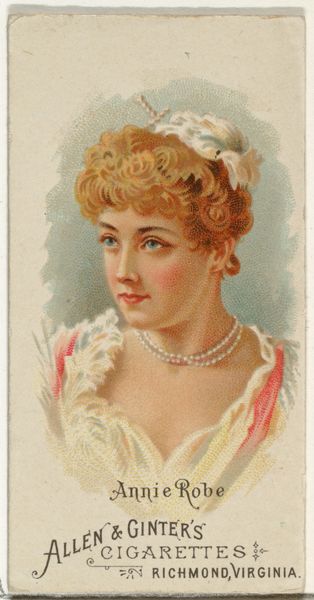
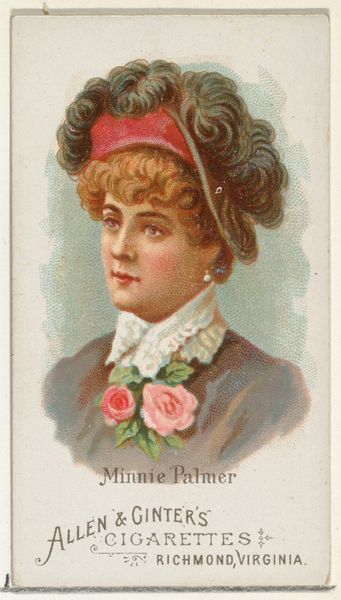
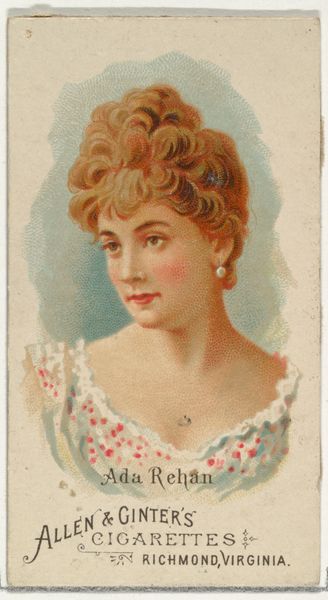
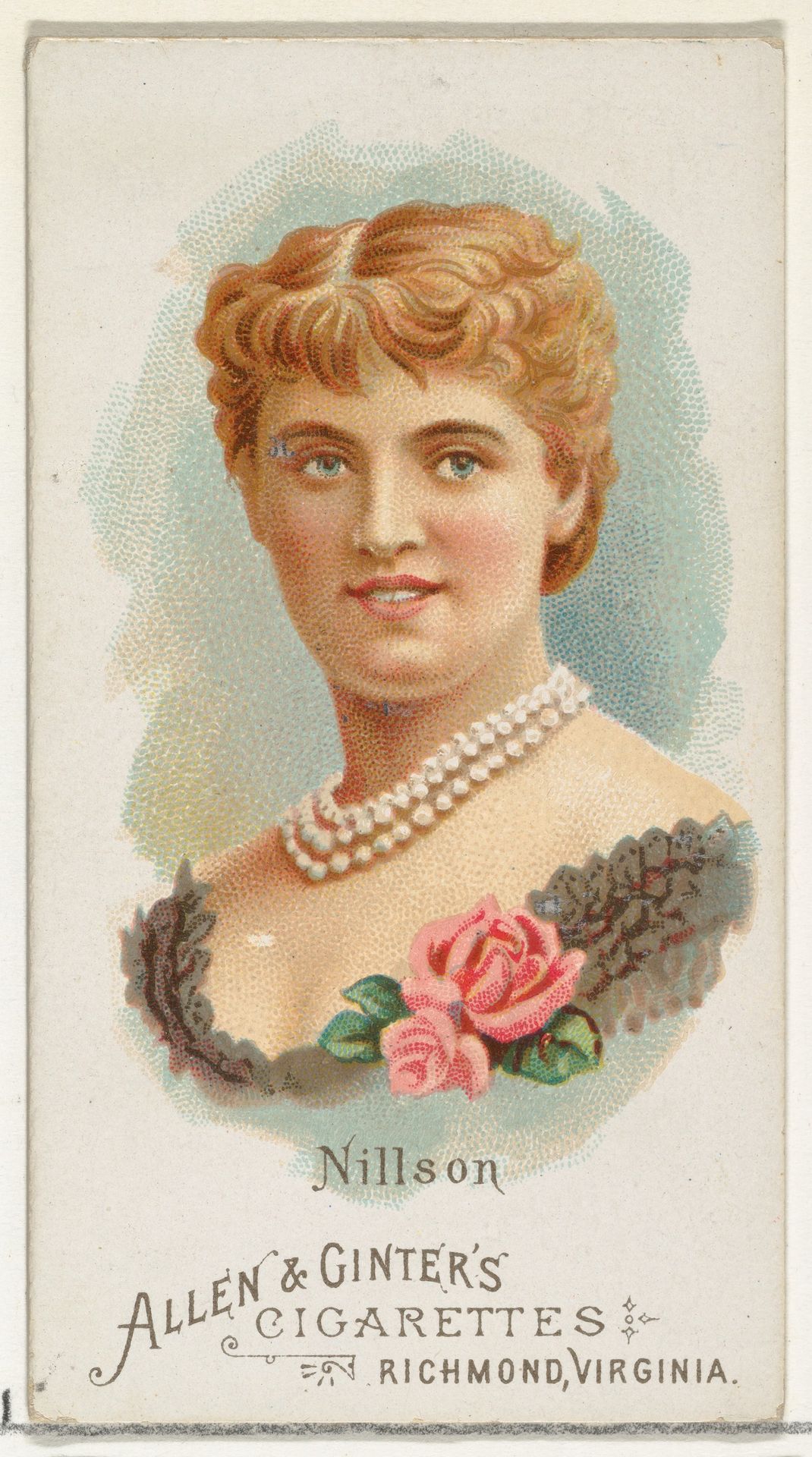
This small chromolithograph card of Nillson, one of the “World’s Beauties,” was created by Allen & Ginter Cigarettes. The portrait is framed by soft pastels and a decorative floral motif. The oval composition centers on a woman, her gaze direct, framed by curls, pearls, and roses. The card’s structure reveals the interplay between commerce and culture in the late 19th century. Its design uses beauty, here a famous opera singer, as a signifier of value, subtly encoding cultural prestige into a commercial product. Semiotically, the pearls and roses are not merely decorative; they signify luxury and femininity, aligning the product with aspirations of elegance. Consider how the card’s materiality—a mass-produced paper item—contradicts the exclusivity it implies. The tension between the high art aspirations of the portrait and its function as a cigarette card highlights the evolving relationship between art, commerce, and identity. It invites us to consider how such images both reflected and shaped contemporary values and desires.
Nillson, from World's Beauties, Series 1 (N26) for Allen & Ginter Cigarettes
1888


Artwork details
- Medium
- drawing, print
- Dimensions
- Sheet: 2 3/4 x 1 1/2 in. (7 x 3.8 cm)
- Location
- Metropolitan Museum of Art, New York, NY
- Copyright
- Public Domain
Tags
portrait
drawing
caricature
portrait drawing
academic-art
watercolor
Comments
Be the first to share your thoughts about this work.
About this artwork
This small chromolithograph card of Nillson, one of the “World’s Beauties,” was created by Allen & Ginter Cigarettes. The portrait is framed by soft pastels and a decorative floral motif. The oval composition centers on a woman, her gaze direct, framed by curls, pearls, and roses. The card’s structure reveals the interplay between commerce and culture in the late 19th century. Its design uses beauty, here a famous opera singer, as a signifier of value, subtly encoding cultural prestige into a commercial product. Semiotically, the pearls and roses are not merely decorative; they signify luxury and femininity, aligning the product with aspirations of elegance. Consider how the card’s materiality—a mass-produced paper item—contradicts the exclusivity it implies. The tension between the high art aspirations of the portrait and its function as a cigarette card highlights the evolving relationship between art, commerce, and identity. It invites us to consider how such images both reflected and shaped contemporary values and desires.
Comments
Be the first to share your thoughts about this work.