About this artwork
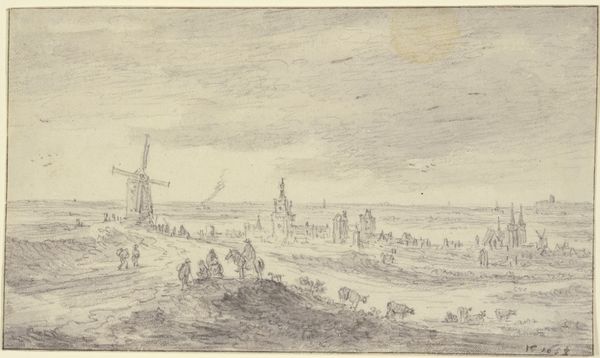
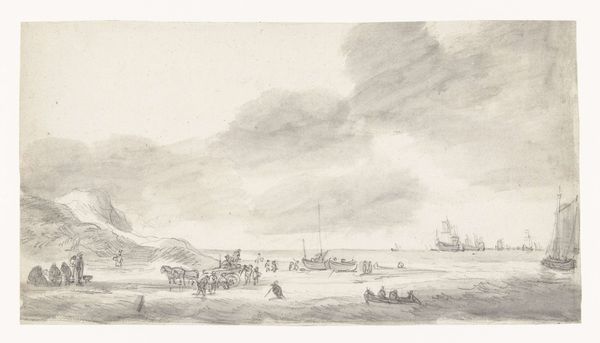
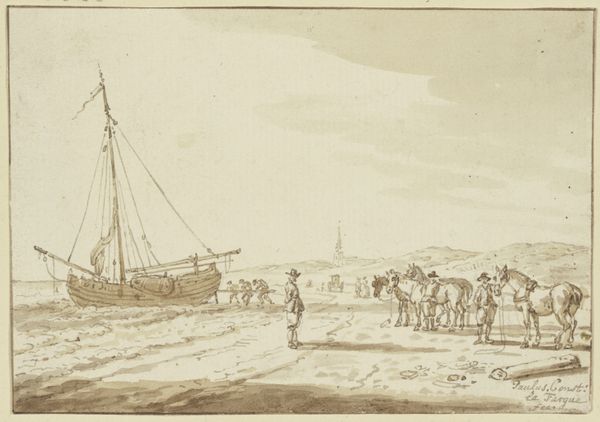
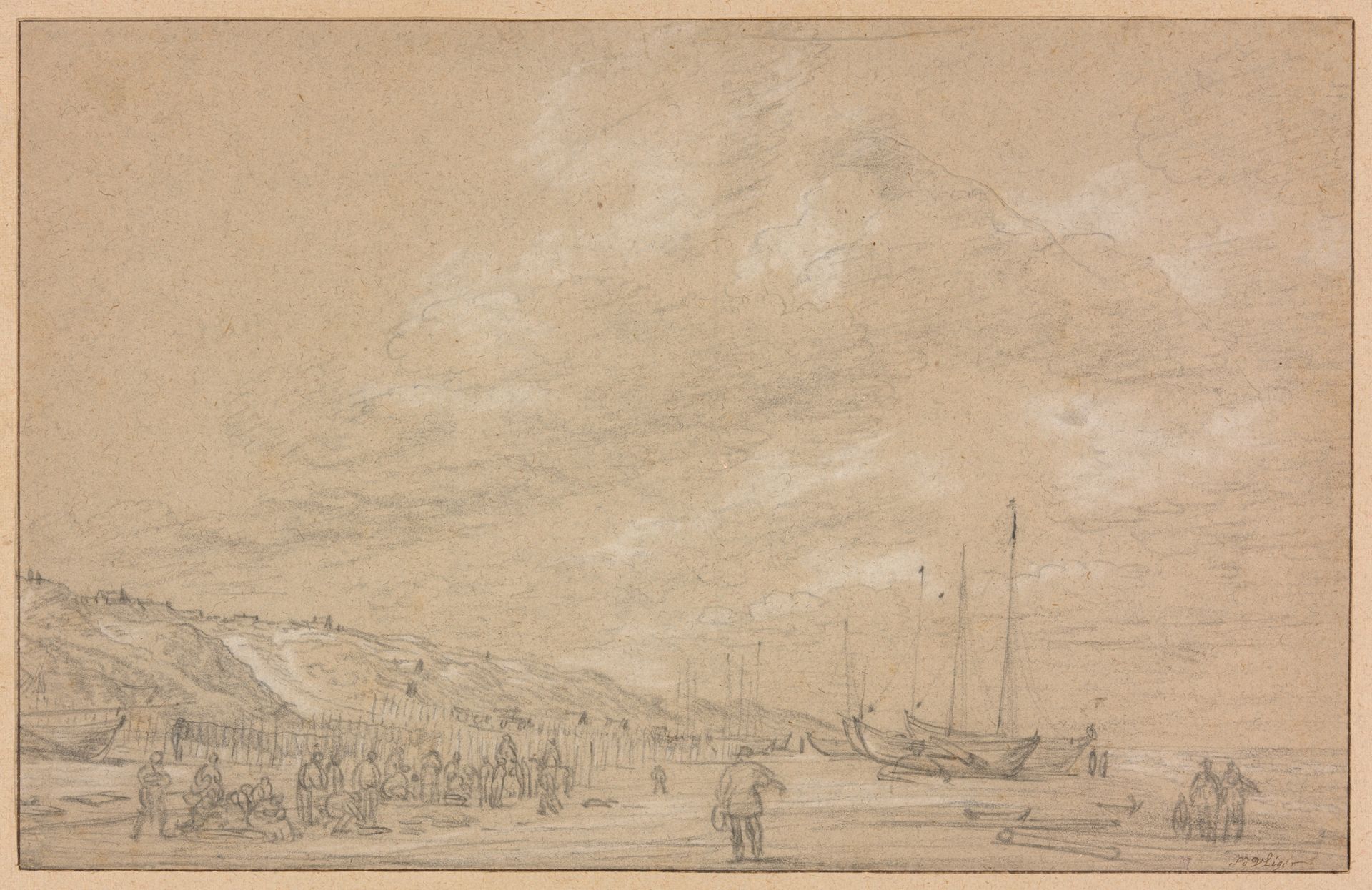
Simon de Vlieger sketched "Fishermen Drying Nets on Scheveningen Beach" using graphite on paper, capturing a serene coastal scene. Dominating the foreground, fishermen attend to their nets, symbols of labor and sustenance intertwined with the sea. The nets themselves, spread out to dry, echo motifs found in ancient fishing communities, where nets symbolized both provision and peril. Consider the cyclical nature of these activities—drawing parallels to the endless cycle of human needs and the enduring relationship between humanity and the sea. The fishermen engaged in their work, heads bowed, evoke a sense of timeless toil and the inevitable return to the sea. This scene, both specific to its time and universal in its depiction of human struggle and perseverance, reminds us of the cyclical patterns embedded within the human experience. We see here a powerful visual statement on the eternal dance between humanity and nature, resonating on a deeply subconscious level.
Fishermen Drying Nets on Scheveningen Beach c. early 1630s


Artwork details
- Medium
- drawing, print, plein-air, paper, pencil, chalk
- Dimensions
- 285 × 444 mm (primary support); 329 × 480 mm (secondary support)
- Location
- The Art Institute of Chicago
- Copyright
- Public Domain
Tags
drawing
dutch-golden-age
plein-air
pencil sketch
landscape
etching
paper
pencil
chalk
genre-painting
realism
Comments
No comments
About this artwork
Simon de Vlieger sketched "Fishermen Drying Nets on Scheveningen Beach" using graphite on paper, capturing a serene coastal scene. Dominating the foreground, fishermen attend to their nets, symbols of labor and sustenance intertwined with the sea. The nets themselves, spread out to dry, echo motifs found in ancient fishing communities, where nets symbolized both provision and peril. Consider the cyclical nature of these activities—drawing parallels to the endless cycle of human needs and the enduring relationship between humanity and the sea. The fishermen engaged in their work, heads bowed, evoke a sense of timeless toil and the inevitable return to the sea. This scene, both specific to its time and universal in its depiction of human struggle and perseverance, reminds us of the cyclical patterns embedded within the human experience. We see here a powerful visual statement on the eternal dance between humanity and nature, resonating on a deeply subconscious level.
Comments
No comments